
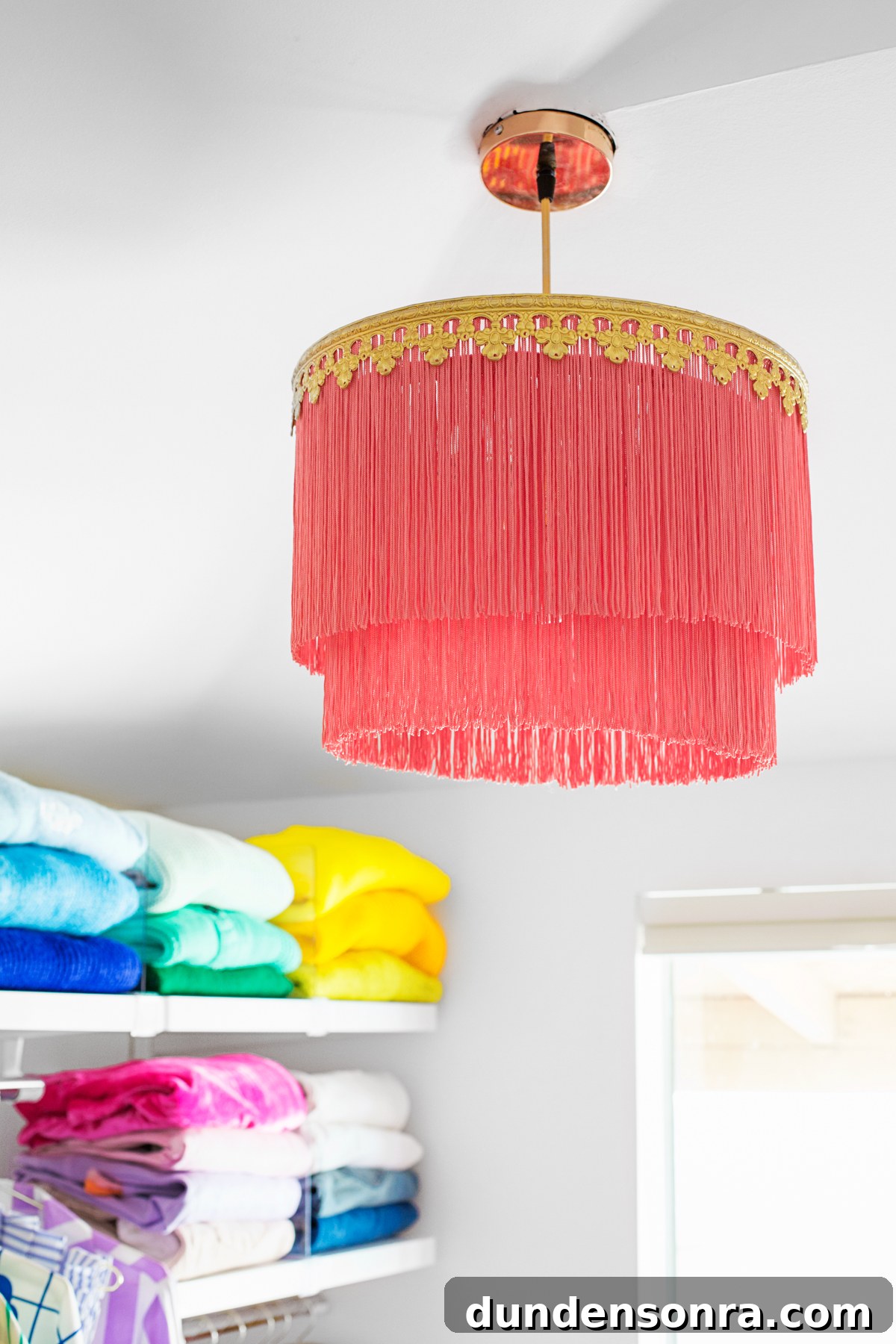
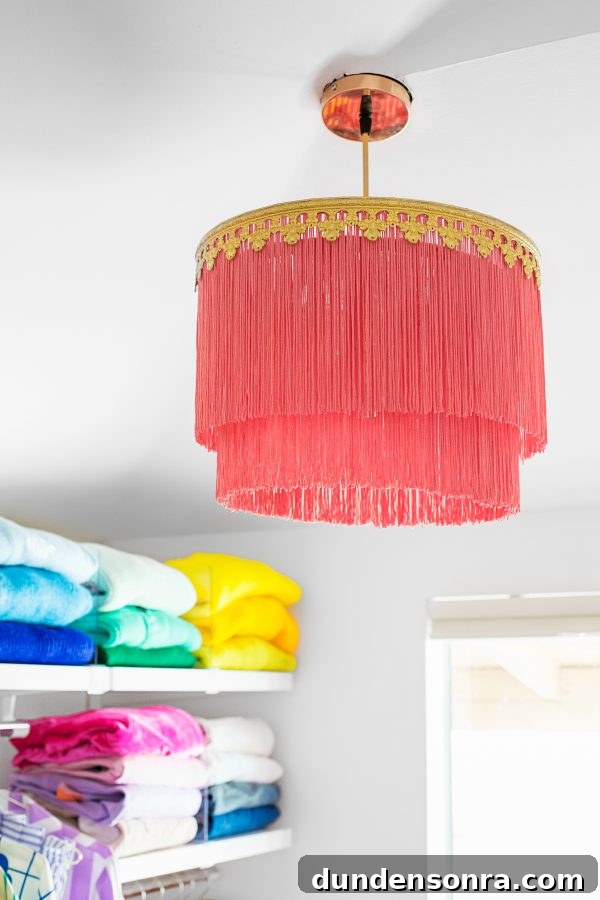
I’m so proud of this DIY fringe chandelier — it took hours of research and trial and error, but the end result was worth every minute. I originally considered buying a ready-made fixture, but making it myself allowed me to get the exact pink, layered look I wanted without spending thousands. I bought and tested a few chandeliers for this closet project before committing to the fringe idea, and creating it cost me roughly $150 versus vintage inspiration pieces that were priced at $2,000–$5,000. If you want a glamorous fringe chandelier on a budget, here’s a clear, streamlined guide to recreate this look.

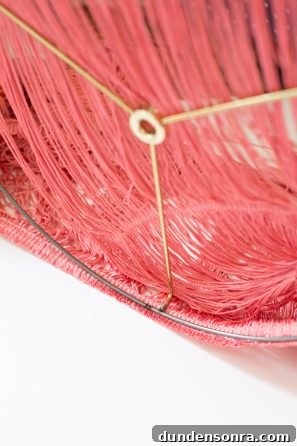

DIY Fringe Chandelier
Total Time: About one hour
Supplies
12″ lamp shade ring
14″ lamp shade ring
4 ft. brass lamp banding
5 yards total of fringe trim (see note below)
Brass pendant cord kit
Scissors
Hot glue gun
Bulldog clips or clothespins
*I purchased 12″ trim locally and trimmed it to the desired lengths (about 8″ and 10″). If you don’t have a local fabric source, look for fringe trim in sizes close to what you need and choose colors that match your design. Buying longer trim and cutting to length lets you create layered effects and subtle color variation.
Directions
1. A quick note: many fringe trims include a chainstitch through the center to prevent tangling. Leave that in place until later in the process.
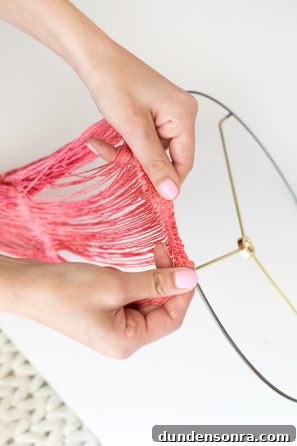
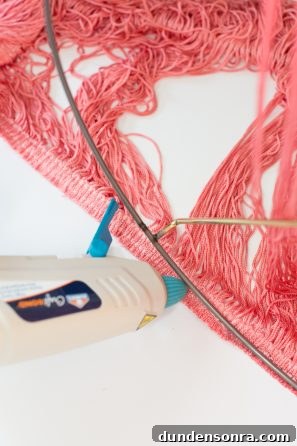
2. It’s easiest to roll the fringe around each lamp shade ring. Lay the trim flat, apply a short line of hot glue, and roll the 14″ ring into the glued section. Hold until set, then repeat in short sections until the ring is fully covered twice. Trim any excess.
3. Repeat the same rolling and gluing method with the 12″ ring and trim the excess.
4. Place the 14″ fringed ring on a stable object (a trash can or similar) so the top edge is accessible. Glue the brass lamp banding around the top of the 14″ shade in small sections, securing each piece with a bulldog clip or clothespin while it sets.
5. Continue around the shade. Before finishing the last section, trim the banding so there’s about a 1″ overlap where you started, then complete the glue and clamping.
6. Stack the shades by setting the 12″ shade on your work surface and placing the 14″ shade on top. Trim the fringe so the outer and inner layers show the amount of difference you want — I left approximately 2″ between tiers. Trim small sections at a time for the best control; you can make final adjustments after hanging.
7. For electrical assembly and installation, consult a licensed electrician. In my case a professional helped me disassemble the light kit, thread the shades onto the cord, select a safe bulb, and install the fixture at the correct height for our ceiling.
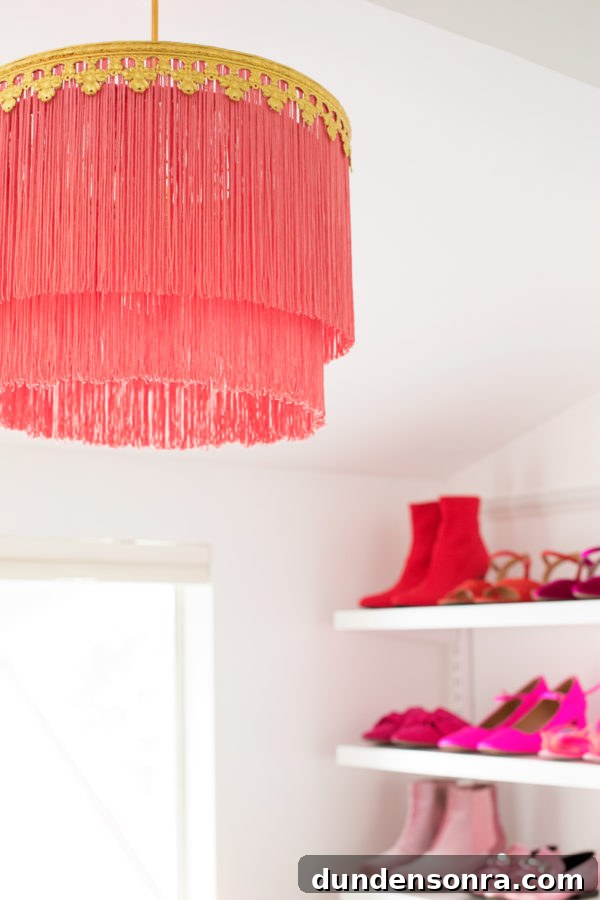
Photos by Jeff Mindell
For the rest of the items pictured in the closet reveal, consult your project notes or original source materials from the reveal.
I’m so glad I followed through with this idea instead of settling. The technique translates well to table lamps, sconces, or other light fixtures — imagine the same fringe treatment on a bedside lamp or wall sconce for an instantly playful, textured update. Give it a try and tailor the colors and lengths to match your space.