
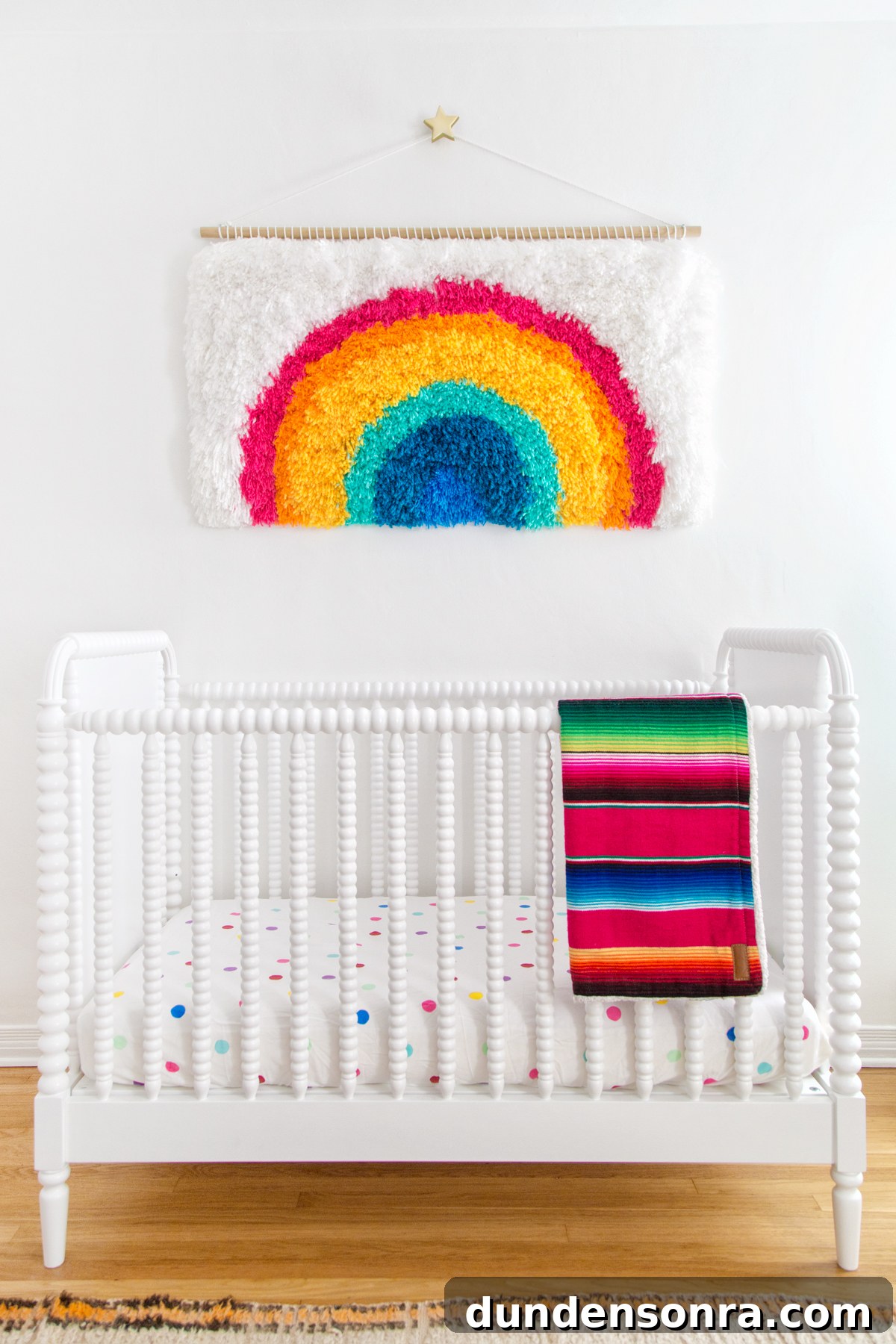
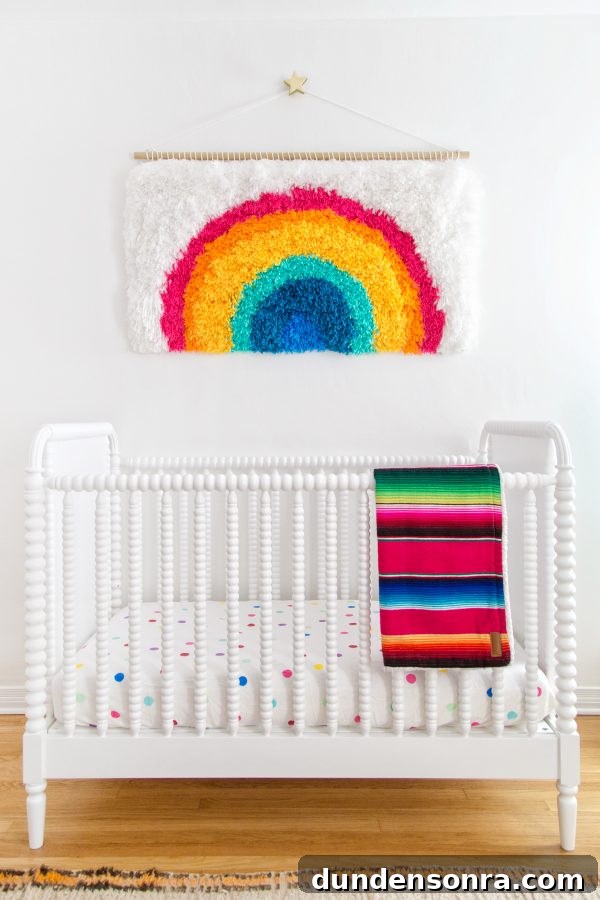
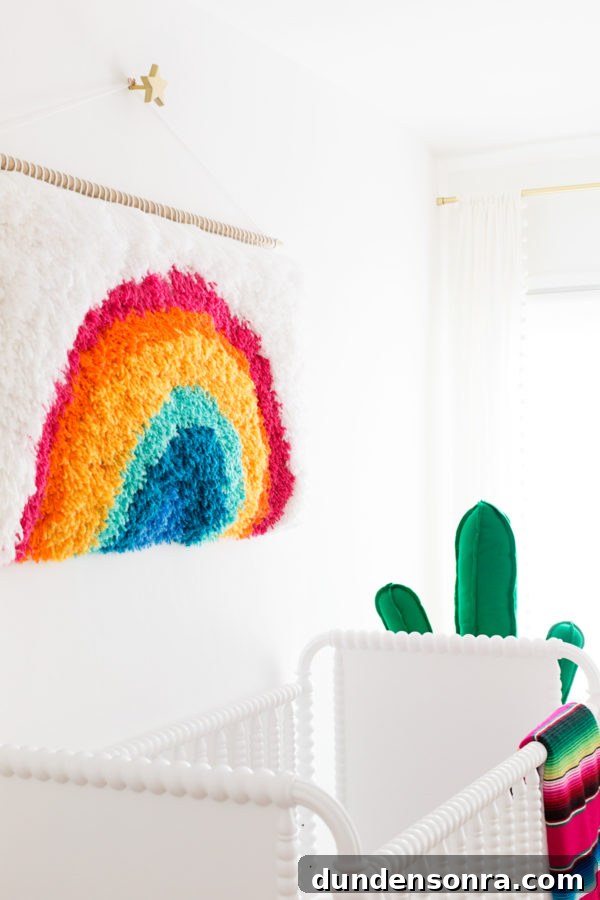
Almost a year in the making — I’m finally sharing the full process for the DIY rainbow latch hook wall hanging I created for Arlo’s nursery. It was a true labor of love. Because I wanted it large, the project took a long time, but I couldn’t be happier with the result.
If you ever did latch hook as a kid, you’ll know why I love this technique: it’s simple, largely skill-free, and very meditative. I worked on this while watching show marathons, and the repetitive motion felt oddly therapeutic. Below are the key tips and step-by-step directions I used so you can recreate your own version.
DIY Rainbow Latch Hook Wall Hanging
Total Time: A lot — expect several sessions, especially for larger pieces.
Supplies
Yarn in 6–7 colors — mix weights and textures for depth. Quantity depends on yarn type and final size; buy extra if possible.
Latch hook canvas
Latch hook tool
1″ or thicker wooden dowel (3–4″ longer than your finished piece)
Rope and embroidery thread
Yarn needle
Scissors
Plastic bags (to store pre-cut yarn by color)
Fine-tip markers or Sharpies for sketching arcs
Ruler
Two small screws, nails, or short dowels (to hold hanging rope in place)
Directions
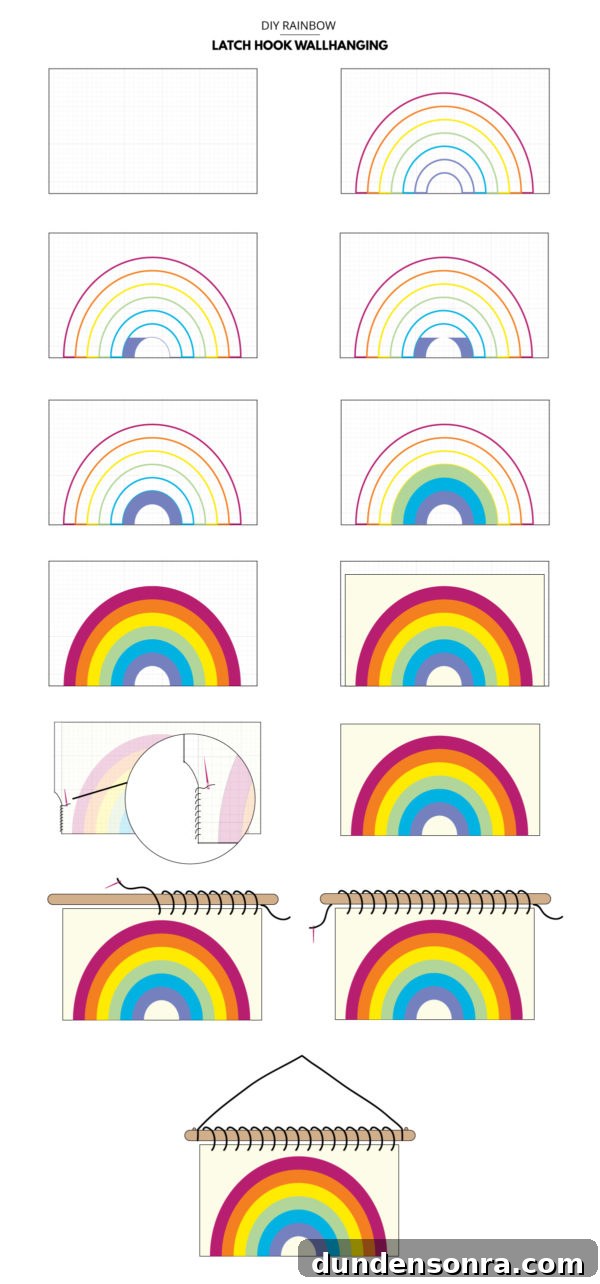
Use the diagram above as a visual guide; the written steps below explain the full process.
1. Decide the final dimensions of your piece. Add about two inches to each side and cut that size from the latch hook canvas.
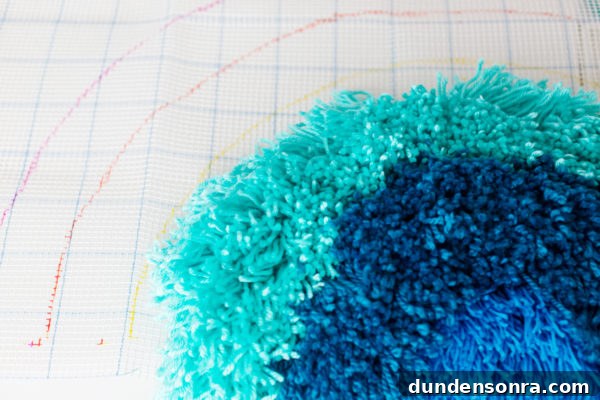
2. Place the canvas on a flat protected surface and mark the rainbow sections. Find the center of the canvas, then determine the width of each color band. From the center, sketch a rough arc for the first band with a marker. Measure and mark additional arcs outward until you have your desired number of sections (six in my example).
3. Cut yarn into 10-inch lengths. This step takes time — consider folding strands in an accordion and cutting multiple layers at once. Keep each color organized in its own bag so pieces are easy to find during hooking.
4. Start latch hooking from the bottom of each section and work upward. If you need a refresher on the latch hook motion, a short video demo is helpful. The important part is to begin at the bottom edge so the rows stack cleanly and the colors align.
5. For each arc section, work up one side from the bottom to where the curve meets the top, then repeat on the other side before filling in the top row across the arc. This approach keeps the yarn uniform and prevents gaps.
6. Continue filling each arc until all sections are covered. The outermost border was white on my piece. Leave the two-inch border on all sides free of yarn so you can finish the edges neatly.
7. Fold the yarn-free edges over to the back of the canvas. Using thick embroidery thread or thin rope and a yarn needle, stitch through both canvas layers to secure the folded edge. Stitch all the way around so the edge forms a clean hem.
8. To attach the dowel for hanging, lay the finished latch hook piece flat and place the dowel along the top edge above the folded area. Thread a sturdy rope through the top holes of the canvas, loop it over the dowel, and bring it back through a few holes along the canvas so the piece is securely hooked to the dowel. Tie a strong knot at each end.
9. About an inch in from each dowel end, add small stops so the rope can’t slide inward when hanging. I used short screws pushed into the dowel; you can also use small nails, glued-on dowel pegs, or other fasteners. Finally, tie a long hanging rope to each end next to the stops and your wall hanging is ready.
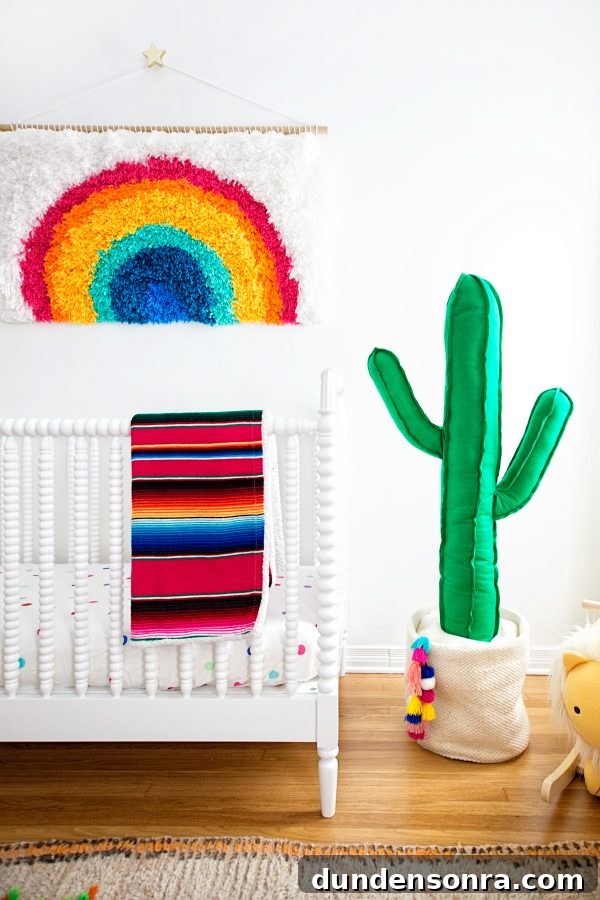
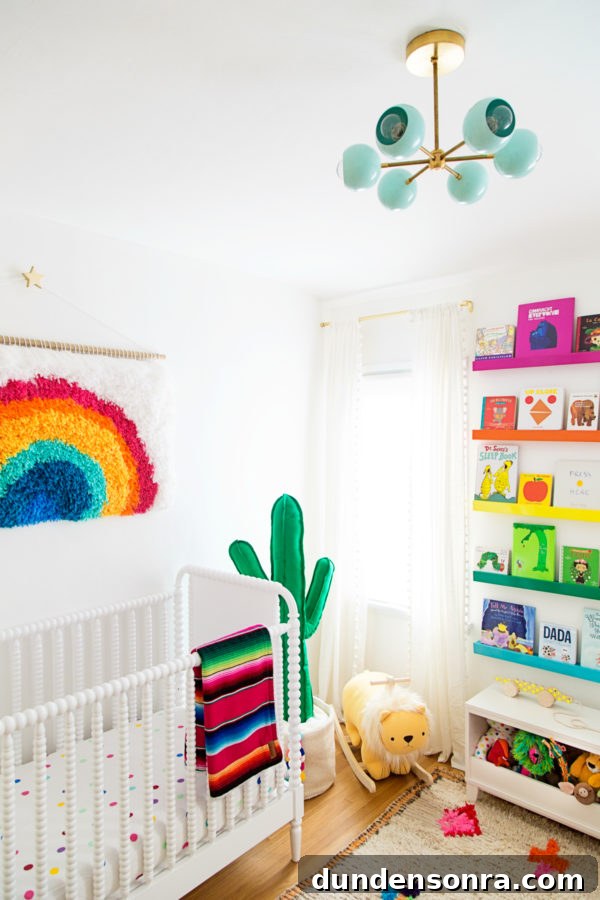
Photos by Jeff Mindell
Sources for other items pictured in the nursery are available from the original nursery reveal.
And that’s it! I already miss working on this project now that it’s finished and I’m thinking about my next latch hook idea. If you make one, please send a photo — I love seeing adaptations inspired by this piece.