
A few years ago we decided to stop using disposable paper towels in our home as a simple, practical step toward being more sustainable. This article explains the alternatives we used (including an unpaper towels review), how we organized our system, and how the switch became effortless for our family of three.
At first we hesitated because we used a lot of paper towels—one to two rolls a week—serving as napkins, quick cleanups, and sometimes replacing sponges. After researching options and trying a few approaches, my husband and I were surprised at how quickly paper towels became unnecessary. Today we primarily use cloth unpaper towels and have only used two rolls of disposable paper towels in the past two years. Here’s how we did it.
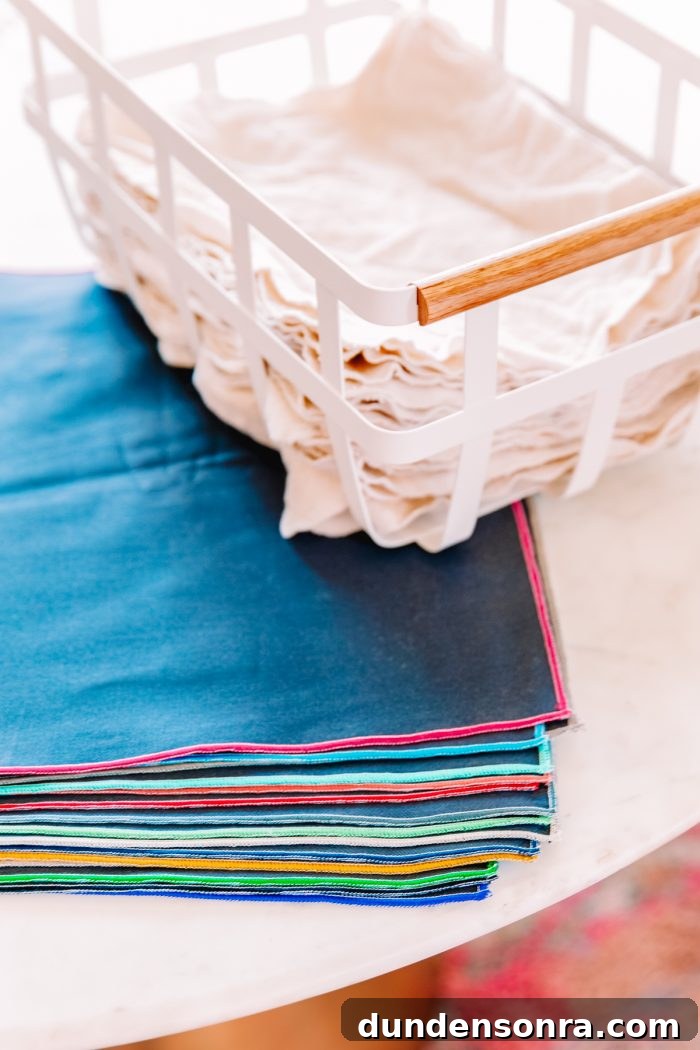
Table of contents
- Different Towels for Different Uses
- What are “Unpaper Towels”?
- Our Favorite Unpaper Towels
- Napkins: Get more bang for your buck!
- Storing Your Clean & Dirty Towels
- Washing the Dirty Unpaper Towels
- Make the process EASY to stick to!
- Do you still use regular paper towels for anything?
- Out Of Sight Out Of Mind
Different Towels for Different Uses
In our kitchen we used paper towels for three main tasks:
- Cleaning up spills and messes
- Napkins at mealtimes
- Drying hands or dishes
You can use one type of reusable towel for all tasks, but we chose different items for practical reasons: cost, what we already owned, and easy separation by use. Our setup:
- Unpaper towels for cleaning messes
- Cloth napkins for meals and packed lunches
- Dish towels for drying hands and dishes
Each type is stored separately to keep things simple and sanitary.
What are “Unpaper Towels”?
Unpaper towels are reusable absorbent cloths, often made from cotton flannel or bird’s-eye cotton, cut to a size similar to disposable paper towels. Some brands sell them in roll form, but we prefer to store ours unfolded. They work well for the same tasks paper towels once did—especially kitchen cleanups and after-meal wipe-downs.
Our Favorite Unpaper Towels
We tested several materials and found bird’s-eye cotton to be the best balance of absorbency, light weight, and durability after washing. Our favorite set is a bird’s-eye cotton option that comes in several colors, including organic unbleached with trimmed edges. Cotton flannel options are popular too; they are soft but can be pricier and feel different when wet.
Napkins: Get more bang for your buck!
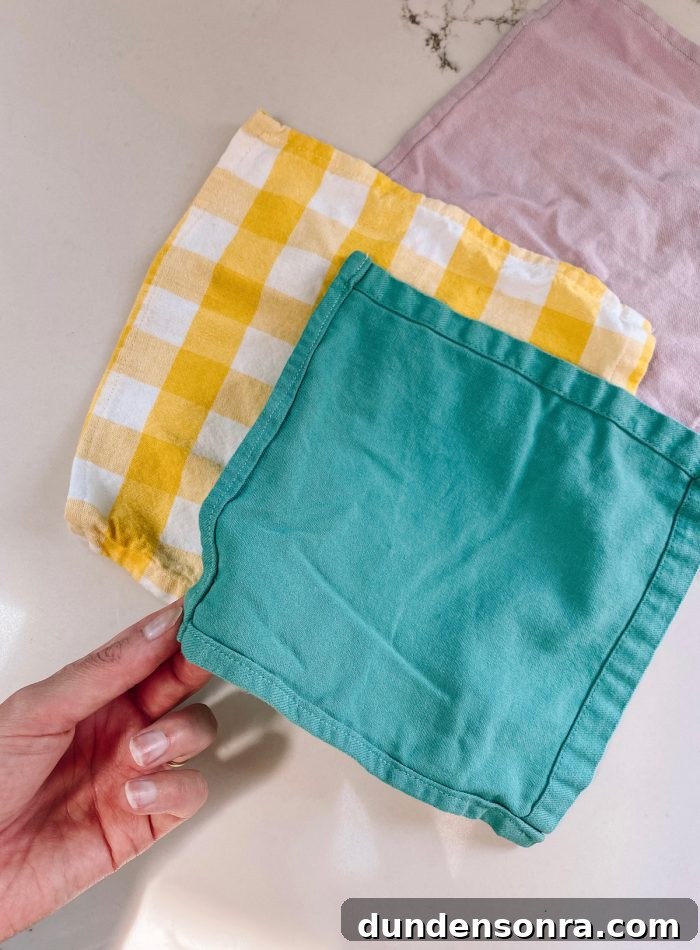
Chances are you already own cloth napkins reserved for special occasions. Put them into everyday use instead. If the napkins you have are too large for casual meals, cut them into quarters and hem the edges to create smaller, practical napkins. This effectively multiplies your supply without buying new items.
If sewing isn’t your thing, smaller cotton napkins are widely available in a range of sizes so you can pick what works best for daily use.

Storing Your Clean & Dirty Towels
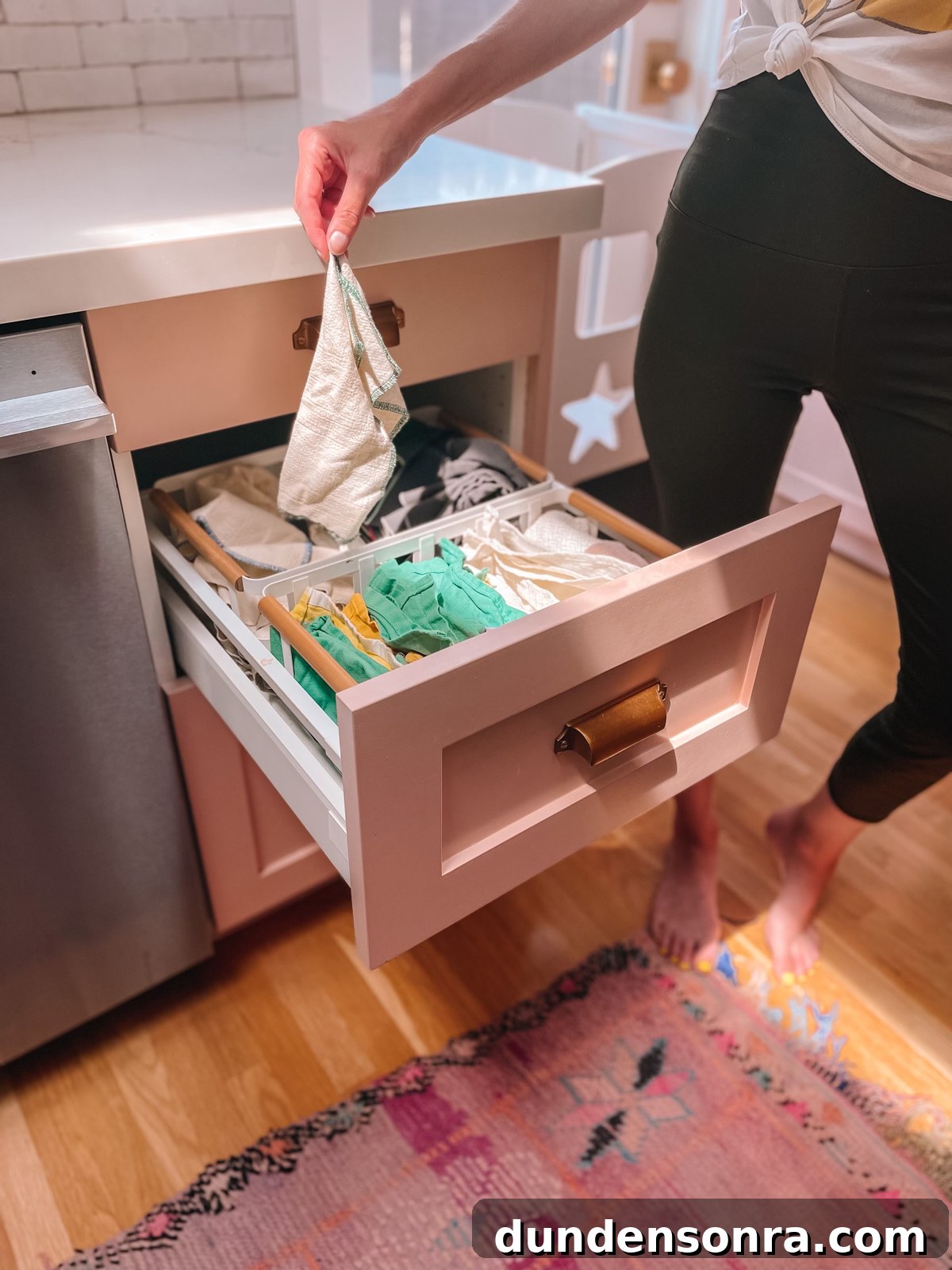
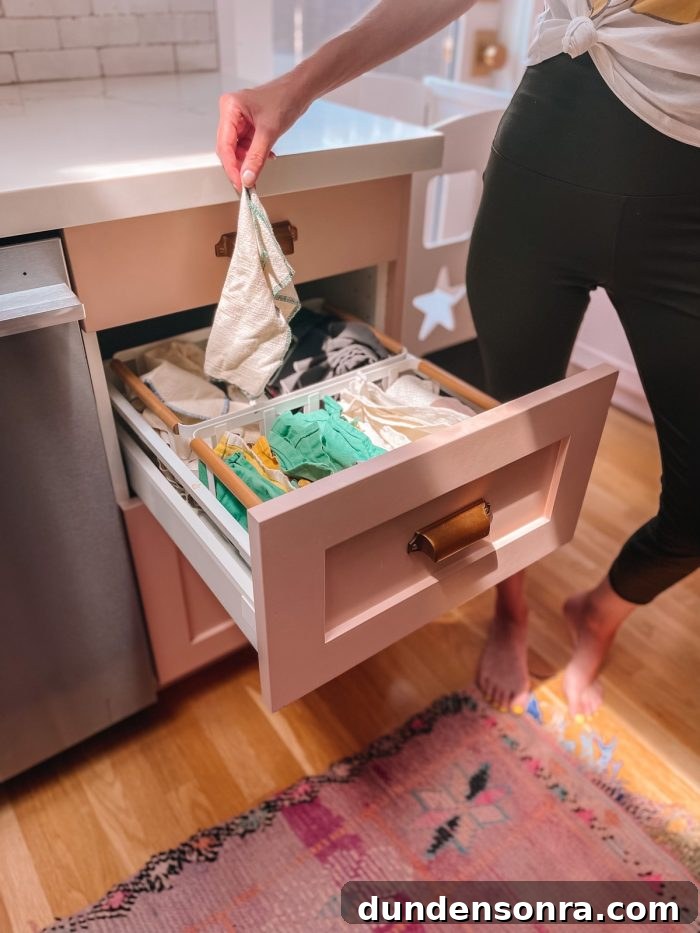
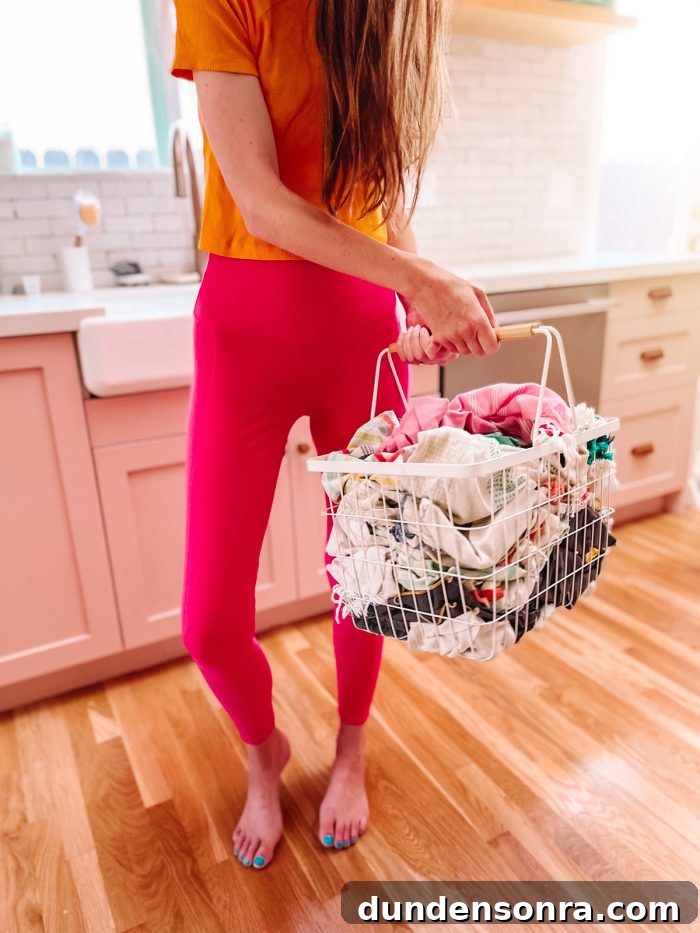
We use a few shallow kitchen drawers to keep clean and dirty towels separate, but a countertop system also works. One drawer holds clean towels and napkins in metal baskets organized by type. A second drawer contains a larger basket with handles for dirty towels. Using baskets keeps everything tidy and easy to access.
A handle on the dirty basket makes carrying the laundry to the washer quick and mess-free.
Washing the Dirty Unpaper Towels
After wiping a spill, we toss towels into the dirty basket. For items that might stain—like tomato sauce—or solid residues such as avocado, we rinse the towel under the sink first, then let it air-dry briefly before adding it to the dirty basket to avoid mildew.
We wash the towels about once or twice a week with regular detergent on a hot cycle to sanitize, then dry them in the dryer. Expect some shrinkage on the first wash, which is normal. Once clean and dry, towels go back into the clean baskets and are ready to use again.
Make the process EASY to stick to!
To make the new routine sustainable, keep it low-effort:
- Don’t fold everything—keep most towels loose in baskets so they’re fast to grab.
- Use color-coding if you have towels reserved for different tasks or rooms to help the whole family sort quickly.
- Choose a dirty basket with handles to make laundry trips simple.
Do you still use regular paper towels for anything?
Yes—kept for emergencies or rare situations where we prefer a disposable option, such as particularly messy pet incidents or when we don’t want to deal with immediate washing. Keeping one roll handy can ease the transition for households worried about going fully reusable, but it’s rarely needed if you adopt the system above.

Out Of Sight Out Of Mind
If removing paper towels completely feels overwhelming, start gradual. Keep disposables out of sight—store the roll in a high cabinet—so you won’t reach for them out of habit. With the unpaper towel system in place and easily accessible, grabbing a reusable towel becomes the new default.
We were surprised at how quickly the habit changed. Once we tried reusable towels for a few weeks, paper towels stopped being part of our routine. If you’re considering the switch, start small, organize for convenience, and give it a chance—you may find it’s easier than you expect.