
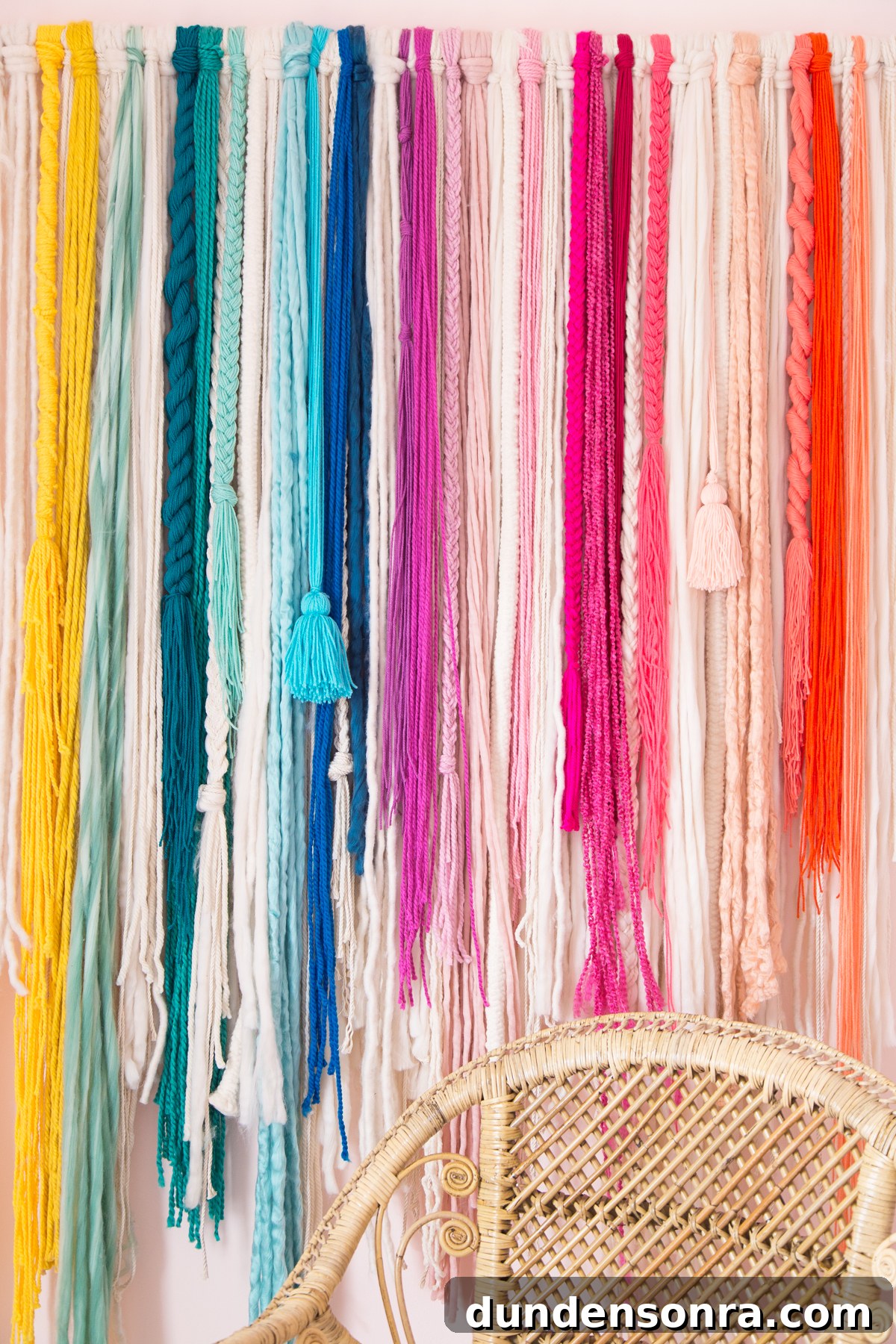
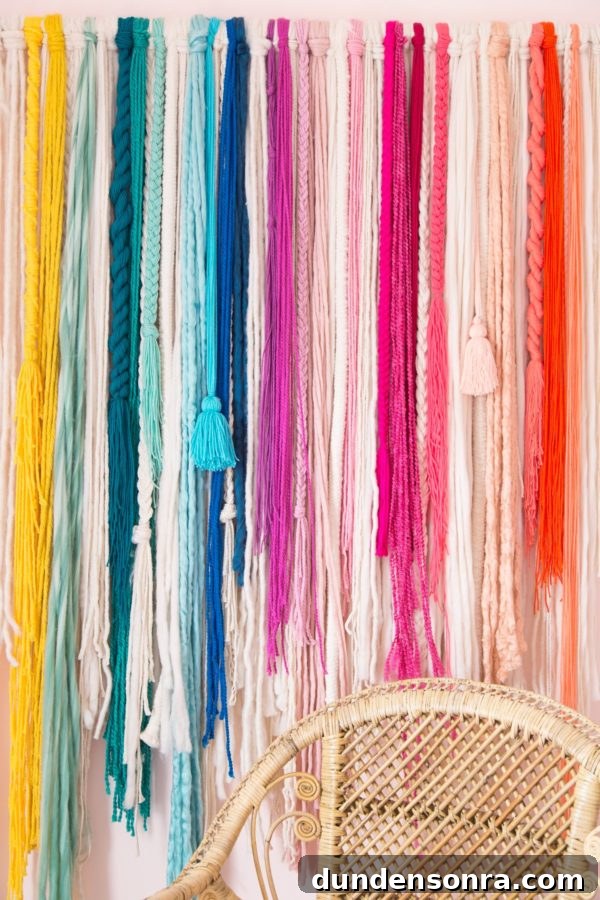
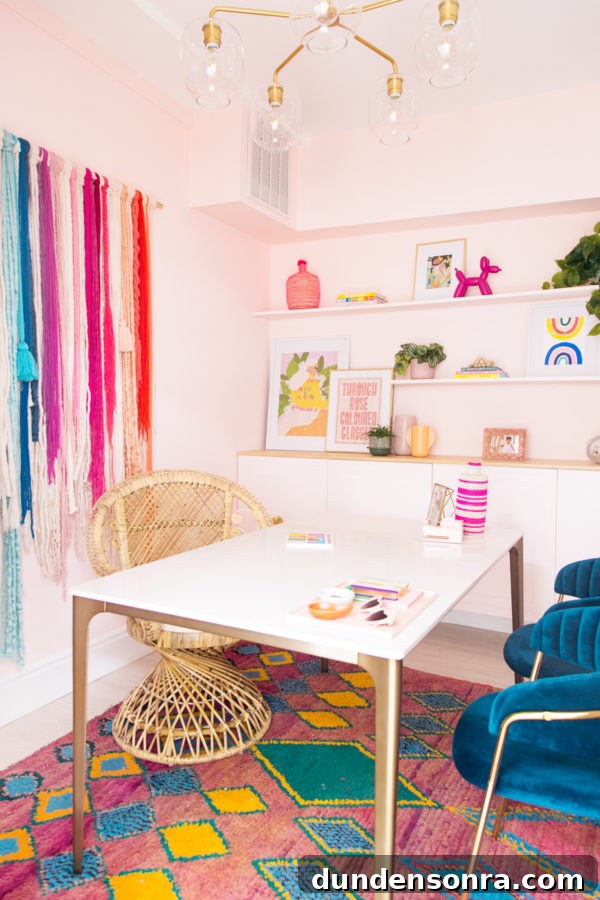
I wanted to get this tutorial posted quickly because so many of you asked for it — thank you for loving our no-weave rainbow wall hanging! Cyn and I experimented with several ideas for my office space, including murals and different wall hangings, before arriving at this design. I love it because it’s easy to make (no weaving, latch-hooking, or gluing), forgiving if you make mistakes, and full of texture and dimension.
Because the piece relies on texture, it requires a lot of yarn, so it isn’t an inexpensive weekend project. Our final hanging is roughly 4′ x 6′ (quite large), and we spent about $250–$300 on materials. Compared to store-bought weavings of the same size, this was still a more affordable option. If you make a smaller version it will cost much less. Also, craft stores often run great yarn sales, so buy on sale and return unused skeins when possible. Here’s how to make it.
DIY No-Weave Rainbow Wall Hanging
Total Time: 5–10 hours (depends on how detailed you get and the final size)
Supplies
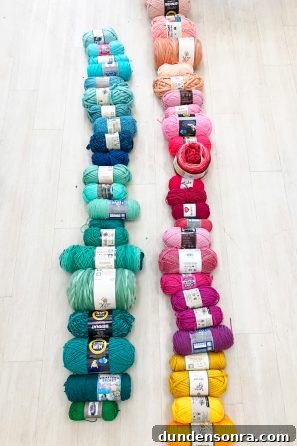
Yarn in a variety of textures and weights — to recreate this look, choose several textures within each color, including white. Quantities depend on your size; buy extra and return unused skeins if needed.
Rope (optional, for added texture)
Cotton piping (very chunky — adds great contrast; sold by the yard at fabric stores)
Wooden dowel or rod
Directions
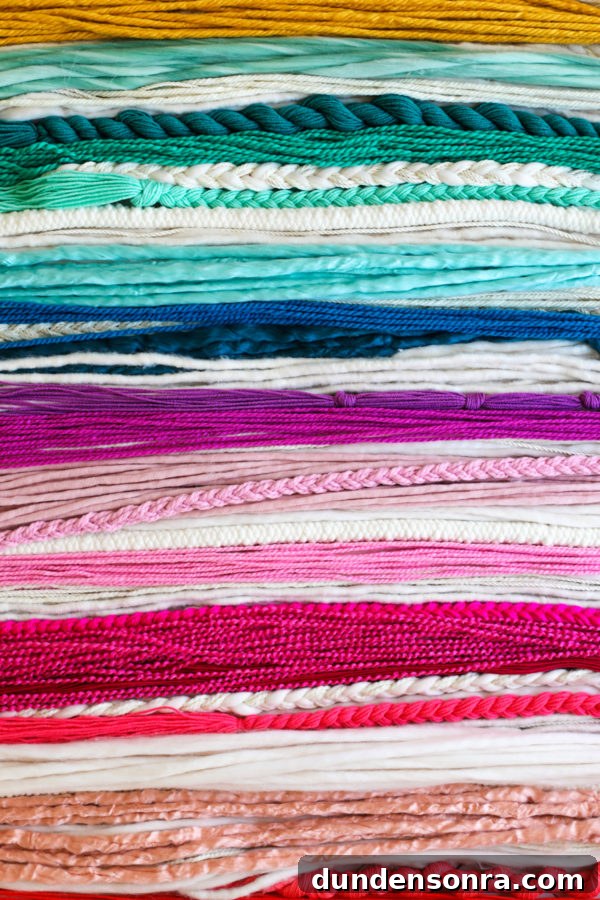
1. Arrange all your yarn in the color order you want. Vary textures within each color band to create richness and depth.
2. Hang your dowel (a clothing rack or door frame works) so you can attach yarn easily as you work.
3. Use a variety of styles across the piece, spacing different textures so identical sections aren’t next to each other. We used white as a neutral base, adding white sections between colors.
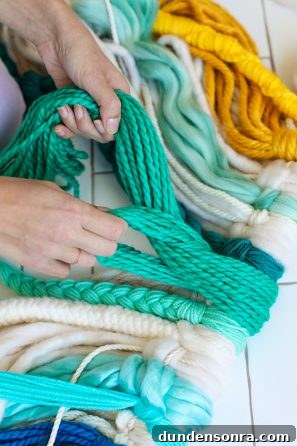
4. To attach most strands: find the middle of a group of strands and fold them in half. Pull the loop from behind over the front of the dowel, then pull the loose ends through the loop to secure (a simple lark’s head knot). Continue across the dowel.
5. Techniques we used:
- Mixed texture strands: Cut 4–8 long strands of different yarns. Each strand should be twice the desired final length.
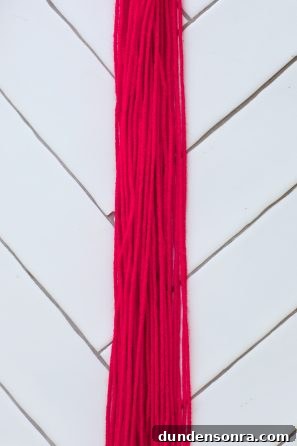
- Single texture strands: Cut 6–12 strands of the same yarn. Each strand should be twice the desired final length.
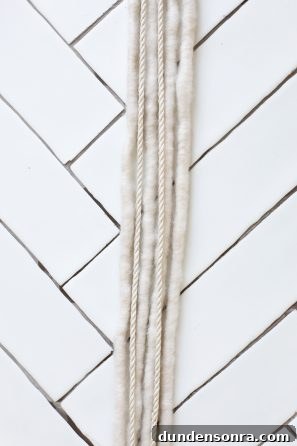
- Cotton piping: This is thicker than yarn and sold by the yard. Remove the encasing thread at the top, split the fibers if desired, and tie sections around the dowel.
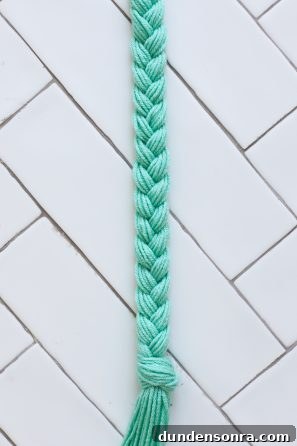
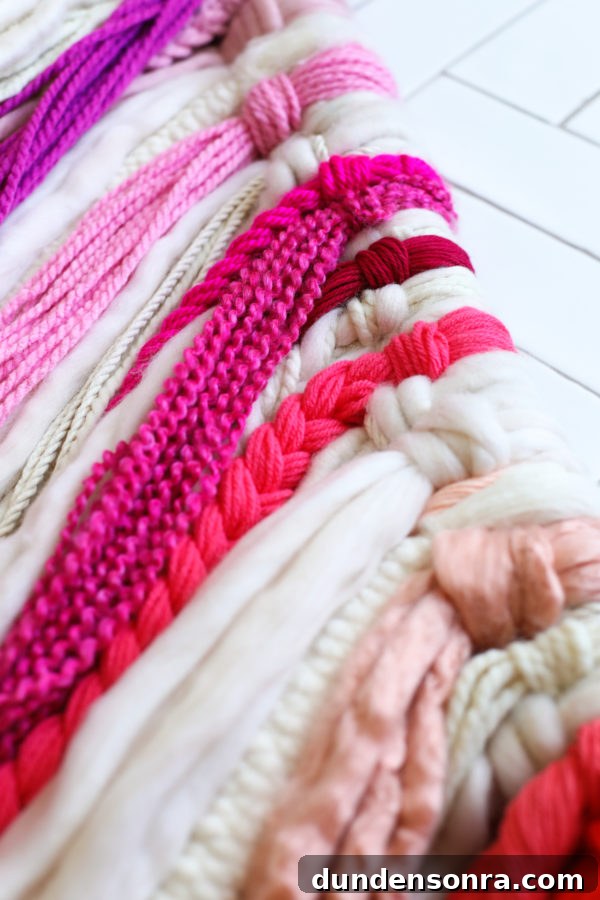
- Single texture braid: Cut 10–12 strands of one yarn at 1.5× the final length. Fold around the dowel, separate into three groups, braid, and finish with a knot.
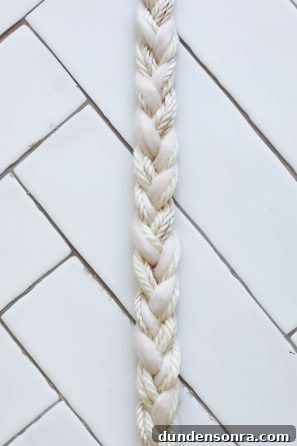
- Mixed texture braid: Same as above, but swap 2–4 strands for a contrasting yarn or rope, and distribute those strands through the three braid sections.
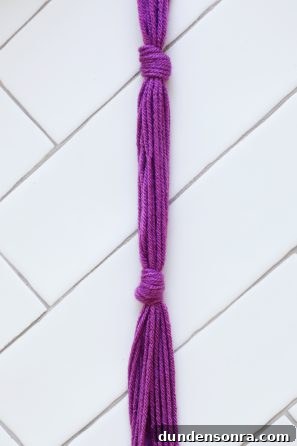
- Knots: Use groups of single texture strands and tie overhand knots every 4–6 inches for a knotted column.
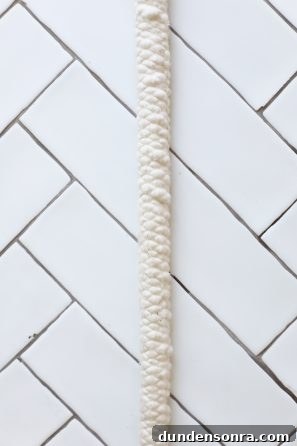
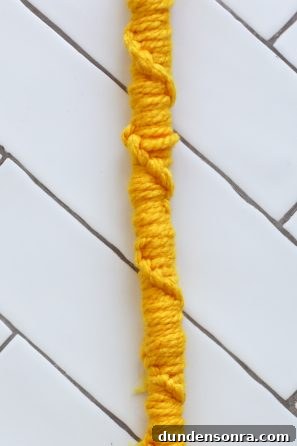
- Spiral wrap: Wrap and spiral-wrap yarn or rope around a core strand for a coiled look — a short video tutorial can help if you haven’t done this before.
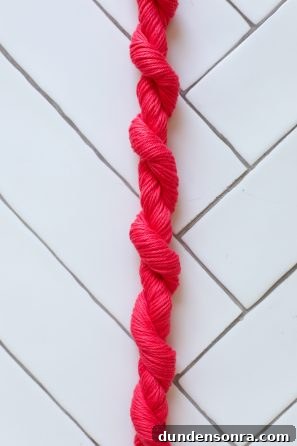
- Twist: This uses a lot of yarn — about a full skein. Cut many strands about 2.5× the final length, fold them over the dowel, divide into two sections, twist each section tight, then twist the two sections around each other and knot the end.
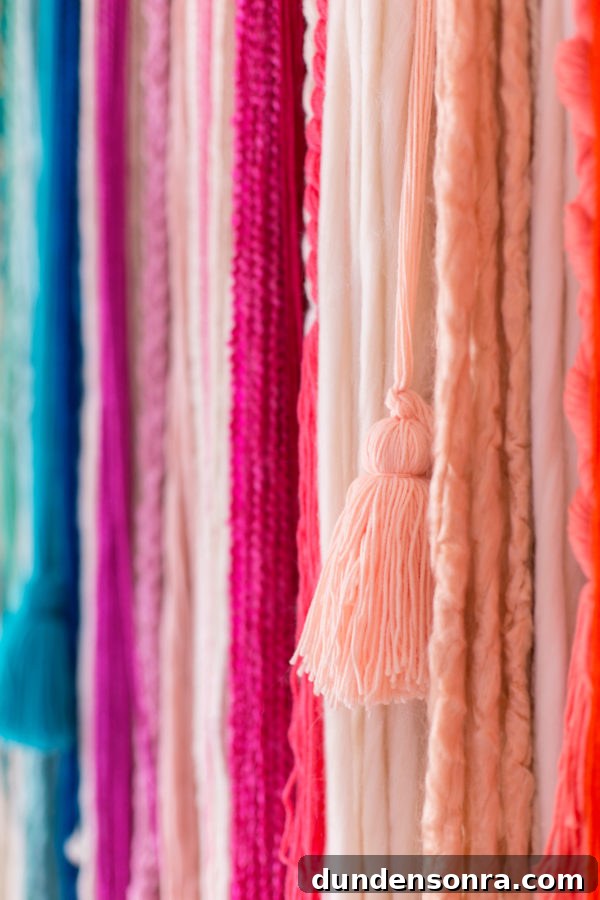
- Tassels: Make tassels from yarn and tie them to loops of single texture strands for added detail.
6. Step back and review your piece. Add or adjust sections as needed. Trim the bottom if you prefer neat lines, or keep uneven lengths for a more organic look — I loved the uneven finish.
7. Hanging: how you mount the piece depends on your wall type and the hanging’s weight. For our large piece we used three large nails spaced along the dowel.
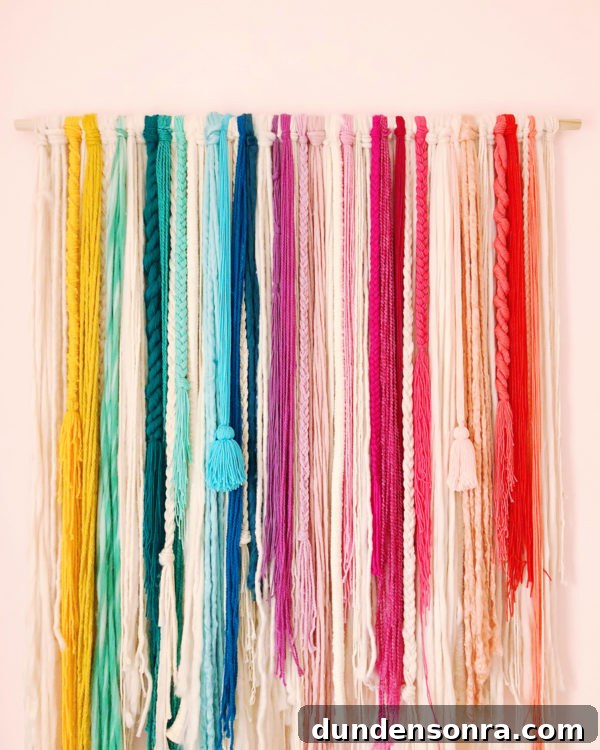
Photos by Jeff Mindell
The main takeaway is there’s no single perfect formula. The more you vary textures, widths, and techniques, the more dynamic and beautiful the finished hanging will look. Embrace imperfection — that’s what makes this piece so special. I can’t wait to see your versions!