

This post is sponsored by BEHR® and PopSugar. All content and opinions are my own.

Ready for a wall refresh? Our studio is usually a crisp white box — perfect for shooting — but sometimes you want to try something bold. For this project we transformed one wall with a colorful ombré finish. It was a fun experiment, required only a few extra brushes, and the result brightened the whole room.
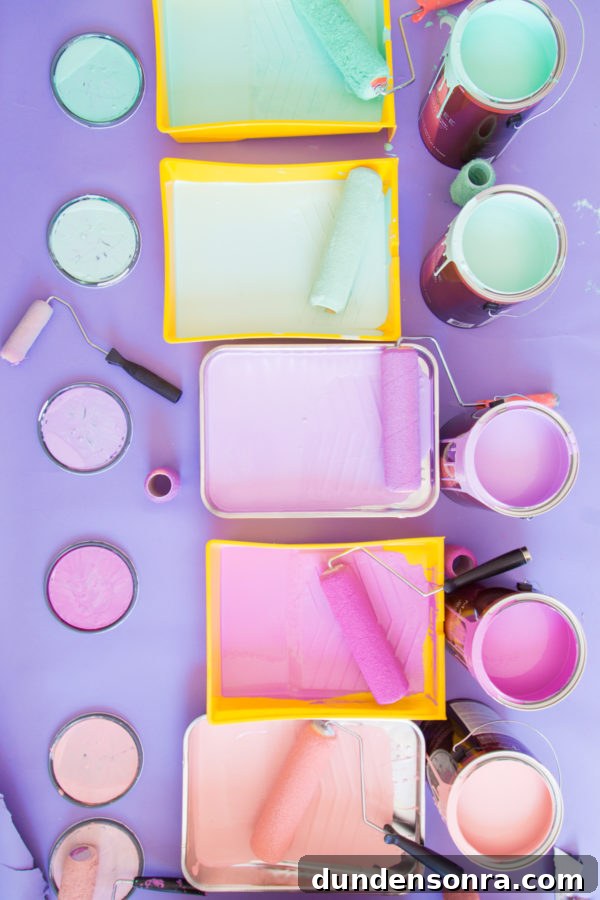
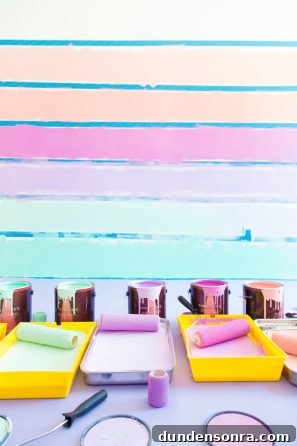
For this makeover we used BEHR® MARQUEE® Interior Paint and Primer. At first I planned to use two colors, but I kept finding shades I loved, so we blended six in the end. The MARQUEE formula gave us excellent coverage and stain resistance, which is important in a busy studio where things get moved around and bumped into walls. It also meant we could work quickly — in many areas the paint covered beautifully in one coat — which is ideal when you want a big change without a long project.

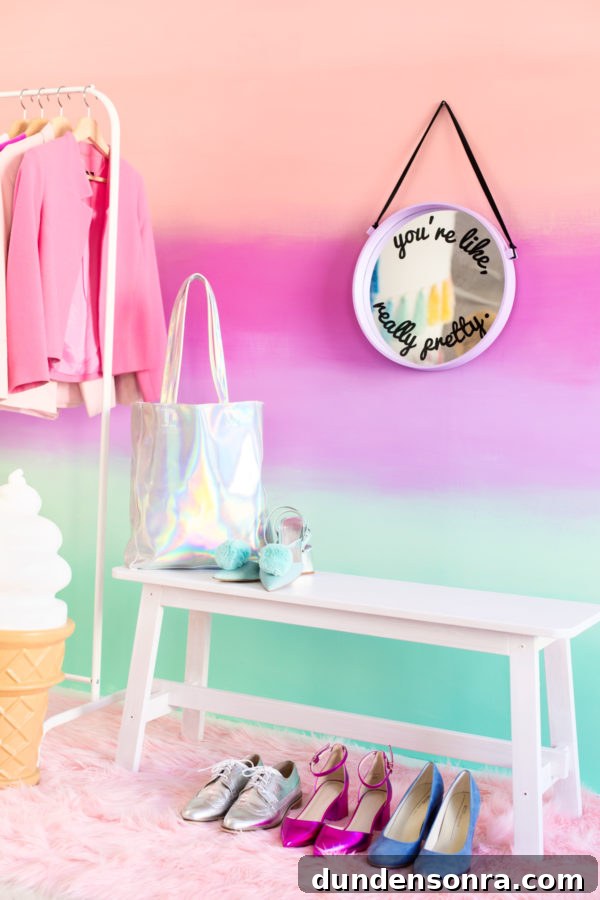
The colors are the star here. We chose shades that flow into each other for a cohesive gradient. Because the project involves blending adjacent colors, you don’t want hard tape lines ending up as obvious seams — the blending process is what makes the ombré look seamless and soft. Below are the steps and tips we followed to make it easy to recreate.
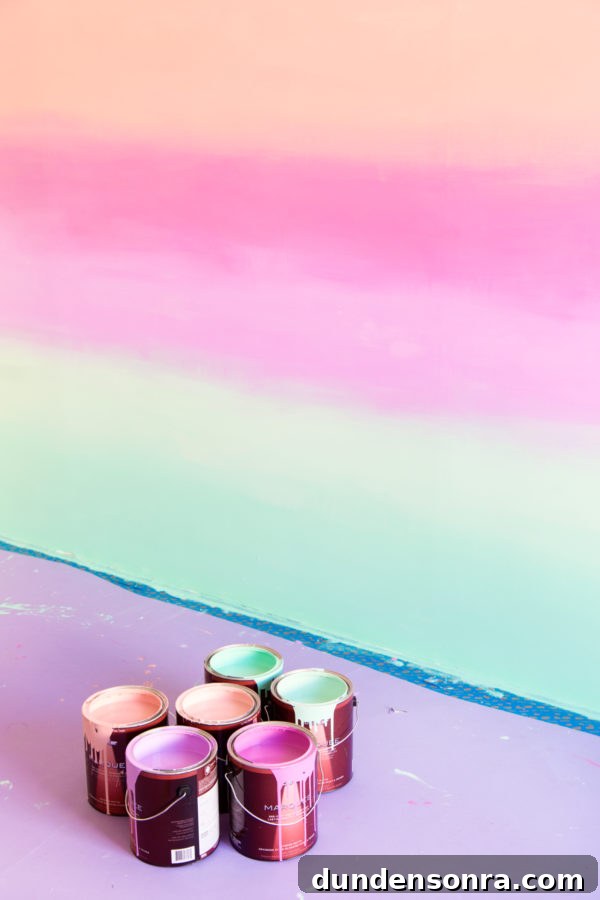
DIY Colorful Ombre Wall
Total Time: Depends on wall size and drying time
Supplies
BEHR Marquee® Interior Paint in 3–6 colors (we used six shades in a specific order for a smooth transition).
Measuring tape
Painter’s tape
Paint rollers (either one per color or plan to clean between colors)
Paint trays
At least three large brushes for blending
A helper — blending is much easier with two people
Directions
1. Choose your colors and count how many you want to use. Measure the wall height and divide by the number of colors to determine each color band’s height.
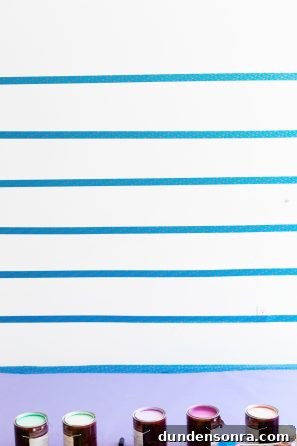
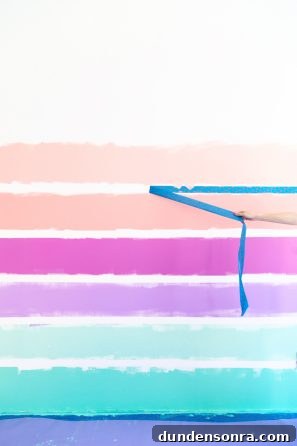
2. Mark the dividing lines lightly with pencil and apply painter’s tape to outline each band. You don’t want to paint right up to the tape — leave a white gap between bands so you have space to blend. Instead of continuous strips, you can place short pieces of tape at intervals along each dividing line to save tape.
3. Paint each band in its respective color. The tape is only a guide — do not paint flush to the tape. The gaps will remain white and act as blending zones.
4. Remove the painter’s tape once the paint is dry enough to avoid tearing.
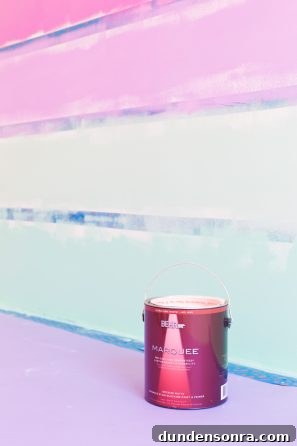
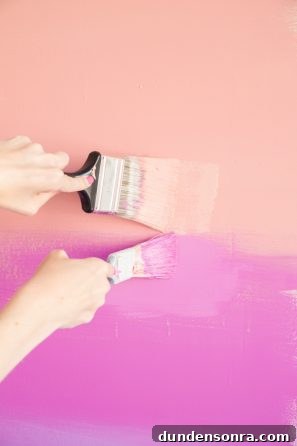
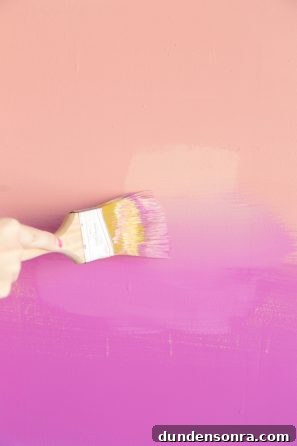
5. Time to blend. Work in small sections along each seam. One person paints a few strokes of the first color into the white gap, covering roughly half of it. The second person paints the adjacent color into the other half of the gap so the two colors meet.
6. Using a third brush, immediately blend the wet edges together with long, sweeping strokes. Keep working back and forth until the transition looks smooth. If a section resists blending, add a bit more paint and blend quickly while wet. For a softer fade, extend the width of the blending area.
7. Repeat this process across each color junction. Step back occasionally to check the overall balance and adjust as needed. Touch-ups are simple: add small amounts of color and reblend. Remember that wet paint looks different from dry paint; wait for paint to dry before making further changes if something appears uneven.
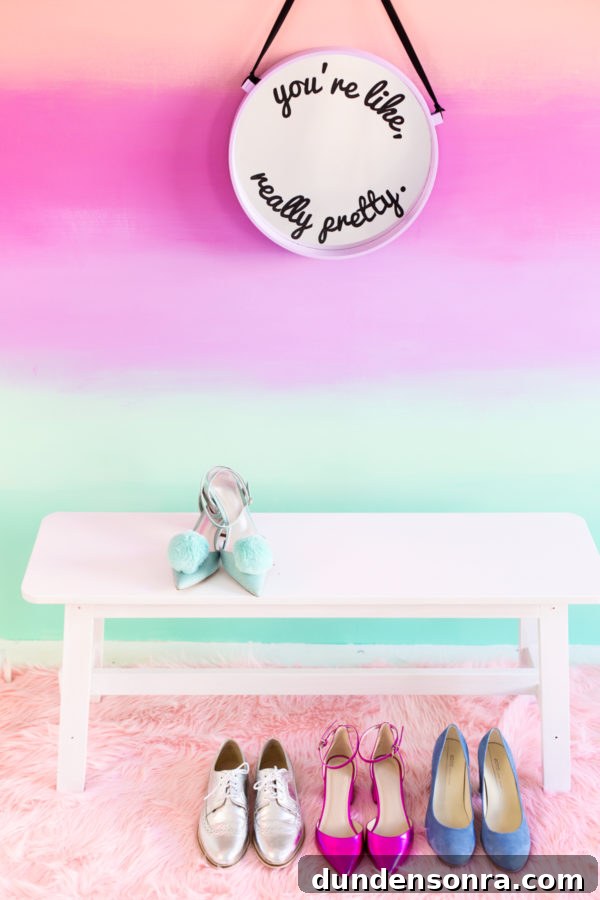
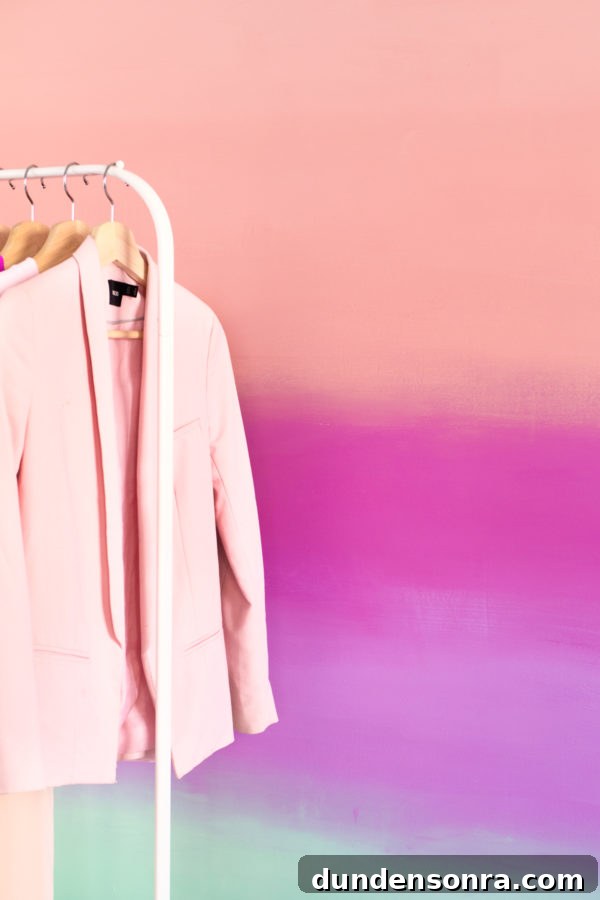

If you love bright color, you could expand this idea into a full ombré rainbow or stick to a narrower palette for a more subtle effect. This technique works well for accent walls in studios, playrooms, nurseries, or any space that could use an energetic focal point. Would you try an ombré wall in your home? Where would you paint it?