
How to Make Giant Crepe Paper Roses for Decorations

Happy Monday! Last week I taught a workshop on giant crepe paper roses at a private Martha Stewart event and fell completely in love with them. I’ll share more about the class soon, but for now here’s a clear, practical tutorial on how I make these oversized blooms. I’m not the first to make them, but I wanted to collect the tips and tricks I learned so beginners can avoid common frustrations. This guide is detailed, but worth the read — the first rose takes about an hour and they’re absolutely worth the time. They make gorgeous gifts for Mother’s Day, birthdays, bridal showers, or just to brighten your home. Order your crepe paper and get started!

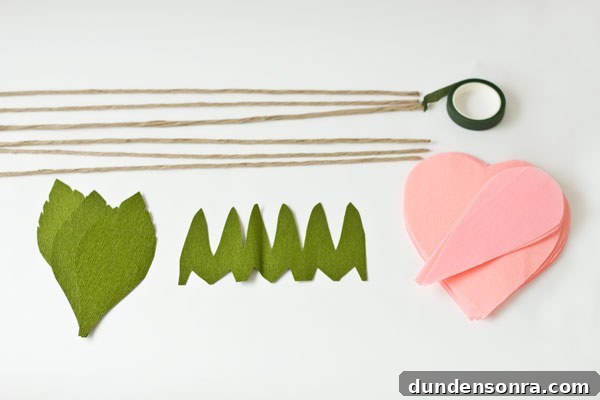
Supplies I used: doublette crepe paper for petals in Light Pink, Light Apricot, and Bubblegum (I substituted similar shades when some were sold out), and Pale Olive and Deep Olive for leaves. Use paper-wrapped stem wires (six per flower), floral tape, craft glue, and a round pencil for shaping. I used templates enlarged to 150% so pieces were sizeable but manageable; measurements below assume that 150% enlargement.
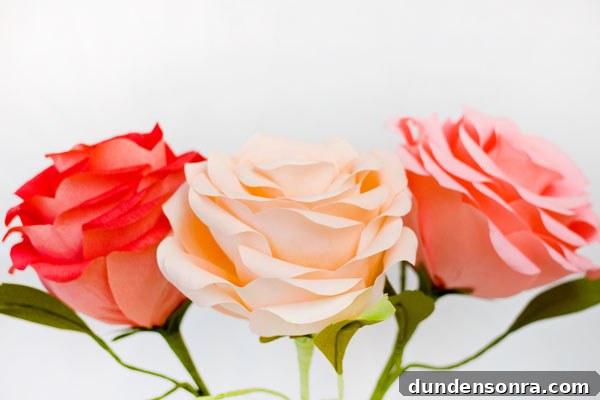
Color note: in photos colors may shift. The left rose in the group photo is light pink (a salmon/coral in real life), the center is light apricot, and the right is bubblegum. If you need a true red, choose deeper reds from your supplier.
Templates: Download and enlarge the template to the size you prefer. I recommend 150% for a large-but-manageable rose. You’ll also need paper-wrapped stem wires, floral tape, craft glue, and a round pencil for curling petals.
Cutting Out Your Crepe Paper
You will need for one rose:
5 small petals
15 heart-shaped petals
3 leaves
1 calyx
2 strips of crepe paper 1″ wide (cut one sheet’s bottom into strips)
Cut multiple layers at once to save time. Fold crepe repeatedly, attach the template with a staple, and cut through the stack. From each full crepe sheet I could get approximately 8 heart petals, 16 small petals, 17 leaves, 12 calyx pieces, and ten 1″ strips. You can often cut a few extra small petals from leftovers.
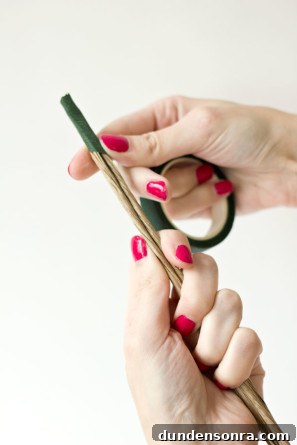
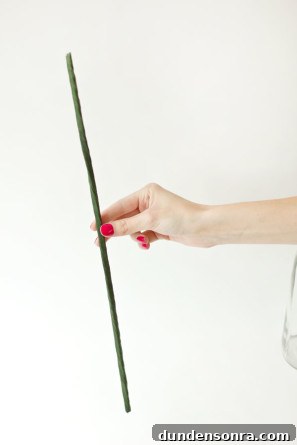
After cutting, iron petals gently if needed to remove creases. Make the stem by twisting three stem wires together and wrapping them firmly with floral tape. Stretch the floral tape as you wrap to activate the adhesive; keep a damp towel nearby because the tape can get sticky on your fingers.
Shaping petals: For small petals, start in the center and pull the crepe outward and upward to create a cupped shape in the middle. Stretch the crepe confidently—these papers are made to be pulled. Curl the top edge by wrapping it around a pencil one to one-and-a-half times, stretching slightly while curling to avoid wrinkles.
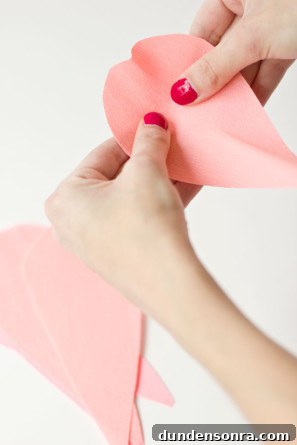
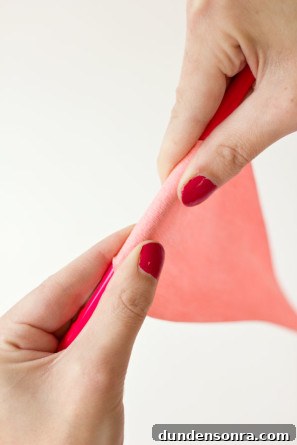
Repeat for the larger heart-shaped petals: stretch the center only (not the edges or the bottom) and curl the top edges as you did for the small petals. Aim for consistent shaping, but small variations add character.
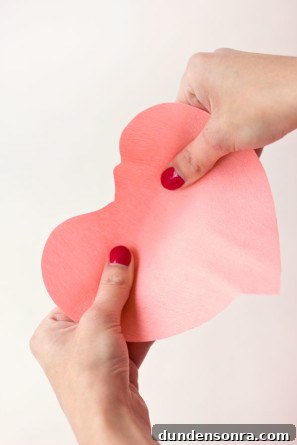
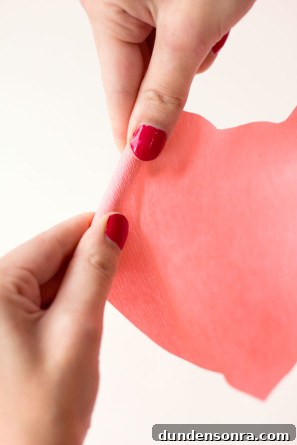
It’s a bit tedious but keeping petal shapes similar will make assembly easier and yield a more balanced flower.
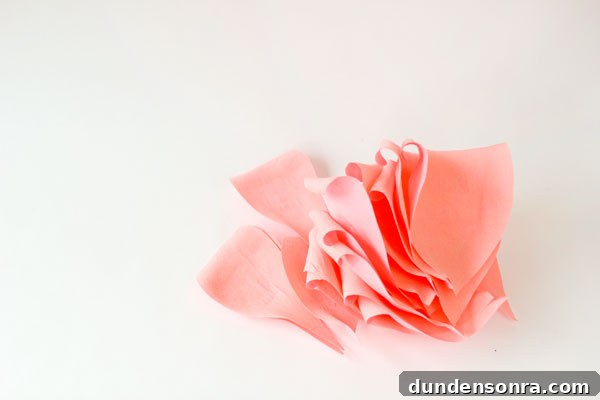
Building the bud: Use the five small petals to create the central bud. Wrap one petal tightly around the stem, then continue wrapping the others, rotating the stem as you go. It’s fine if the bases crease or fold slightly.
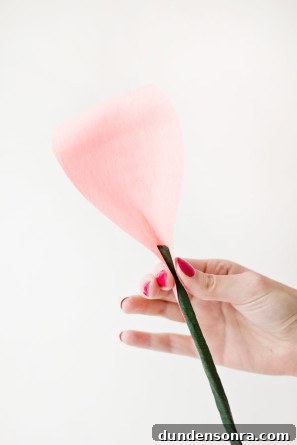
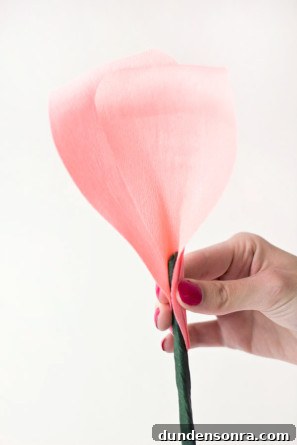
Secure the bud by wrapping floral tape down to the green stem. Wrap all the way down so the petals are firmly held in place.
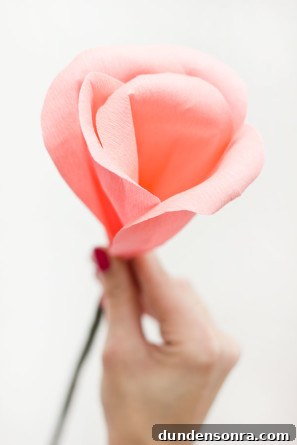
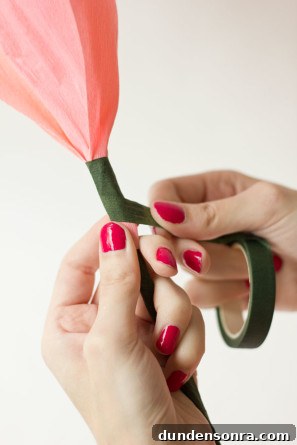
Adding the heart petals: Attach the 15 heart-shaped petals next. I usually add two at a time and tape after a few petals; toward the end I add them one by one so I can place them strategically. Rotate the rose as you add petals so they distribute evenly around the bloom.


As you work, slip your fingers inside each petal, cupping and shaping it so it sits close to the previous petal. After adding petals, always wrap floral tape down onto the stem to lock each group in place. It’s okay if the petal bases wrinkle; the outer calyx will hide them.
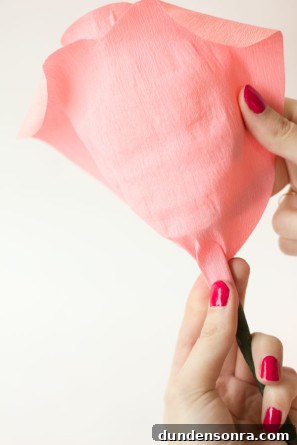
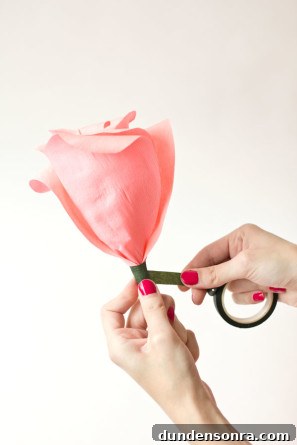
When you’re adding the final petals, view the flower from above to place them where the bloom needs balance and fullness.

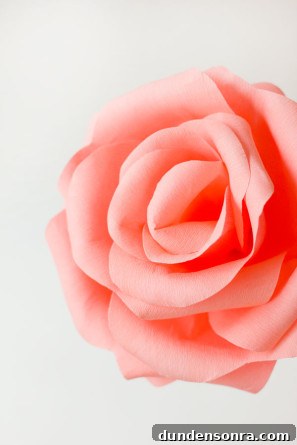
Attach the calyx: Flip the rose upside down and wrap the calyx piece around the base. This step can feel awkward; focus on smoothing the large outer leaf sections so they sit flat against the flower. The top of the calyx may not lie perfectly smooth against the stem; that’s normal. Wrap floral tape over the calyx and down the stem to secure it.
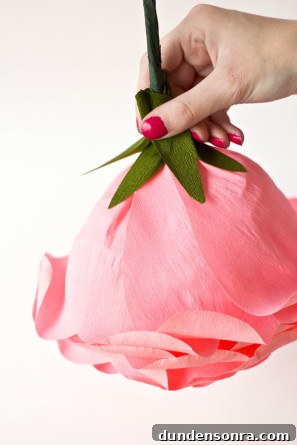
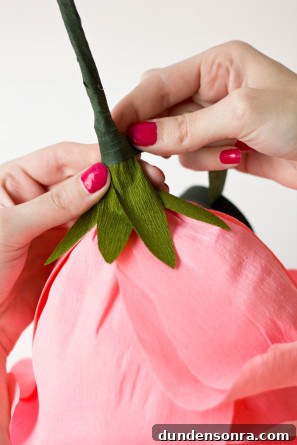
Leaves: Put glue down the center of each leaf and place a single stem wire in the glue. Fold the leaf over the wire, pinch along the stem to bond the two sides, and let dry. To open the leaf once dry, hold the back of the leaf and bend the top backward to give it a natural curve. Add a dot of glue at the leaf base to begin wrapping the stem with a 1″ crepe strip.
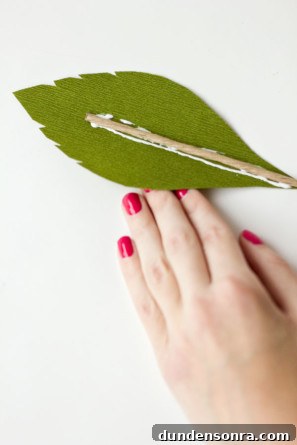
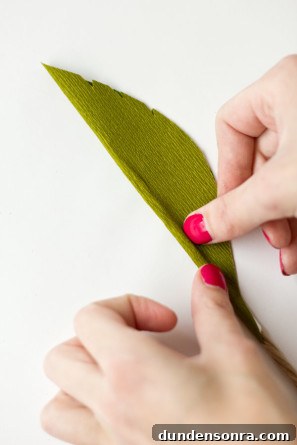
Wrap the leaf stem tightly with crepe strip in a diagonal motion, stretching slightly as you wrap. Use only a small dot of glue at the start and end — the stretched crepe adheres well once wrapped. Secure the end with glue. Repeat for the other two leaves.
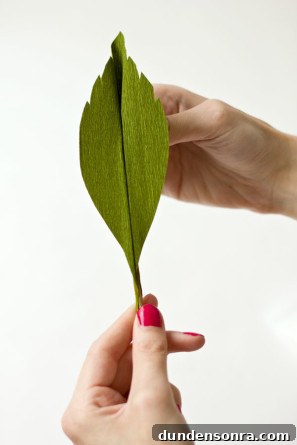
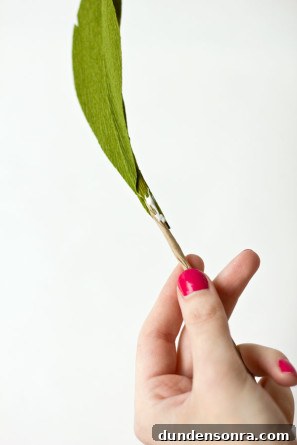
Attach leaves to the flower: Temporarily tape the leaves around the stem where you want them, wrapping just a few turns of floral tape below the future bend point. Bend the leaves outward to give space for wrapping. Put a dot of glue on the calyx and begin wrapping the stem with your second crepe strip, taking care to wrap over the leaf stems where they meet the main stem. Continue wrapping down to the bottom and secure with glue.
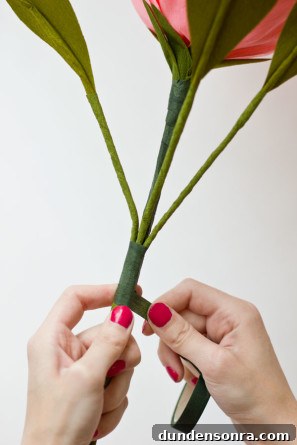

You can position leaves higher or lower on the stem depending on the look you want; wrapping the crepe over the stems disguises any unevenness at the bottom of the wires. Once wrapped, shape the leaves as you like and you’re finished.
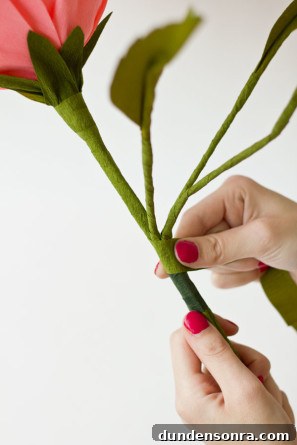
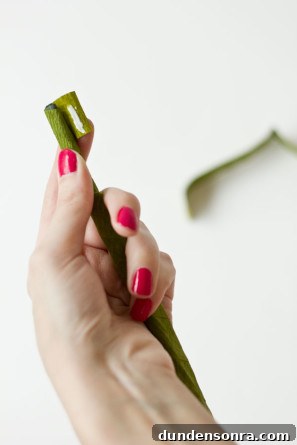
Final step: bend the leaves into the shape you want and admire your finished rose. These feel special and unique — each one has personality and makes a wonderful handmade gift or decor piece.
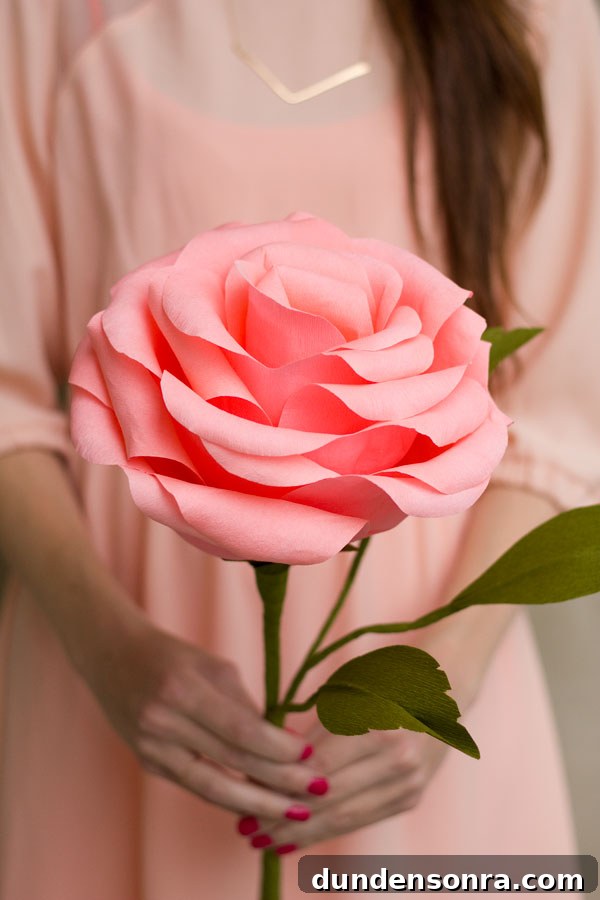
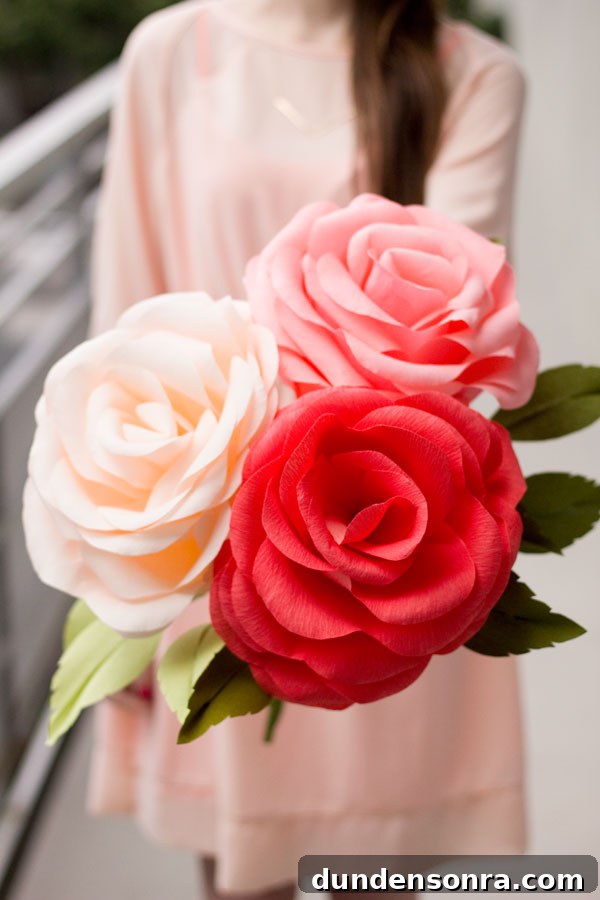
Top Tips for Making Paper Roses
(My experience)
1. Shape only the center of each petal — leave edges and the bottom points untouched.
2. Stretch the floral tape as you wrap to activate the adhesive.
3. Always wrap the tape down onto the stem so petals stay locked and won’t spin.
4. Don’t worry about wrinkles and folds at the base — they’re usually hidden by the calyx.
5. Re-shape petals as you work by slipping your fingers inside and cupping them close to the bloom for a snug finish.
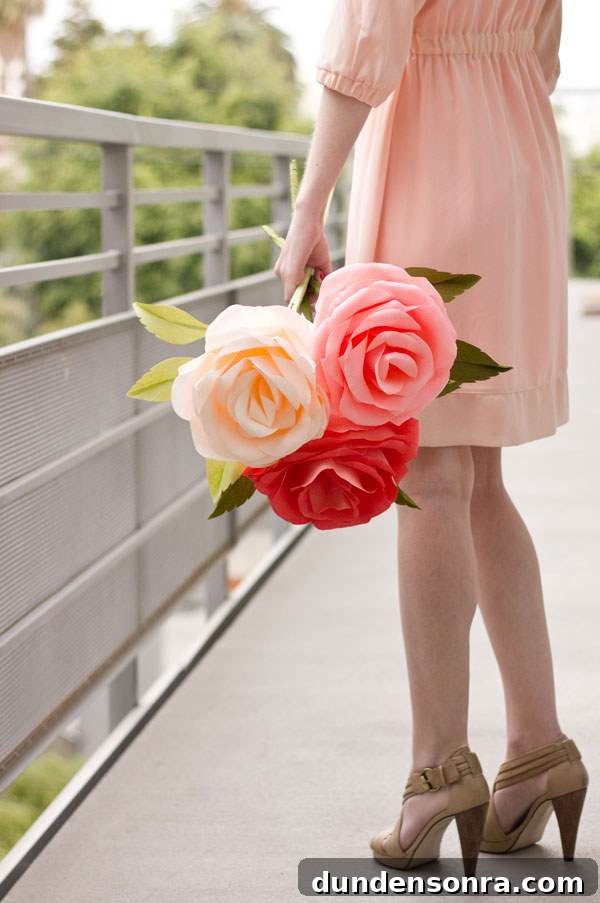
All photos by Studio DIY
Thanks for sticking with this long post — I hope these instructions and tips help you avoid the struggles I had when learning. There are several video tutorials available elsewhere if you prefer moving images; my method has small differences from other tutorials, so feel free to adapt these steps to your preferred technique. Most of all, have fun — every rose will be unique and beautiful!