
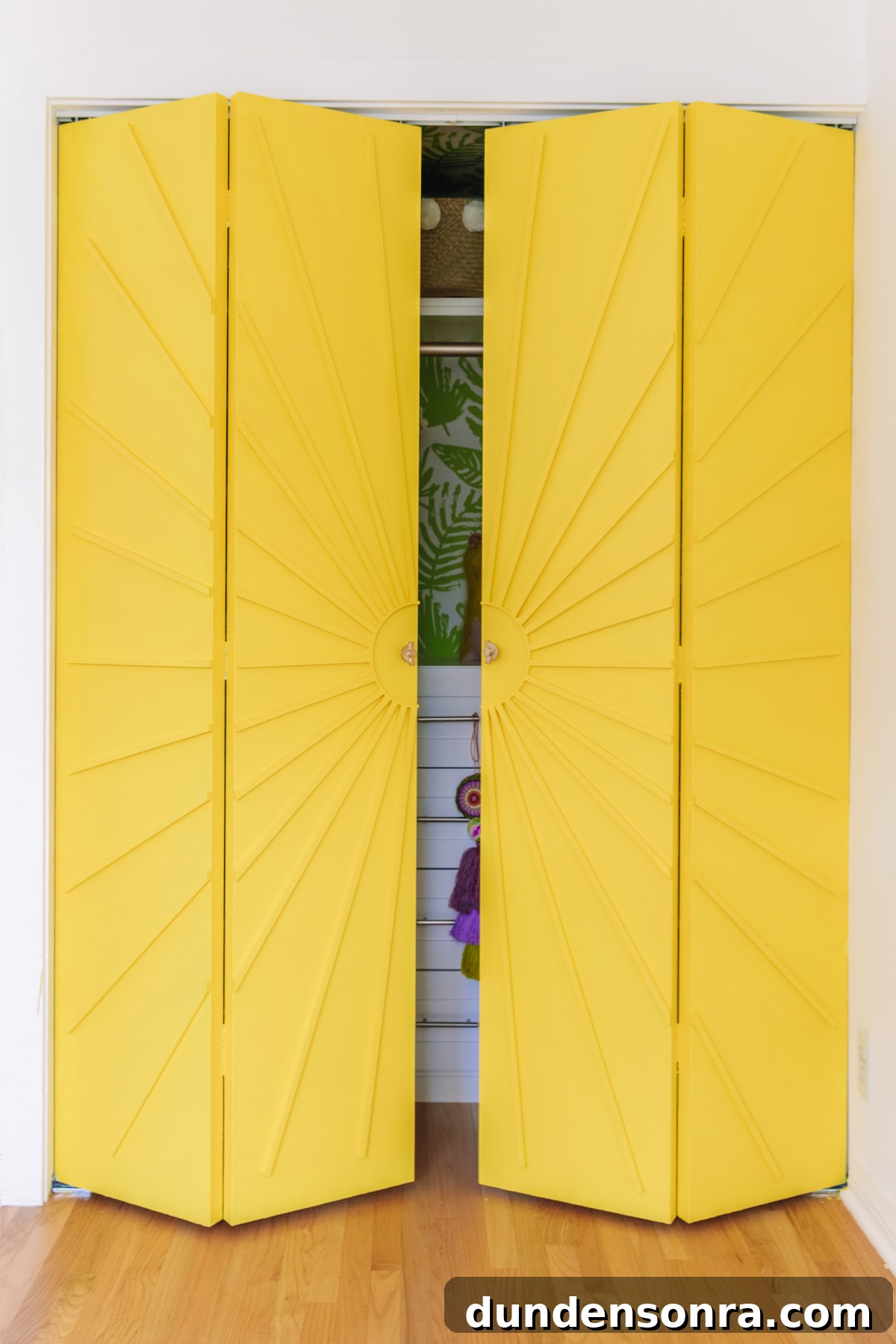
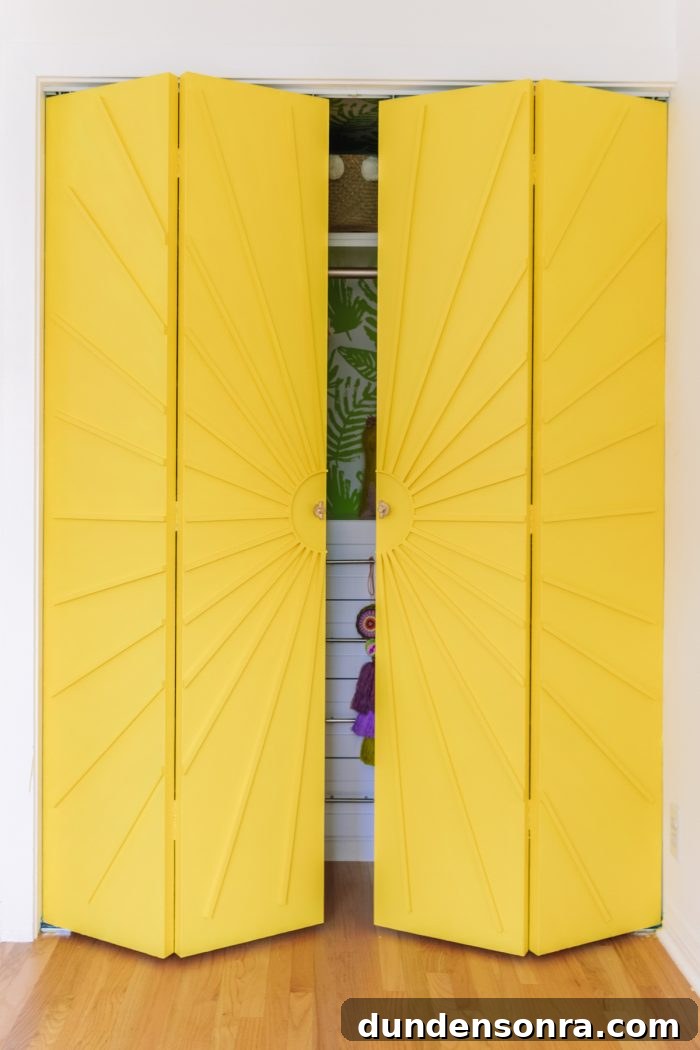
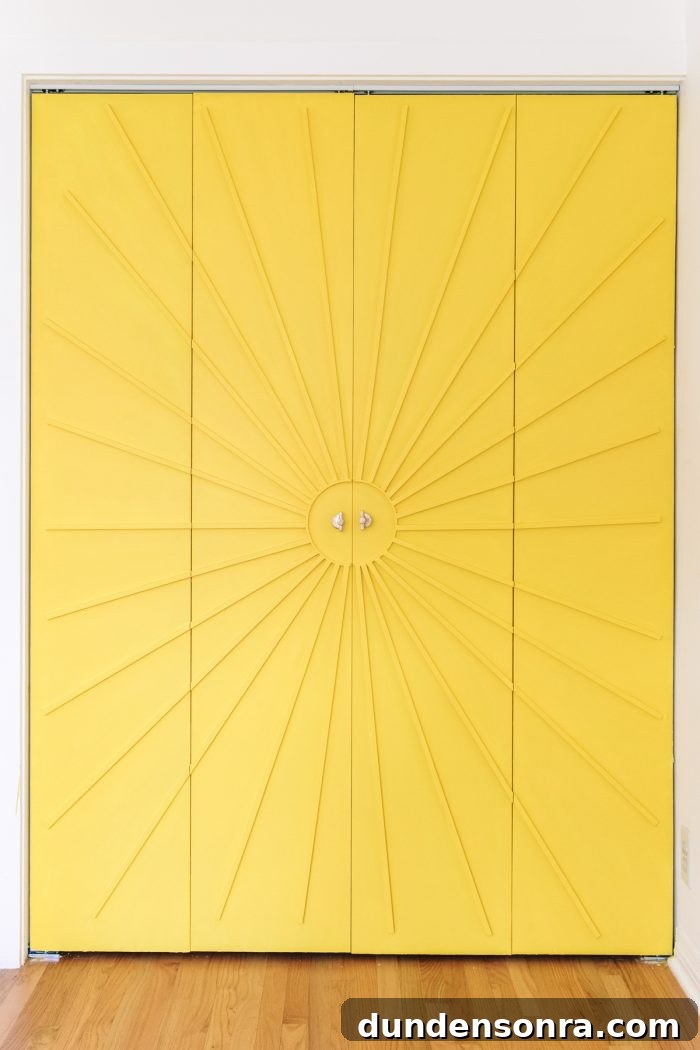
Bifold closet doors don’t have to be boring. With a few simple supplies and careful measuring you can transform plain bi-fold doors into a striking sunburst focal point.
In Los Angeles I always admired homes with sunburst screen doors, and when we tackled the nursery closet remodel I finally had the perfect opportunity to recreate that look on bi-fold doors.
The original closet had mirrored sliding doors. Our handyman swapped the mirrors for plain primed bi-fold doors, which provided a flat canvas for the sunburst design.
This project uses basic materials — wooden dowels and an embroidery hoop — and mainly requires accurate measuring and angled cuts so the rays align from panel to panel. The sunburst pattern is forgiving, though, so small shifts in alignment aren’t very noticeable.
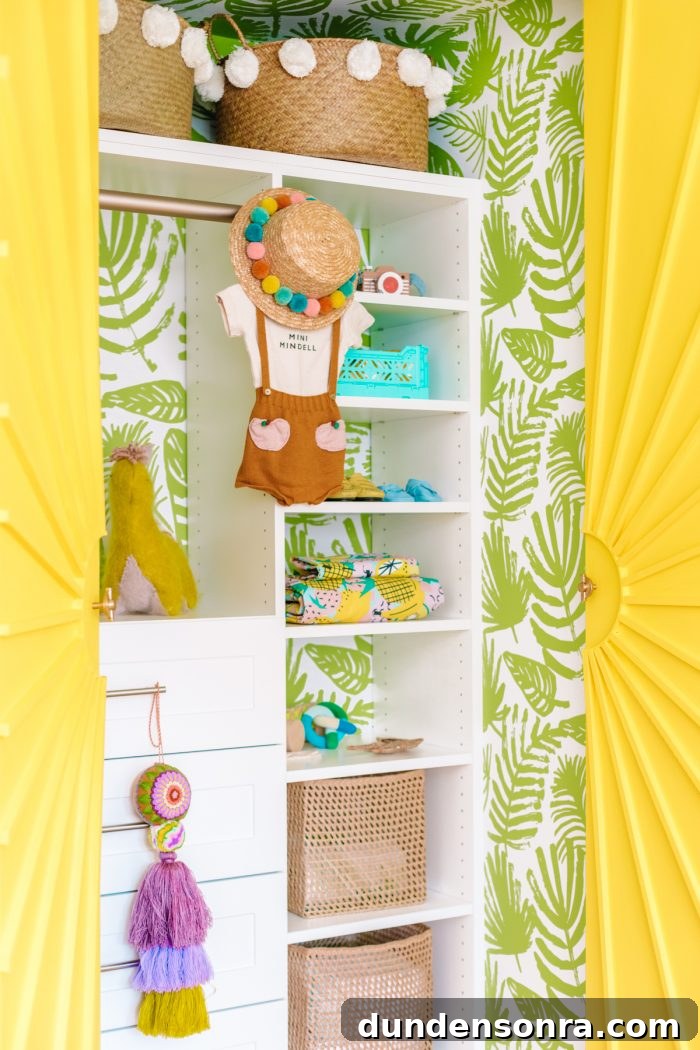
From Sliding Mirrored Doors to Bi-Fold Doors
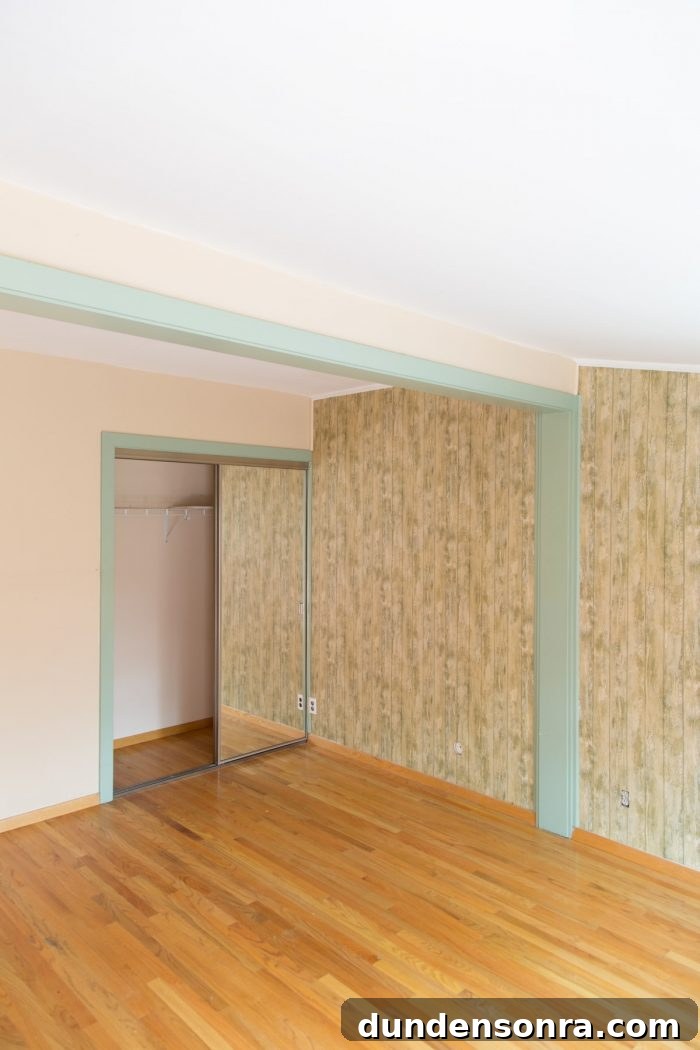
When we bought the house the closet had mirrored sliding doors. We found plain primed bi-fold doors that fit the opening with only minor adjustments. The handyman reused the existing frame and removed the old tracks, installing the bi-folds so the closet opening stayed clean and functional.
Supplies and Equipment
Materials and tools used to create the sunburst:
- Bi-fold doors (plain, primed)
- 1/2″ square wooden dowels — quantity depends on door size and number of rays (we used 26 rays on an 8’x6′ set)
- Wood embroidery hoop (we used an 8″ hoop)
- Washi tape (optional, for planning)
- Pencil and yardstick
- Saw (hand saw or power saw)
- Sandpaper
- Wood glue
- Nail gun or finishing nails and hammer
- Wood filler
- Primer and paint (we used a tinted primer plus two coats of paint)
- Basic safety equipment for cutting and nailing
Measuring is the most time-consuming part. A yardstick and pencil help you visualize and mark each ray before cutting and attaching. We cut everything by hand but rented a nail gun to speed up installation — it made a noticeable difference given how many small pieces needed securing.
How To Make Sunburst Closet Doors
Follow these clear steps to replicate the sunburst design on bi-fold doors.
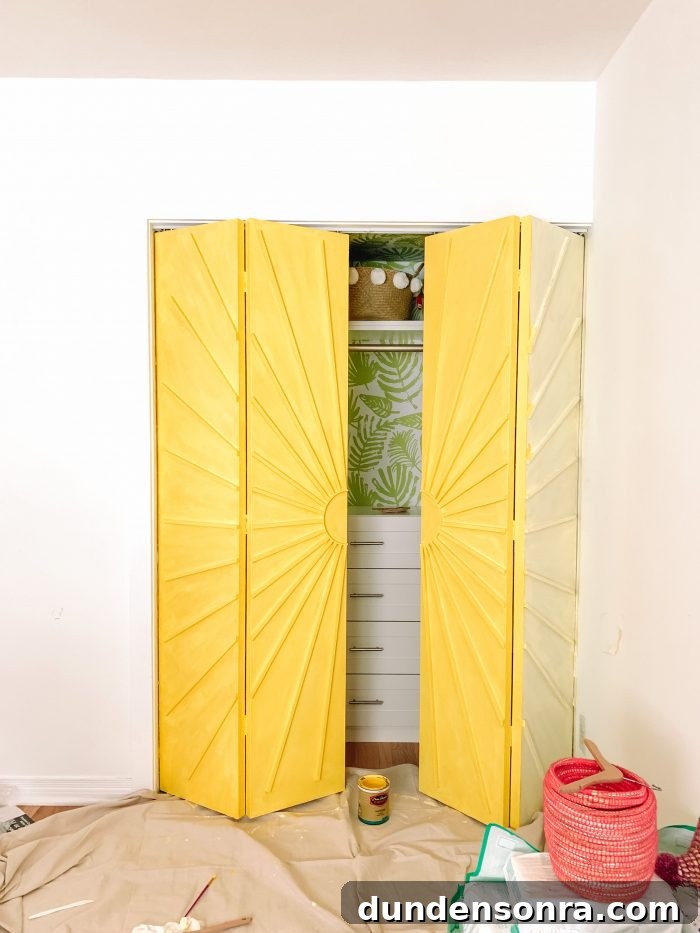
1. Plan and mark the center: With the doors closed, decide where the sun’s center will sit and trace the embroidery hoop on the doors. The hoop becomes the hub for the rays.
2. Map the rays: Use washi tape or pencil and yardstick to lay out each ray. To space them evenly, we measured about 12″ from the hoop for a reference point and placed rays roughly 3″ apart at that distance. Adjust spacing to suit your aesthetic.
3. Transfer guidelines: If you used washi tape to visualize the pattern, trace a pencil line along one edge of each tape strip to create a permanent guideline. Remove the tape once lines are in place.
4. Attach the hoop: Cut the embroidery hoop in half, sand the cut edges, and glue each half into position on the doors using wood glue. Allow to dry according to the glue manufacturer’s instructions.
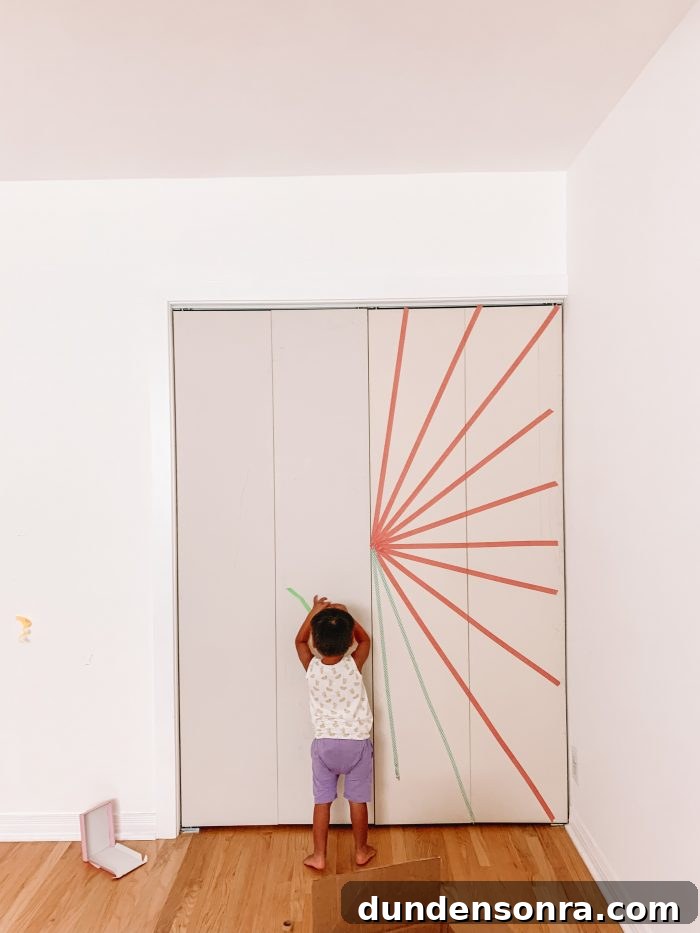
5. Cut dowels to length: Hold each dowel against its guideline and mark the length, leaving the ray ends about 1–2″ from the door edge. I varied lengths slightly for an organic look, but you can keep them uniform. For rays crossing the door fold, mark and cut a second time at the fold so both halves align when closed.
6. Sand and fine-tune: Sand each dowel end smooth and check fit against the door. Because the rays meet the hoop and the door edges at different angles, many dowel ends will require angled cuts.
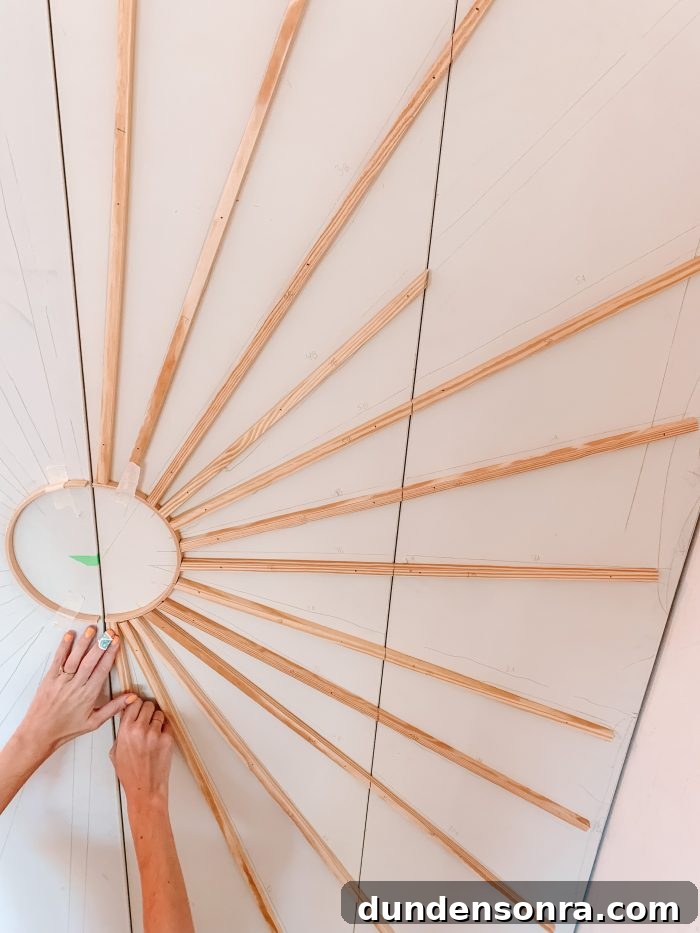
7. Secure the rays: Using a nail gun or wood glue, attach each dowel to the door along your pencil guidelines. Be especially careful aligning rays that cross the bi-fold seam — this step is easiest with two people to hold and fasten simultaneously.
8. Fill and sand: Cover nail holes and any visible seams with wood filler. After the filler dries, sand smooth for a clean painted finish.
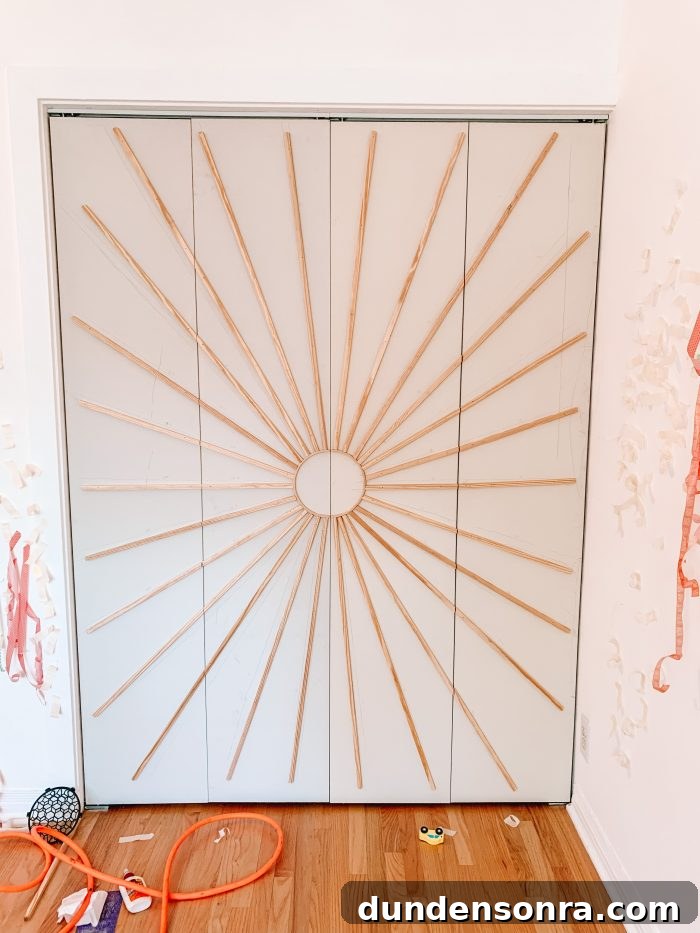
9. Prime and paint: Apply a coat of primer, then two coats of paint, sanding lightly between coats. We painted the whole door a single color, but you could paint the sunburst in a contrasting or darker shade for more visual pop.
10. Add hardware: We added decorative brass handles centered on the embroidery hoop for visual interest. Note: decorative handles positioned in the hoop do not function as opening hardware for bi-fold doors. If you prefer functional pulls, attach narrow painted wood handles along a ray or place functional hardware on the inner panels where they operate correctly.
More Closet Inspiration
- How To Make Our Pink Closet French Doors
- The Mindwelling: Colorful Nursery Closet Reveal
- The Mindwelling: Our Colorful Entry Closet Makeover
- Kids Closet Reading Nook Makeover
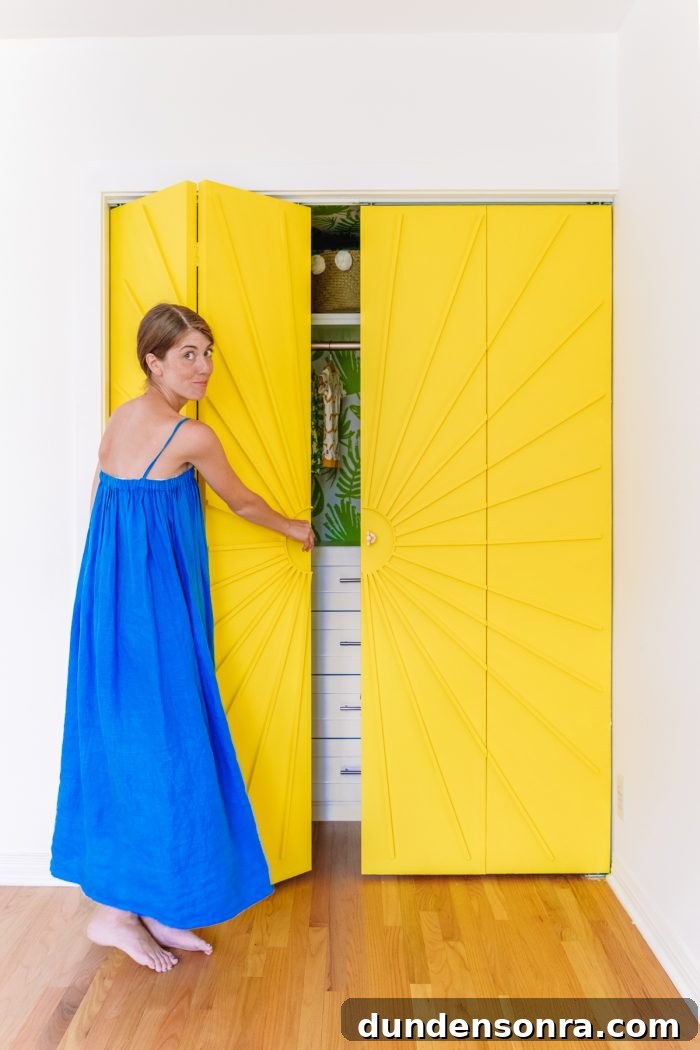
The sunburst doors brightened the room and added personality to an otherwise plain closet. If you’re searching for bi-fold closet door ideas, this simple, budget-friendly makeover is a great place to start.
With careful planning and basic tools you can customize scale, spacing and color to match your room—creating a durable, eye-catching closet that functions well and looks unique.