


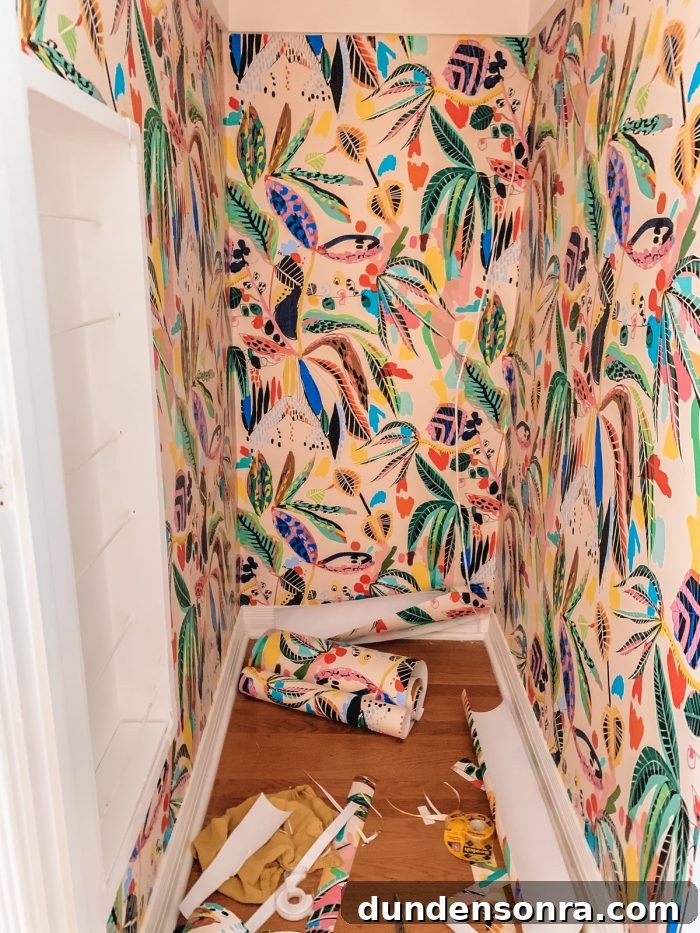
When we decided to give our son’s closet a colorful refresh, I wanted a bold wallpaper but also something removable since we won’t be in this home forever. I searched for removable options but ultimately fell for a traditional wallpaper. So I turned that wallpaper into a removable installation — and it worked beautifully. Below I’ll share the simple method I used to make regular wallpaper removable.
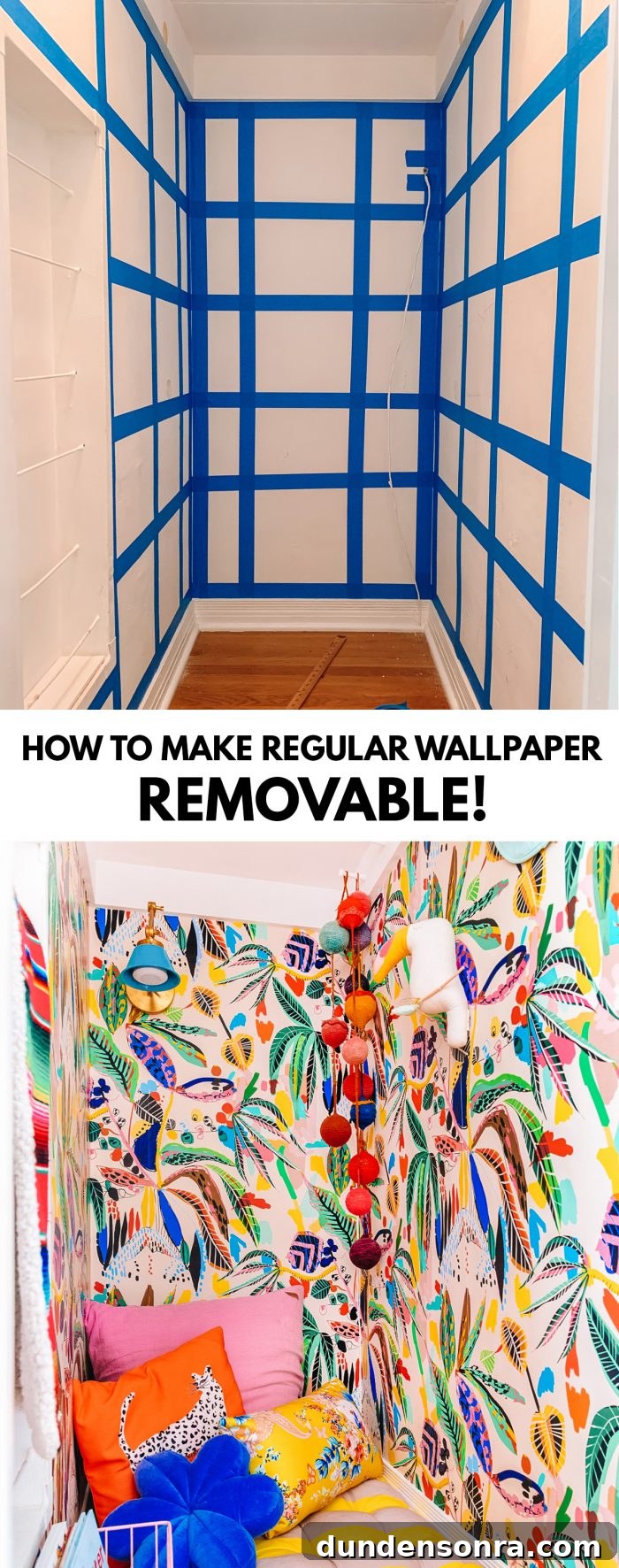
After asking on Instagram, many readers recommended creating a grid of removable tape on the wall, adhering the wallpaper to that grid with double-stick tape, and removing it later like you would peel off a temporary covering. The method is straightforward, surprisingly forgiving, and in many ways easier than installing pre-pasted removable wallpaper.
This approach is ideal for renters, kids’ rooms that change often, or anyone who loves a pattern but wants a non-permanent solution. Read on for the full, step-by-step process.
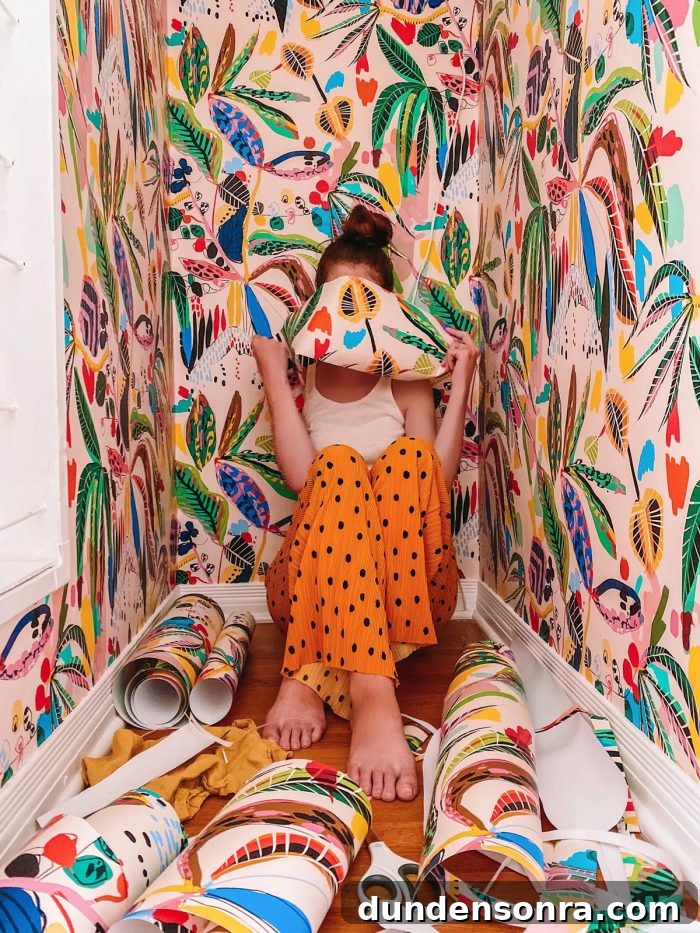
TL;DR: Method Overview
The method creates a removable grid from painter’s tape or white paper tape on the wall. Double-stick tape is applied over that grid where wallpaper seams will sit. The wallpaper adheres to the double-stick tape instead of the wall, so the whole installation can be peeled away cleanly later.
Placing double-stick tape along every seam and edge gives a seamless, secure result that stays flat and durable.
Working with Light-Background Wallpaper
If your wallpaper has a light background (white, ivory, blush), test the removable tape before committing. Blue painter’s tape can sometimes show through lighter patterns, so switch to white paper tape if needed. I discovered this after starting with blue tape and changing to white when it showed through.
Supplies You’ll Need
Quantities depend on your wall size, but here are the essential supplies:
- Wallpaper
- Removable tape:
- Blue painter’s tape (for dark backgrounds)
- White paper tape (for light backgrounds)
- Double-stick tape
- Yardstick or measuring tape
- Pencil
- X-acto knife
How To Make Regular Wallpaper Removable
Follow these steps to hang traditional wallpaper so it can be removed later.
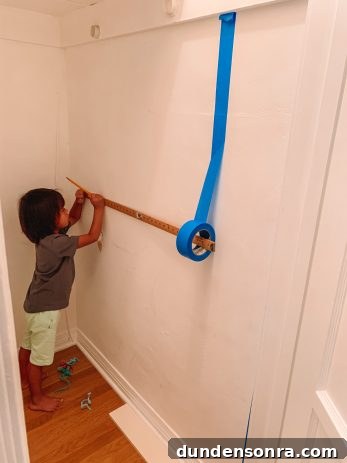
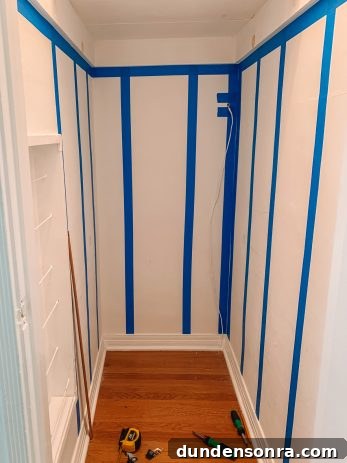
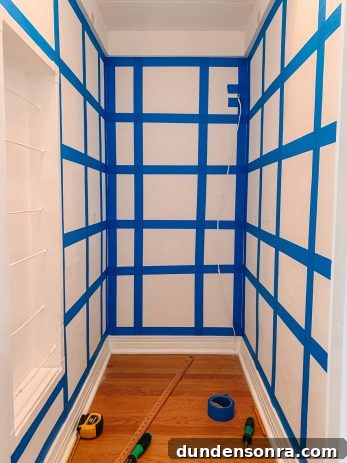
1. Create the tape grid. Key points:
- Place tape along the top and bottom of the wall and in corners.
- Run vertical tape where each wallpaper seam will fall. If your wallpaper is 24″ wide, you might space vertical tape every 12″ so seams land on tape.
- Outline windows, cutouts, or other obstacles with tape as well.
- The grid doesn’t need to be perfectly spaced; the important thing is tape at every seam and edge.
Use a pencil and yardstick to mark placement lightly, then apply the tape. Adjust as you go if necessary. If blue tape shows through a light print, switch to white paper tape.
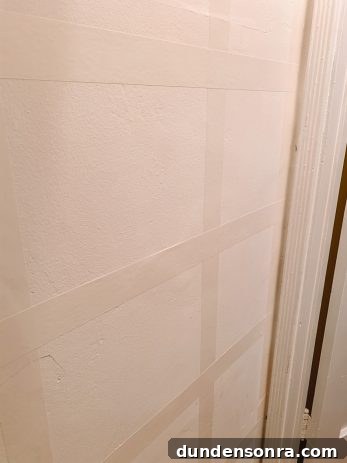
2. Cut wallpaper to length. Account for pattern repeat so seams match, and cut each strip 3–4″ longer than the wall to allow trimming.
3. Hang the wallpaper starting at an edge or corner. I worked from top to bottom and right to left:
- Apply long strips of double-stick tape along the top edge on top of the painter’s tape, then adhere the top of the wallpaper sheet to it.
- Work underneath the wallpaper as you proceed, adding strips of double-stick tape on top of the painter’s tape and smoothing the paper down to avoid bubbles.
- Place vertical double-stick tape where sheet edges meet so both sheets have adhesive backing at the seam.
4. Continue down to the bottom, add double-stick tape along the bottom painter’s tape, and adhere the wallpaper. Use an X-acto knife to trim excess.
5. Repeat for each sheet until the wall is covered.
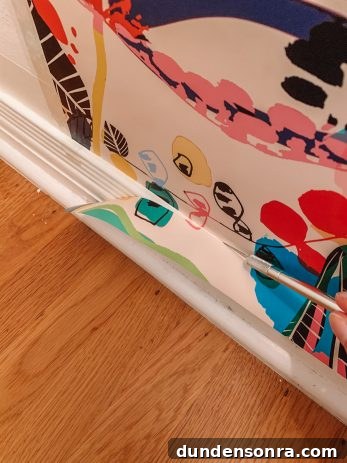
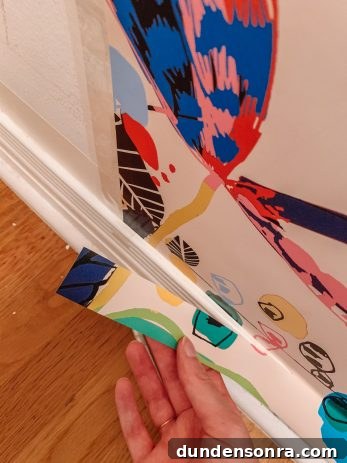
Tips for Windows, Doors and Inside Corners
Flat walls are easiest, but when you encounter corners, windows, or doors, use these techniques:
Inside corners — overlap method:
- Trim a sheet so it overlaps the corner about 1/2″ onto the next wall.
- Lay the next sheet so it overlaps slightly as well, and be sure double-stick tape is applied along the seam to keep both edges adhered.
- Avoid forcing paper into imperfect corners; that often causes bubbling or gaps. Overlapping and trimming yields cleaner results.
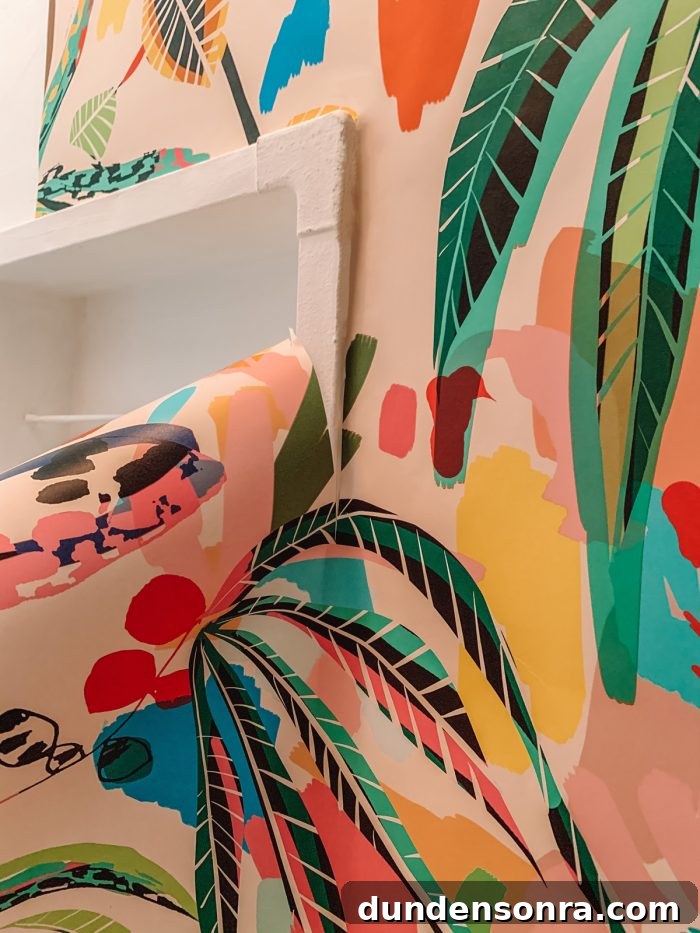
Windows, doors, or cutouts:
- Adhere the wallpaper up to the opening vertically.
- Make a diagonal “relief cut” from about six inches below the upper corner of the opening up to the corner point; this lets you continue smoothing the paper across the top edge.
- Trim excess and ensure double-stick tape runs along all cut edges so the paper stays secured.
Durability of the Tape Grid Method
Yes — the installation can be very durable when done correctly. I’ve had my wallpaper up for several months with no peeling. The crucial step is to secure every edge and seam with double-stick tape so no edges can lift.
Is This Easier Than Installing Removable Wallpaper?
From my experience and watching others install pre-pasted removable wallpaper, this tape-grid method is easier. Because the wallpaper itself isn’t adhesive, it’s more forgiving and simpler to adjust. You can work in small sections, adding tape as you go, which reduces mistakes.
How to Remove the Wallpaper
To remove, peel the wallpaper away from the double-stick tape. Depending on the paper and how long it’s been up, you may or may not be able to reuse the sheets. After removing the wallpaper, carefully peel the painter’s tape grid off the wall. The wall underneath should remain intact.
Photos by Jeff Mindell
I’m thrilled with the result and how well it’s held up. If you love a traditional wallpaper but need a temporary solution, this tape-grid method is a reliable, renter-friendly option. If you prefer not to use tape, some people use alternatives like glue-based methods, but those require separate testing.