
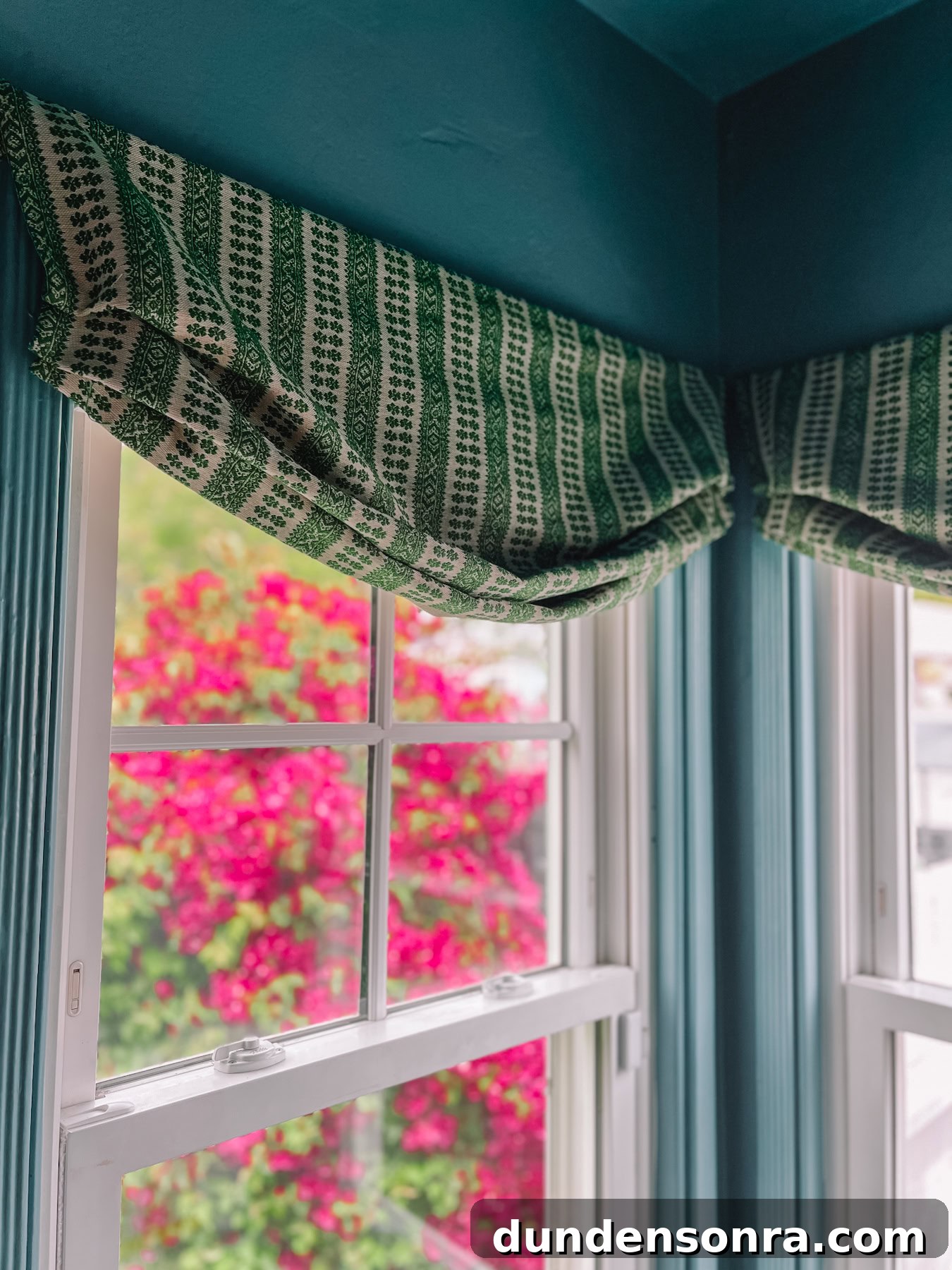
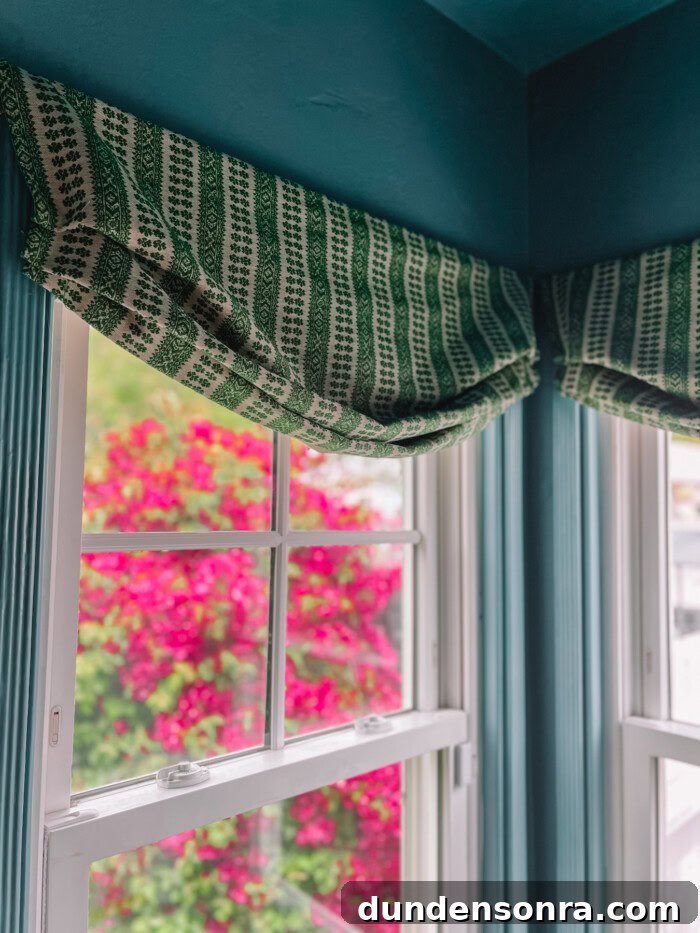
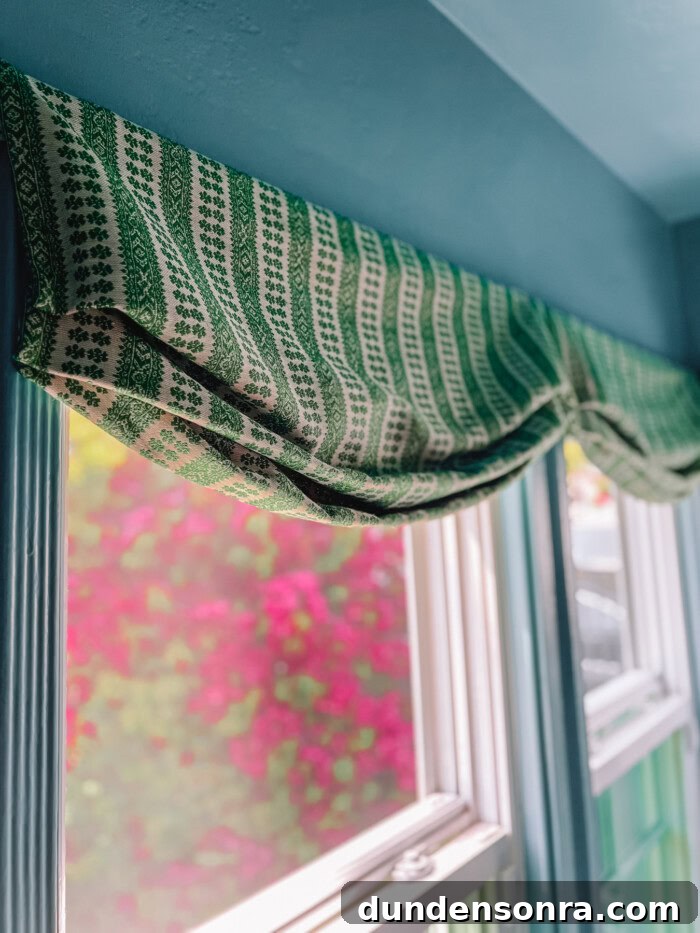
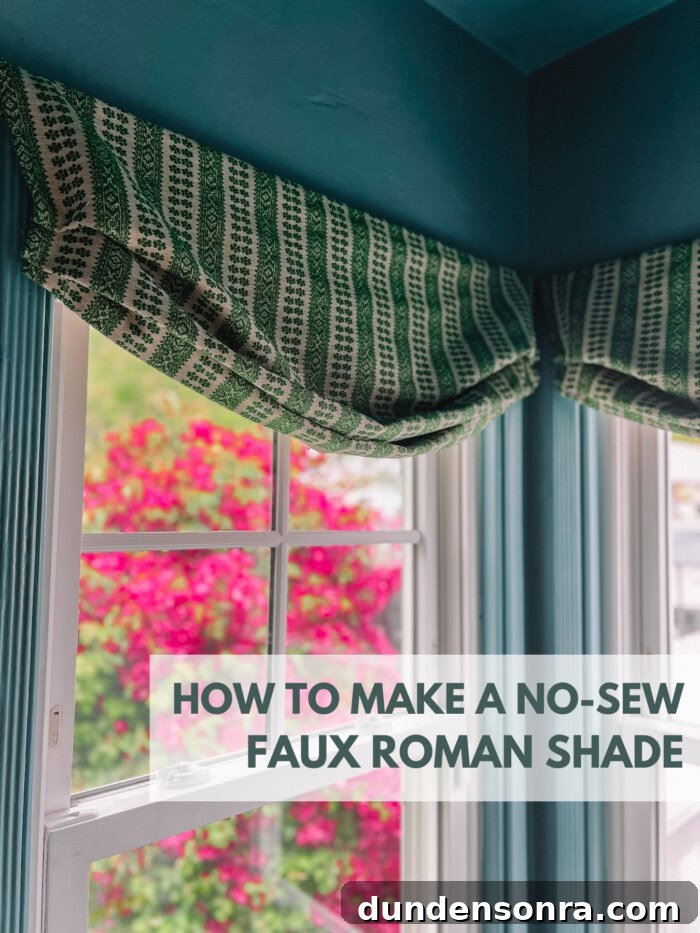
Looking to add pattern and texture to your windows without spending a lot? This no-sew faux roman shade tutorial shows an easy way to give any room a polished, designer look. It’s a simple afternoon project that converts plain windows into a finished focal point using minimal supplies. If you prefer to sew, the steps can be adapted accordingly.
Whether you want a quick style update or to conceal unattractive blind hardware, a faux roman shade is a budget-friendly, high-impact solution.
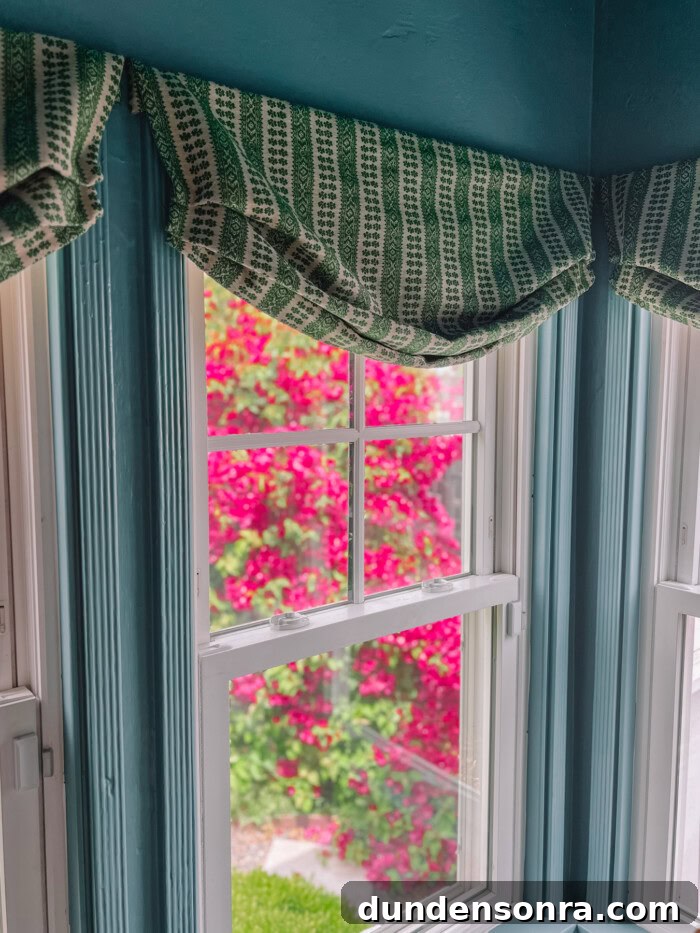
What is a faux roman shade?
A faux roman shade is a decorative treatment that mimics the look of a classic roman shade but is not functional. It stays fixed in place and serves as a valance-style finish. These shades are ideal when you already have functional blinds or shades and simply want a more refined window appearance without adding privacy or light control.
They’re especially useful for windows with roller or cellular shades when the operating hardware is visible and you want a neater, more cohesive look.
Supplies Needed
- 2×1 wood board cut to your desired width (I made mine window width + 1.5″ for a slight overhang). Note: If your window has deep moulding, choose a deeper board about the depth of the moulding.
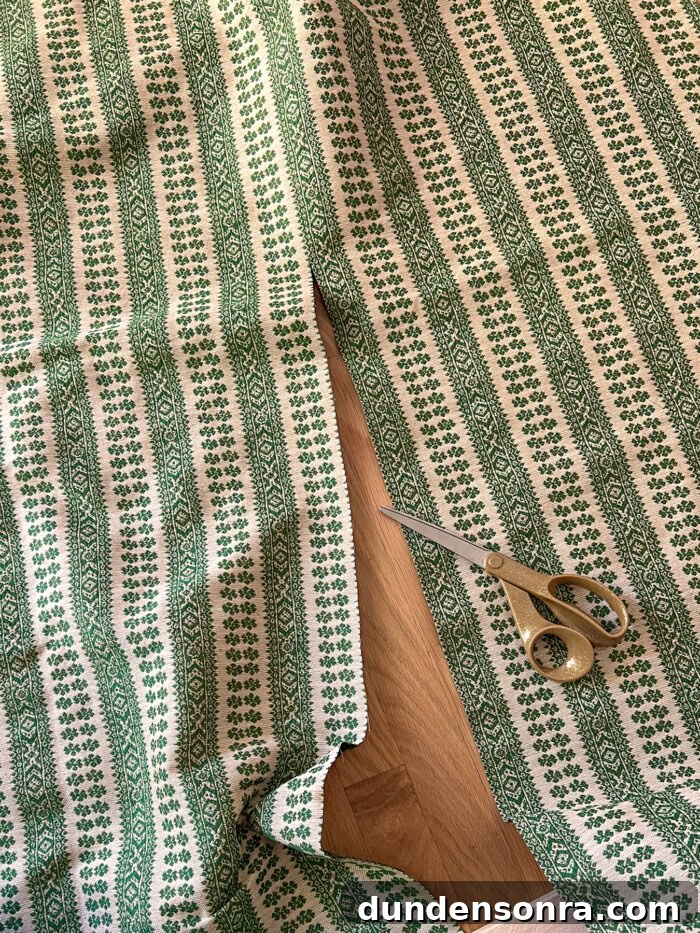
- Decorative fabric — cut 2″ wider than the board width and 12″ longer than the intended finished length (to allow for folds). Also cut two 3″ x 8″ scrap pieces for finishing the ends.
- Lining fabric — same size as the main fabric
- Iron
- Hot glue gun
- Hem tape (optional) — I used hot glue because my fabric was thick; for lightweight fabrics, hem tape gives a cleaner edge
- Fabric scissors
- Needle and thread (optional) — for securing folds; hot glue works too
- Screws for hanging the board
Editor’s Note: The featured fabric is Susan Dellis’ Patmos in Hedge Green. The lining is an oatmeal linen from Joann’s.
Step-by-Step Tutorial
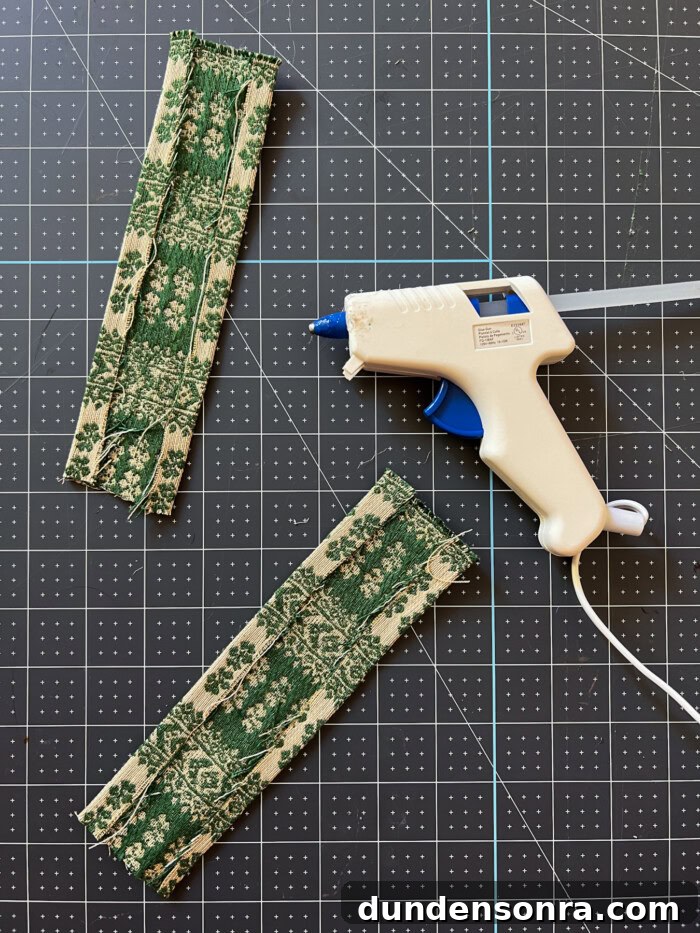
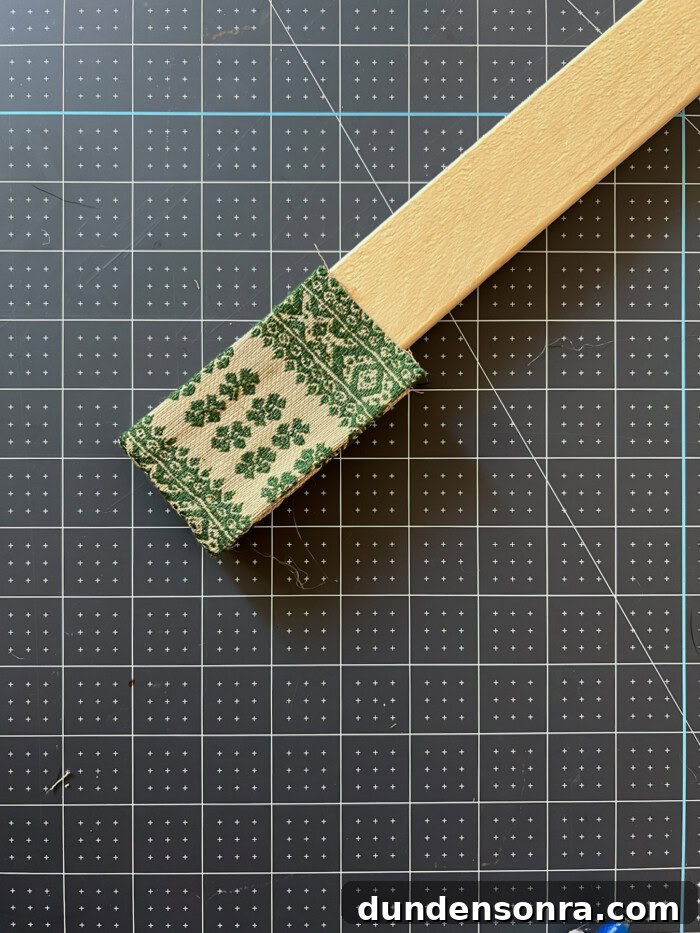
- Finish the board ends. Use the two 3″ x 8″ scrap pieces to cover the wood board ends. Fold and glue a 1/2″ hem on the top and bottom of each scrap, then hot glue them around each end so the raw board edges are covered.
- Prepare the fabric layers. Lay the main fabric face down on a flat surface, then place the lining fabric face up on top so the wrong sides touch. Smooth and iron to remove any creases.
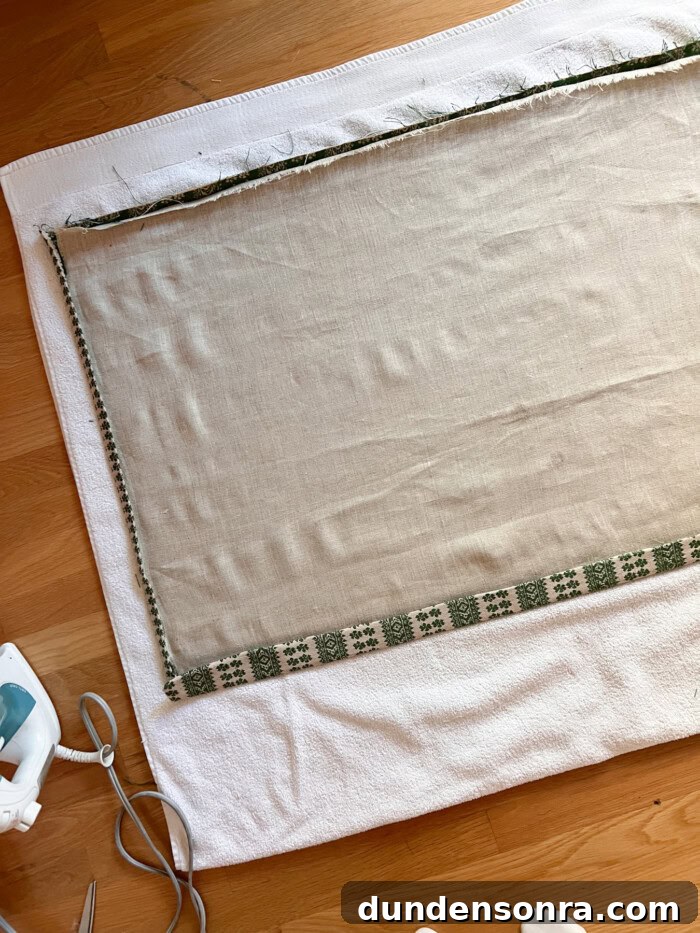
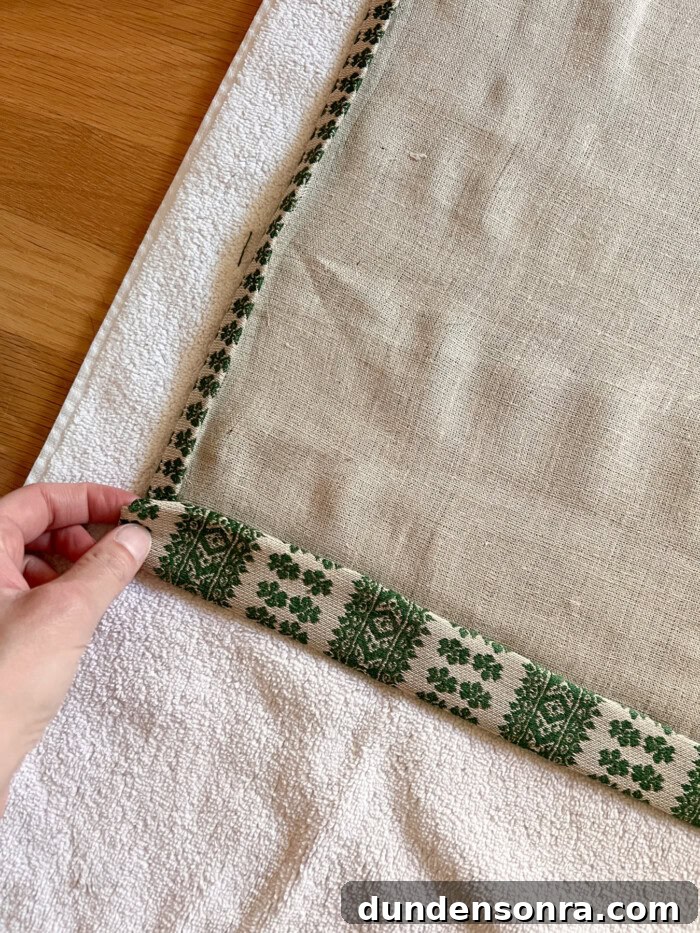
- Hem the side edges. Fold both side edges of the fabric layers 1/2″ and press. Secure with hot glue. Fold another 1/2″ to create a double-fold hem, press again and glue. (If you prefer a professional finish, finish the lining hem slightly differently so it overlaps the outer fabric; the method above is a quick, effective approach.)
- Hem the bottom edge. Fold the bottom edge over 1/2″ and press. Then fold again to form a wider double-fold hem (about 1″) and press. Secure with hot glue. This larger hem creates visual weight at the bottom of the shade.
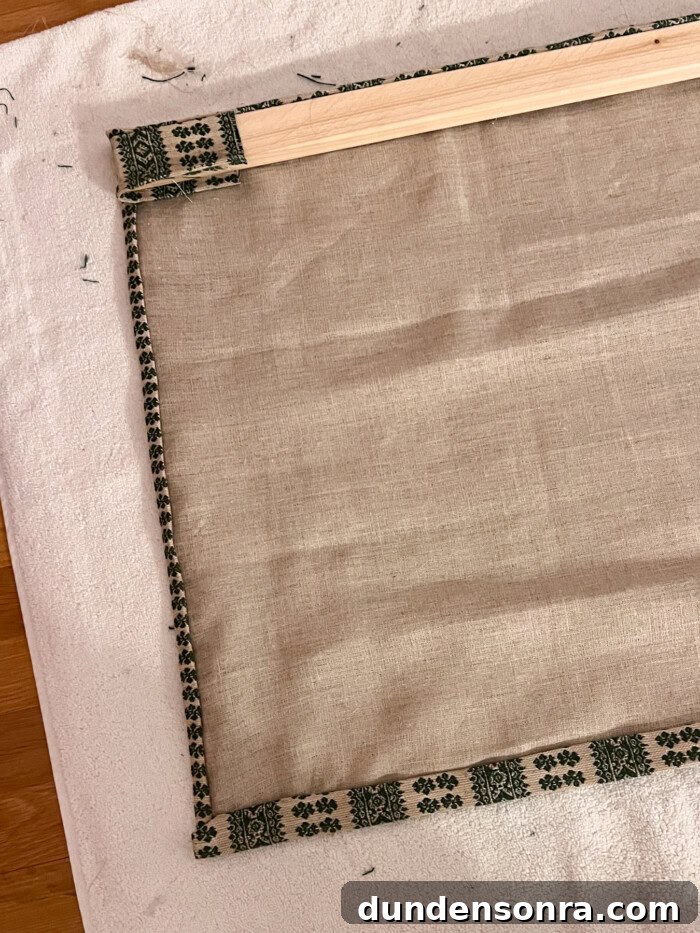
- Hem the top edge. Fold the top edge 1/2″, press, and glue. This edge will be attached to the wood board, so a single fold is sufficient.
- Attach fabric to the board. Hot glue the top hem to the 1″ top edge of the wood board, pressing firmly so the fabric is secure and smooth.
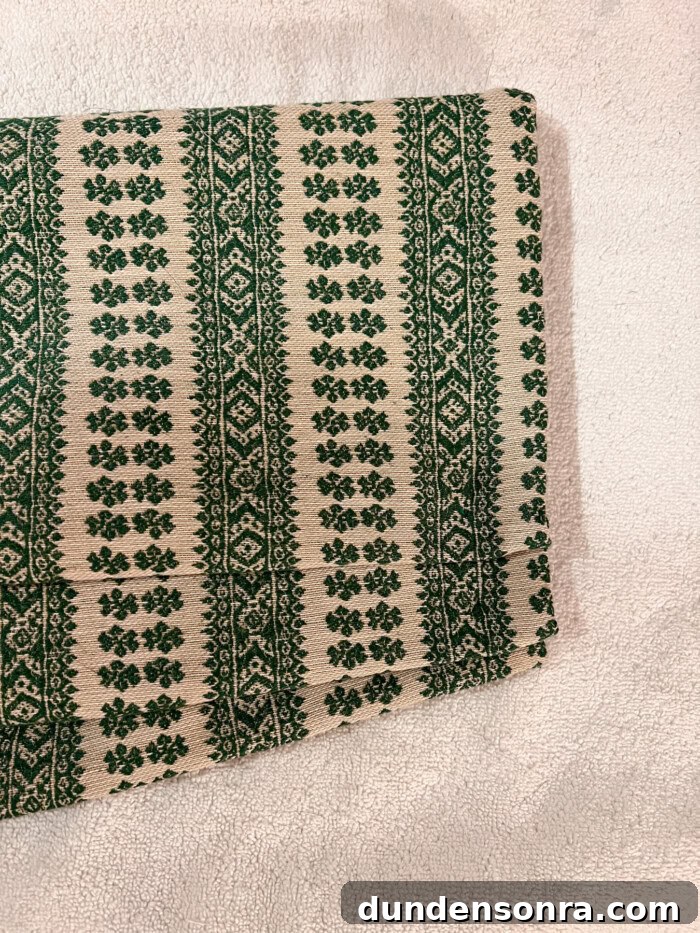
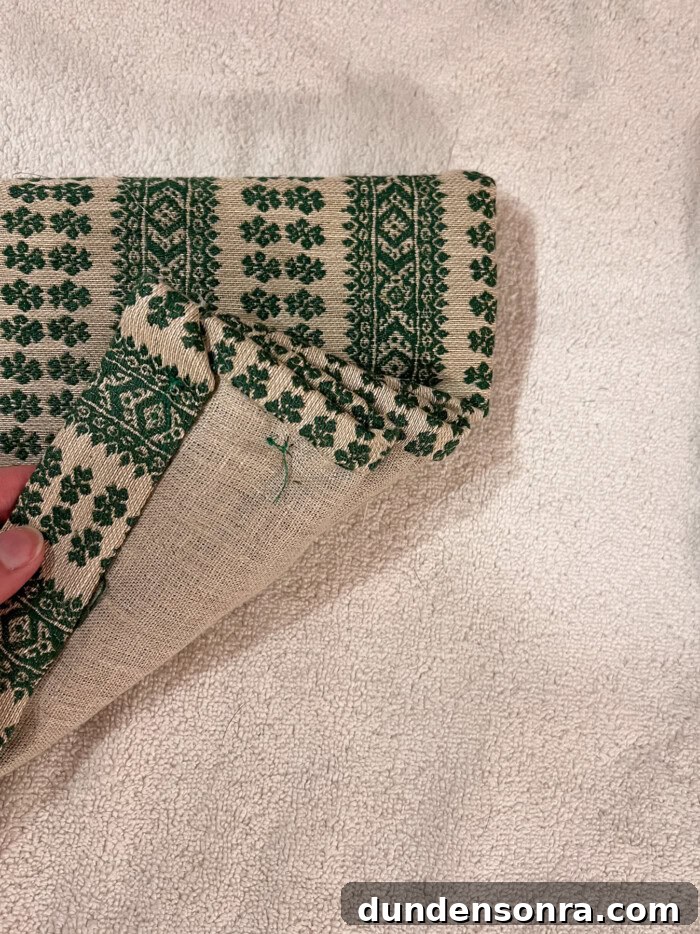
- Create and secure the folds. Form the folds you want—spacing and depth depend on the size and style you prefer. For each fold, pinch the fabric and make a small hand stitch at each end to hold it, or use a dab of hot glue if you’re skipping sewing. For a classic flat roman look, you may need additional tacks in the center of wide shades. For a relaxed look, lift the bottom corners into the last fold and tack them in place to create a soft curve.
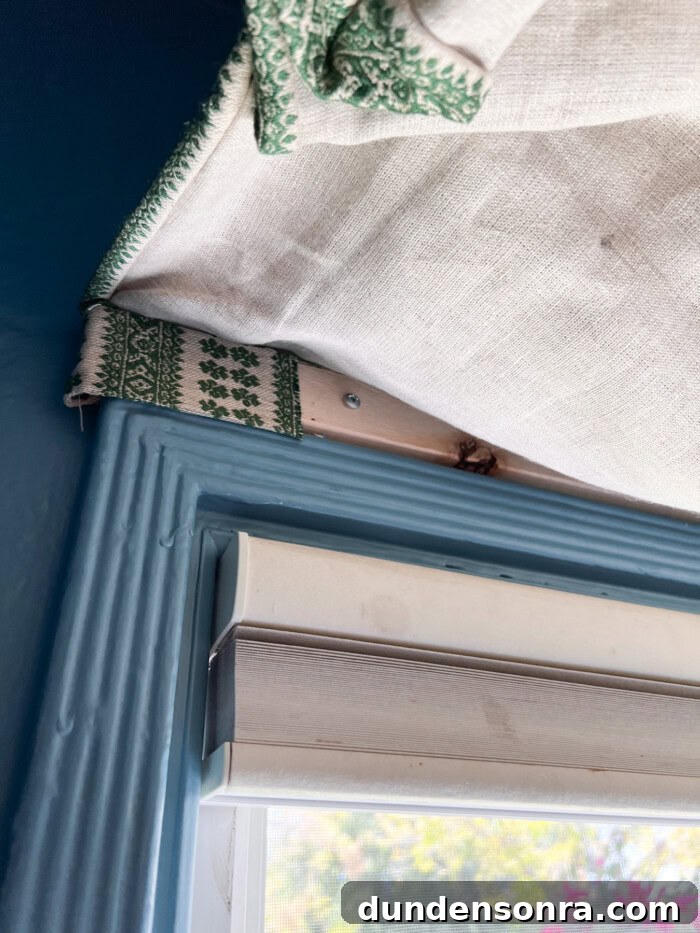
- Hang the shade. Position the board above your window where you want the shade to sit. Flip the fabric up and out of the way, pre-drill holes through the wood into the wall, and secure with screws. Flip the fabric back down to conceal the screws and create a clean finished look.
- Final adjustments. Once hung, tweak the folds and add any extra stitches or glue to keep them in place and achieve the exact appearance you want.
Different Styles of Roman Shades
This method can produce several roman shade styles depending on how you form the folds.
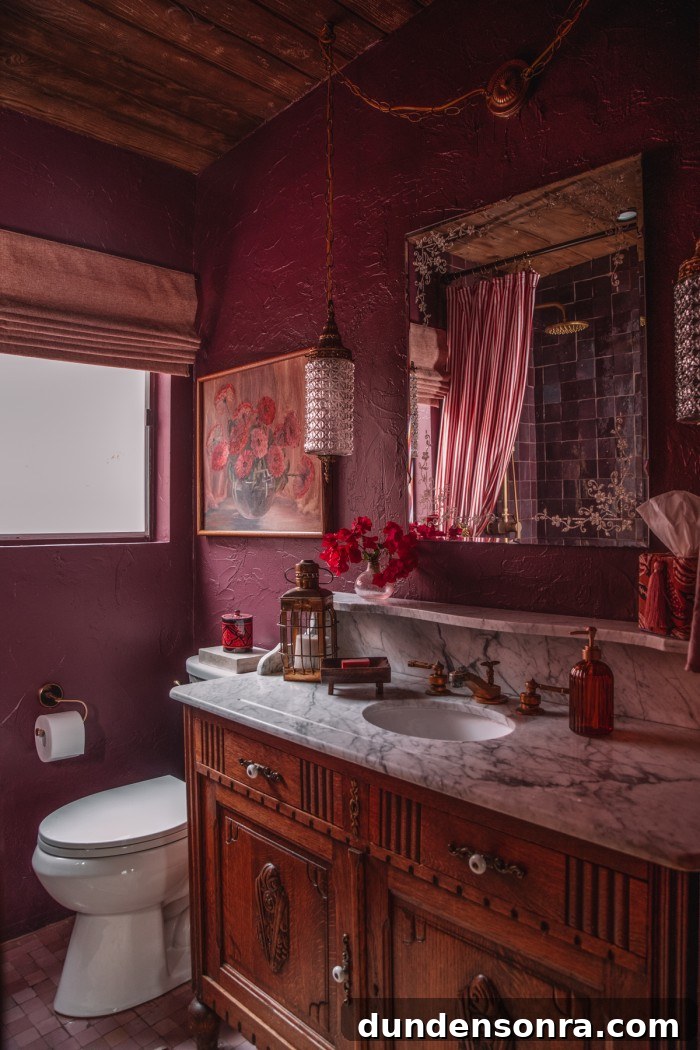
A flat or plain roman shade features straight, even folds across the width and is the easiest faux style to replicate. It offers a crisp, sophisticated look.
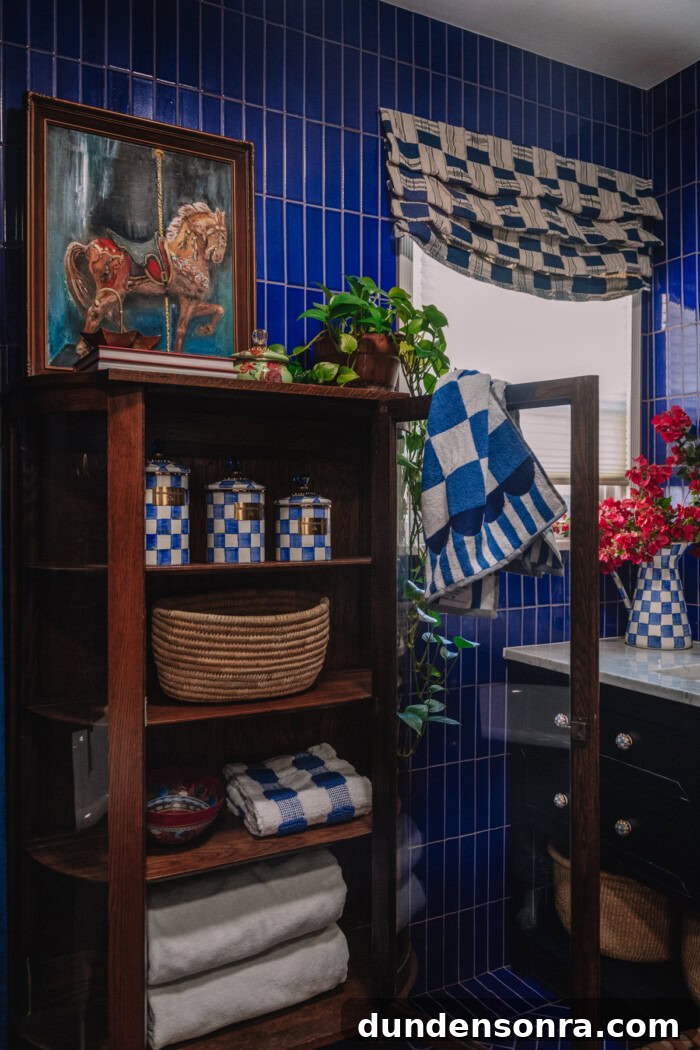
Relaxed roman shades curve gently at the bottom and create a softer, cozier feel. You can also add a ribbon or trim border for contrast—this works well in children’s rooms or to pull a color from the fabric into the rest of the room.
No matter which style you choose, a no-sew faux roman shade adds texture and a polished layer to your space with minimal time and expense.
More DIY Home Projects to Try
If you enjoy budget-friendly decor updates, consider trying additional DIY projects to refresh other areas of your home.
- How to create sunburst closet doors for a striking closet makeover
- How to make regular wallpaper removable for an easier update
- How to frame art on any budget to personalize your walls
These small projects pair well with a faux roman shade and can help you achieve a cohesive, designer-inspired home without a big investment.