
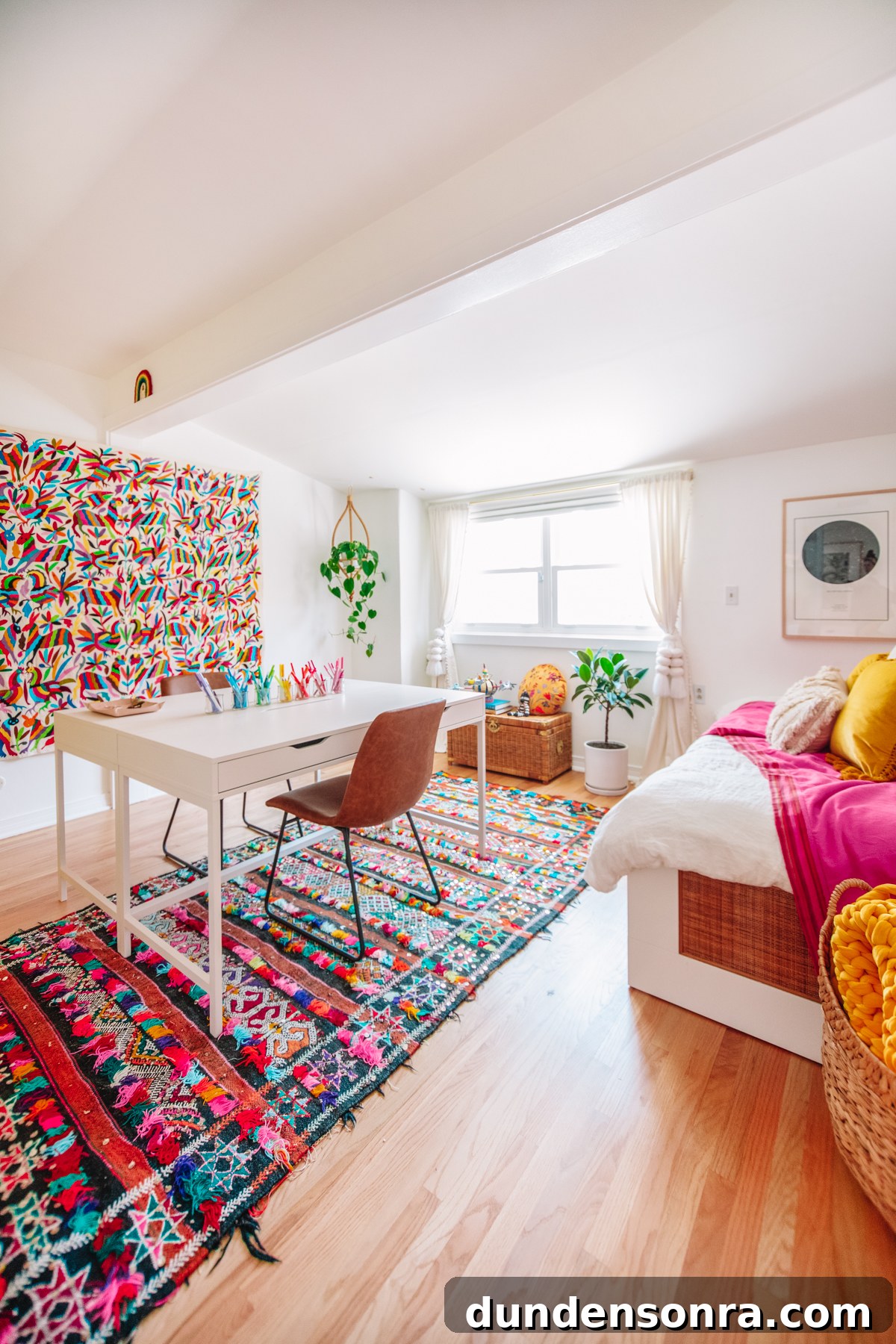
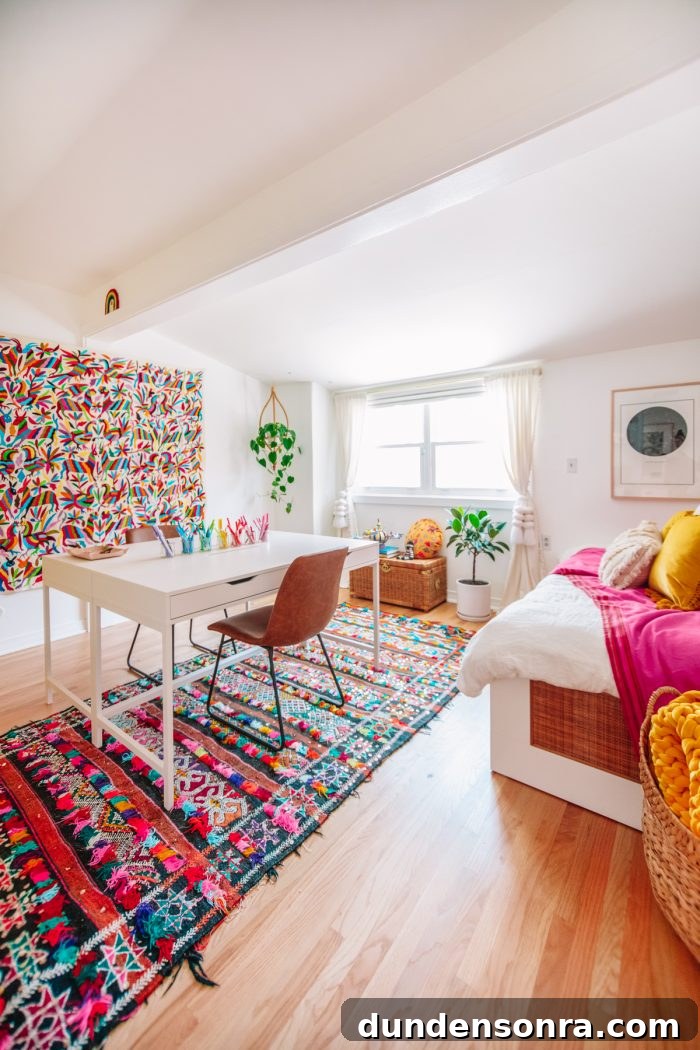
The largest room in our house proved the hardest to design because it had to serve multiple roles: craft space, home office, and guest bedroom. Balancing those functions without committing too quickly left the room full of clutter for a long time. When I finally decided to tackle it, my goal was to use mostly pieces I already owned or items waiting in the garage for a purpose.
Now this is our colorful home office that converts into a guest room. I bought the bed, desks and chairs, but nearly everything else was something we already owned. Designing a multipurpose room takes compromises and creativity, but with a few strategies you can make a space work for both daily life and overnight visitors.
Below are the practical choices we made to keep the room functional, flexible, and full of personality.
Choose a Functional, Space-Saving Bed
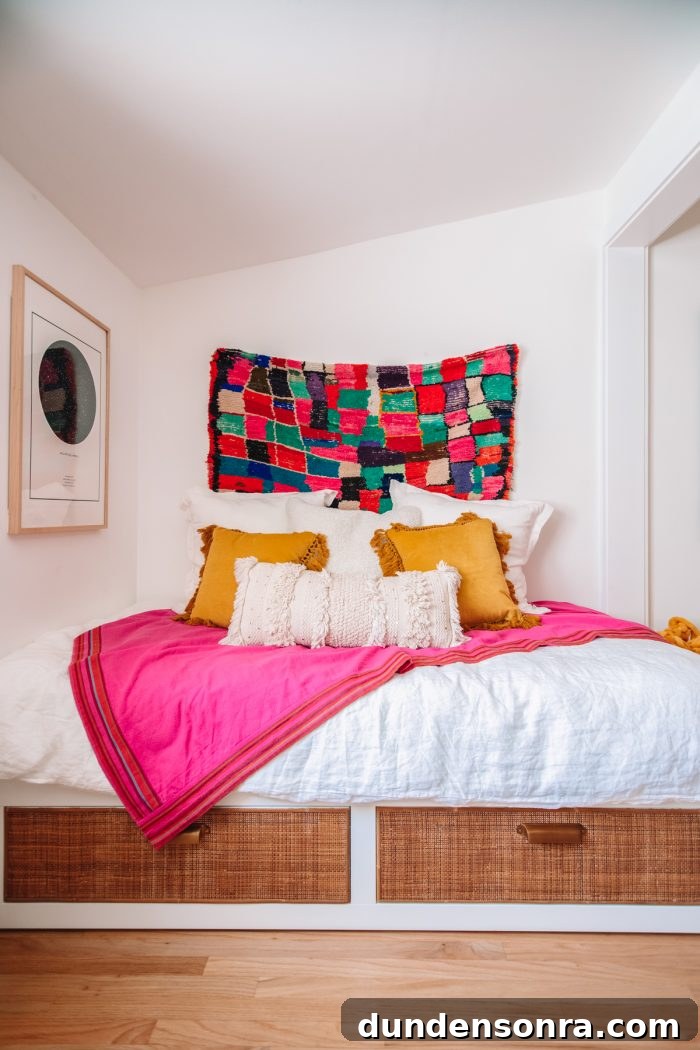
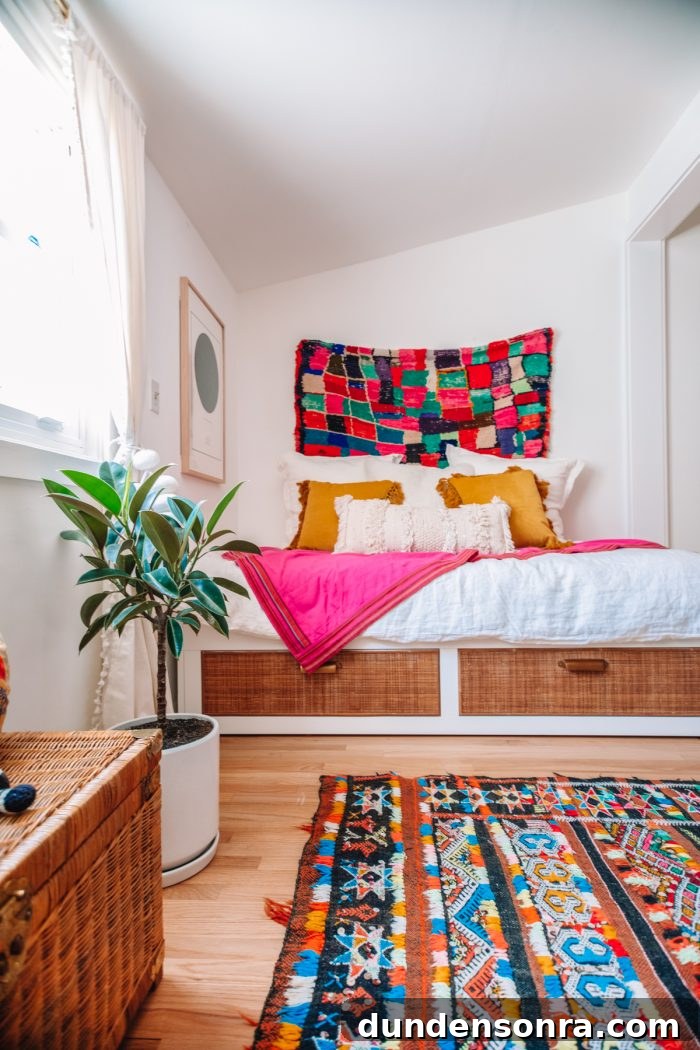
Because the room functions as an office most days, a space-saving bed that still comfortably sleeps two people when needed is the best solution. Options include a pull-out sofa or a trundle daybed. We chose a trundle that converts into a king-size bed so guests sleep comfortably on the same level when both mattresses are in use.
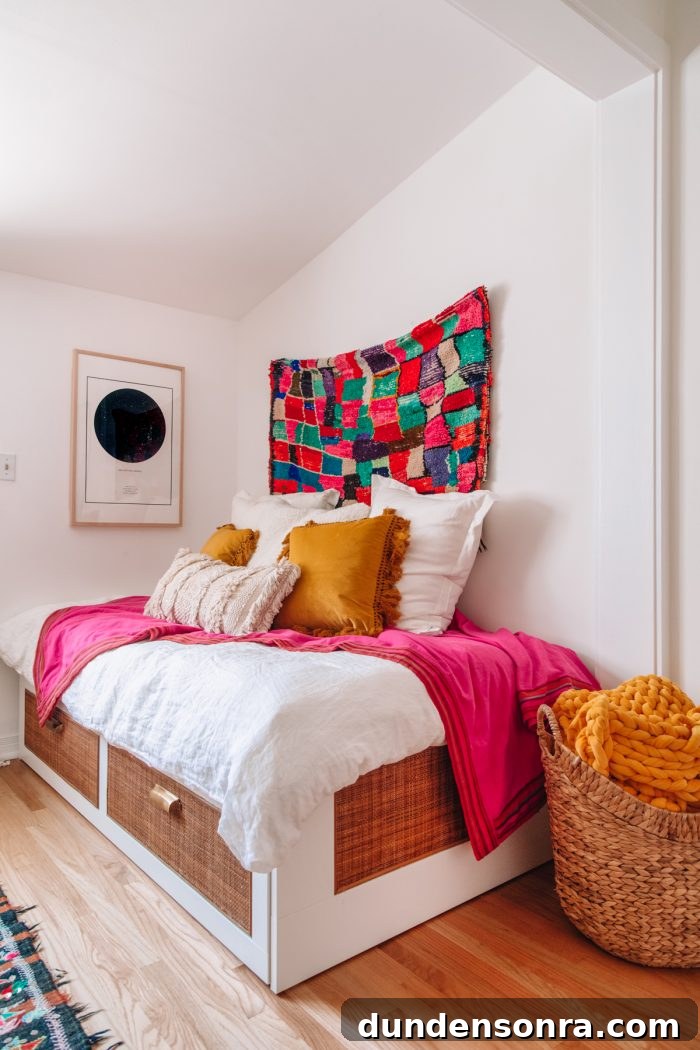
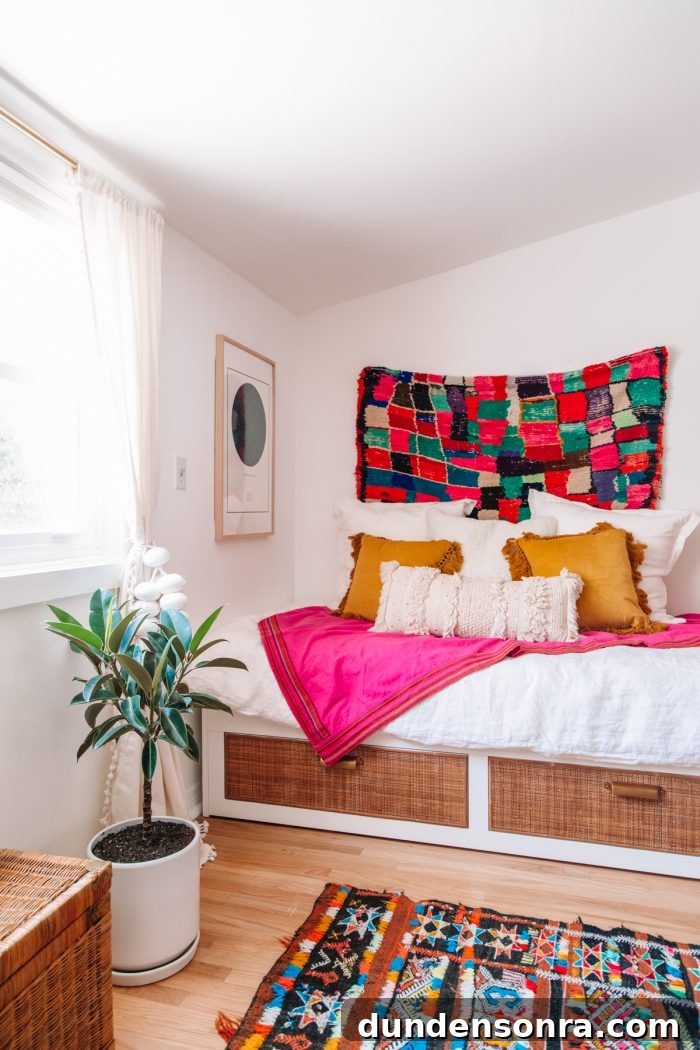
Our daybed serves three purposes: it reads as a couch when not in use, it hides large storage drawers for linens and extra bedding, and the trundle converts to a wide sleeping surface that can be made with king-sized bedding. To elevate the look, I added cane detailing as a simple IKEA hack.
When using the bed as a daybed, make-up can be minimal — a sheet or folded comforter works well. Folding the king comforter in half across the daybed makes transitions easier without needing two full bedding sets.
Pick Moveable Desks
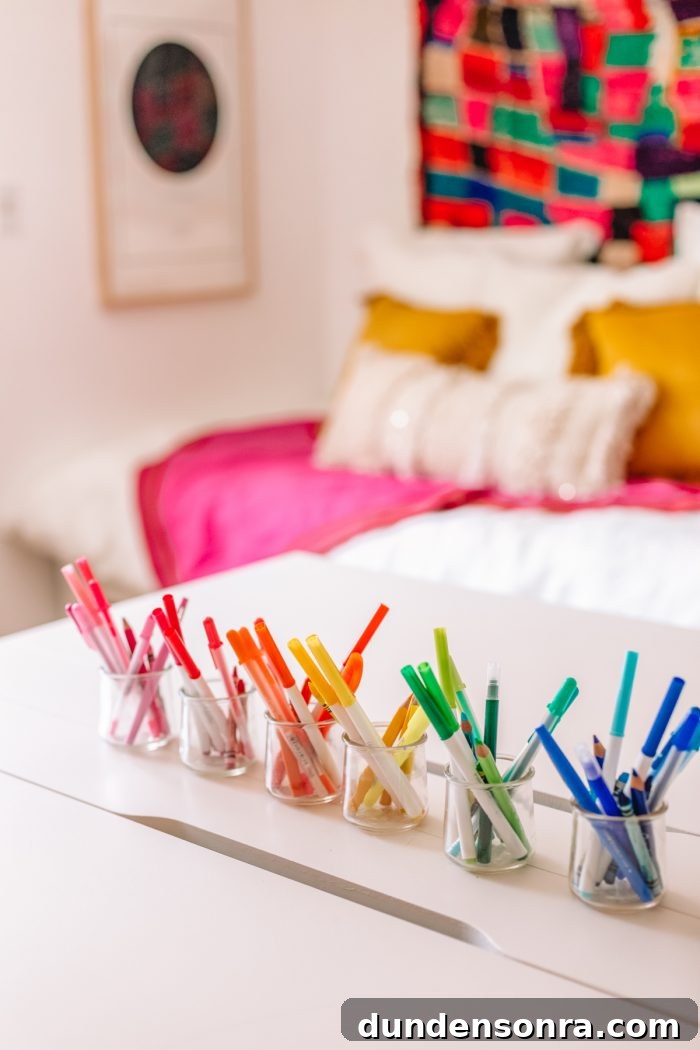
For creative work I needed a large surface, but that surface also had to move so the trundle could extend when guests arrive. Two smaller desks that can be pushed together create one roomy workstation most days and slide apart or against the wall to free floor space for the bed.
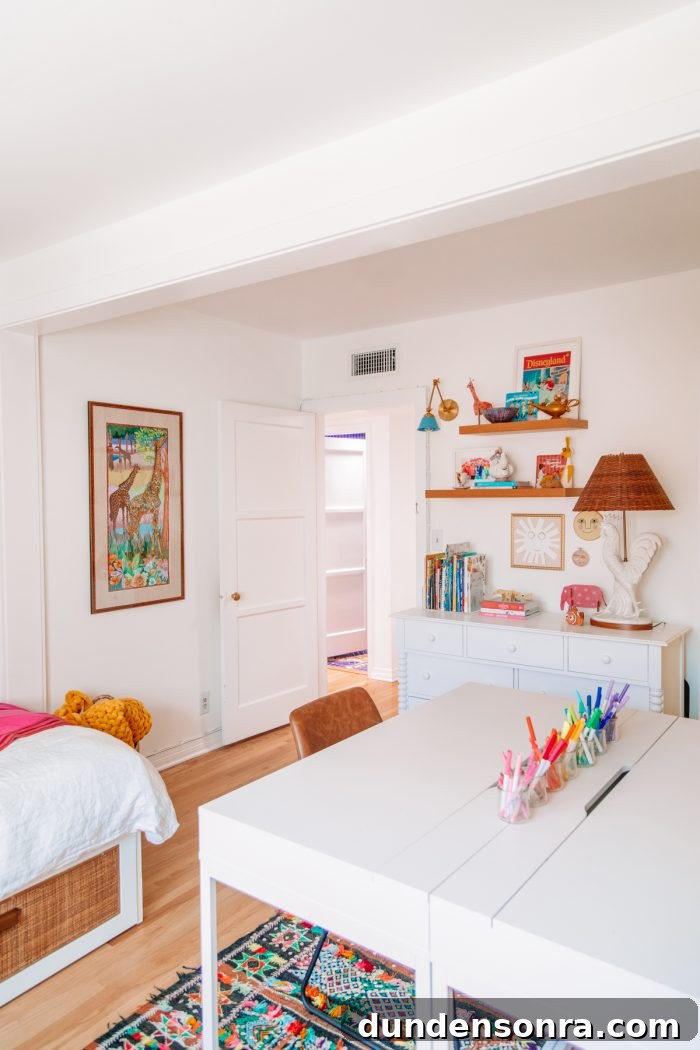
We used practical desks with drawers and cord management openings so the workspace stays tidy. The configuration allows two people to work facing the room and a window, which feels much more pleasant than staring at a wall. When guests come, the desks easily move side by side against the wall to open the center of the room.
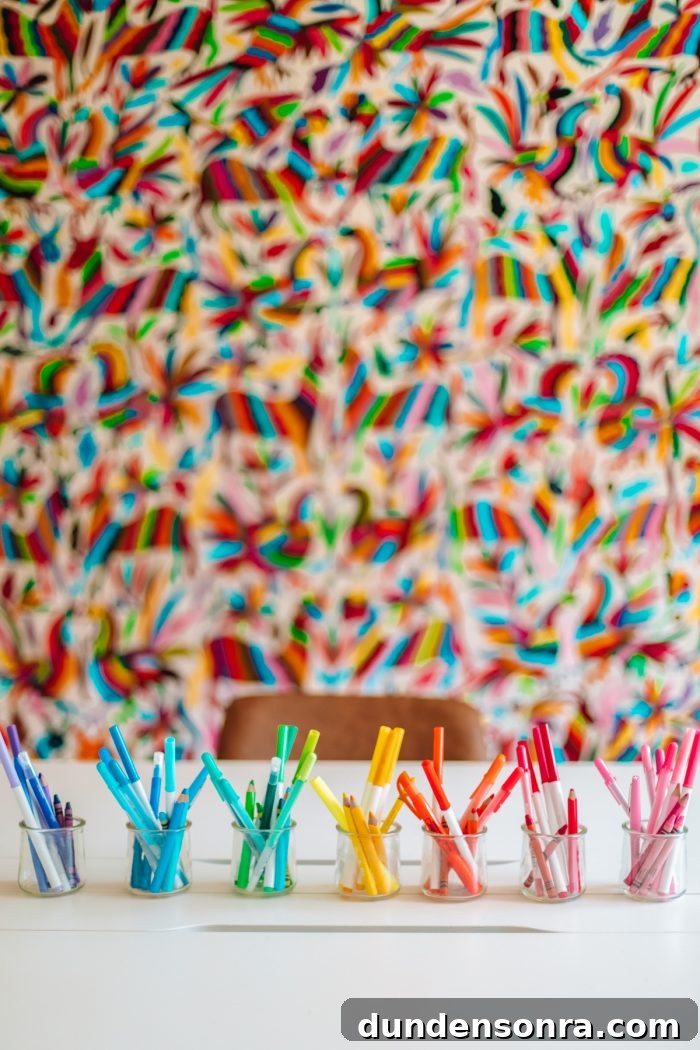
I layered a bold Otomi tapestry behind the desk as a colorful backdrop that still tucks away when the desks move. A vintage Moroccan rug anchors the area and a hanging plant brings height to a corner.
Use Multipurpose Storage
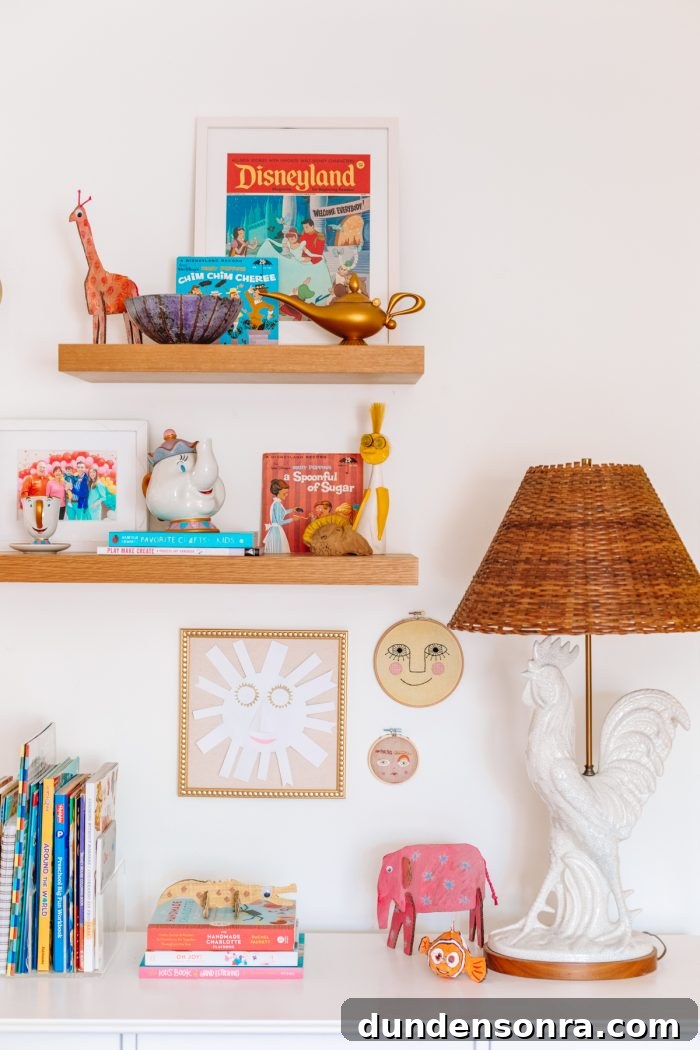
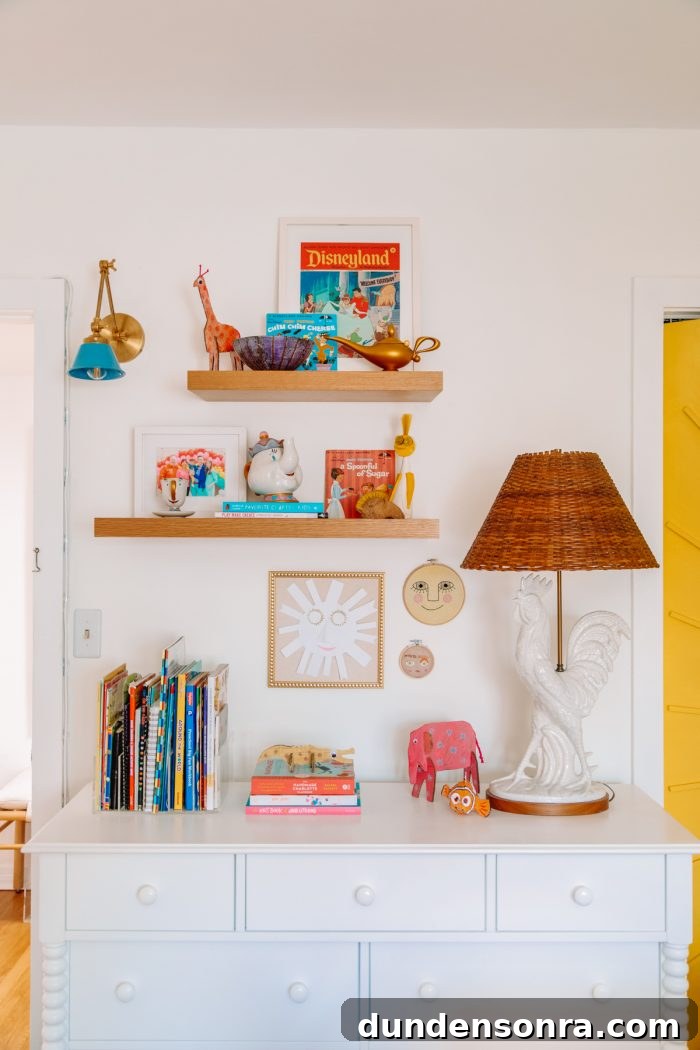
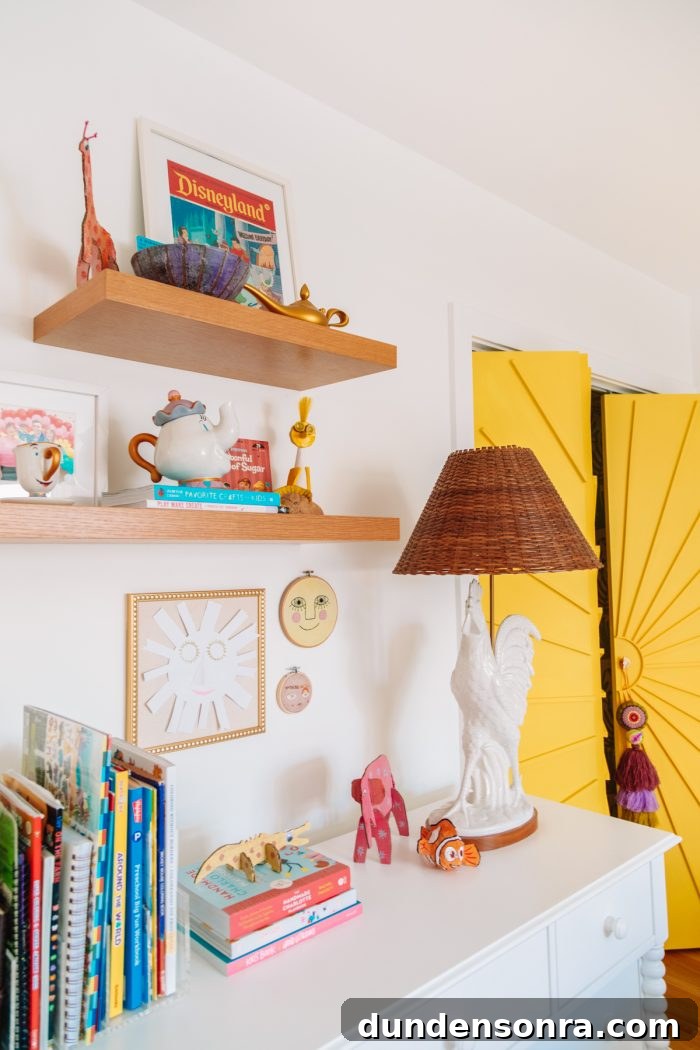
Repurposed storage is ideal for multipurpose rooms. Extra floating shelves from a previous project became display and craft storage, while a dresser serves double duty: most drawers hold office and wrapping supplies and a couple are left available for guests to unpack into. Use shelves to show meaningful items and keep frequently used craft tools within reach.
I incorporated sentimental pieces — like a family lamp — by updating small elements (a wicker lampshade, for example) so they fit the overall look. A framed space on the wall wrapped in linen fabric creates a simple rotating gallery for kid artwork, which is a fun way to weave family projects into the room.
Organize the Closet for Flexibility
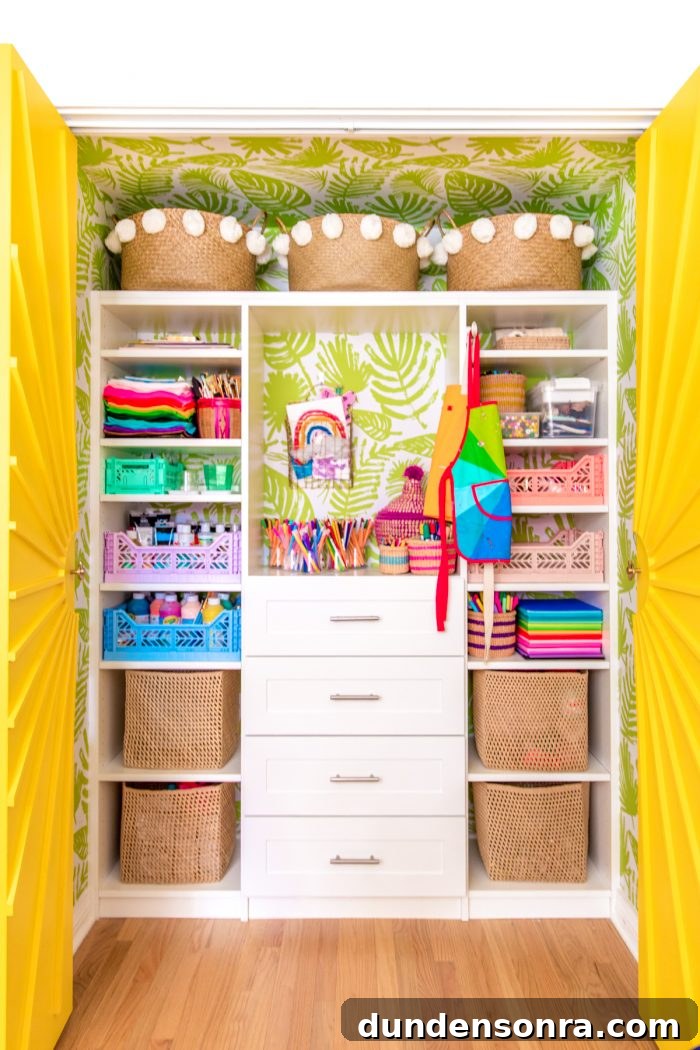
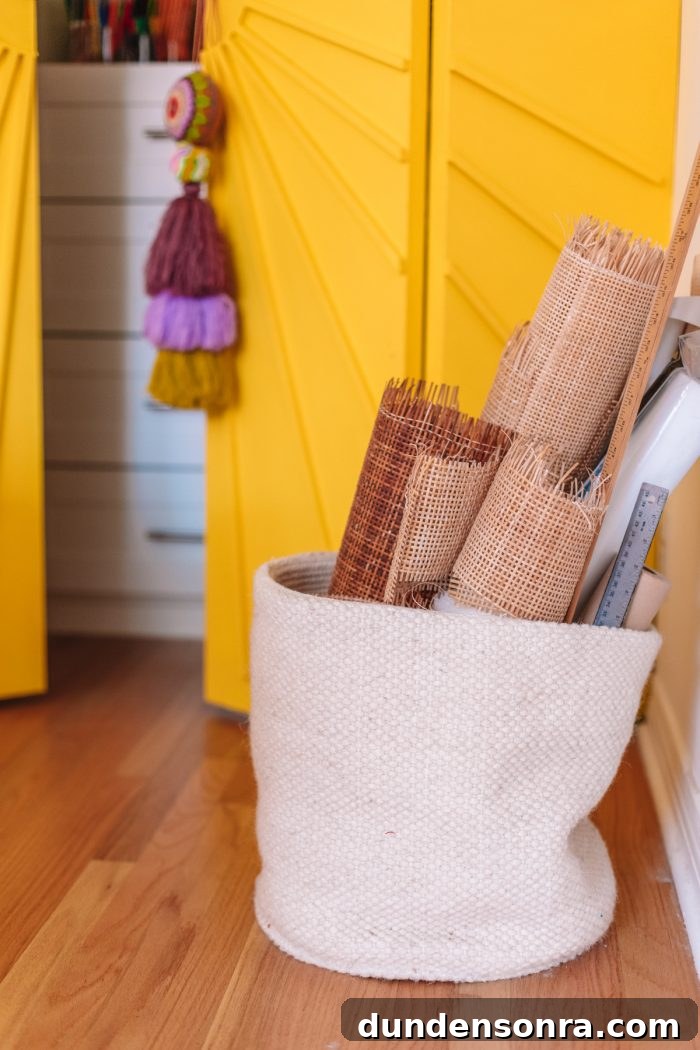
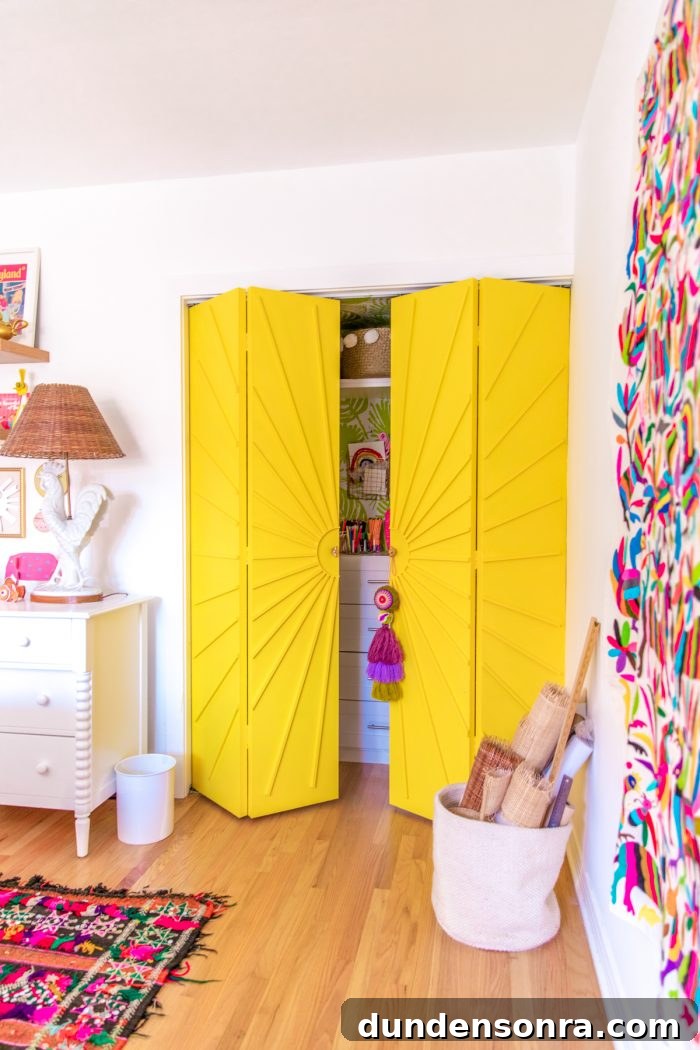
In a home with limited storage it didn’t make sense to dedicate the closet only to guests. We use this closet as a craft closet but kept the center rod available so a hanging bar can be added quickly to give visitors a small amount of hanging space. Bifold doors are a space-saving choice when a swinging door would take up too much room.
Little Whimsical Details Make a Big Impact
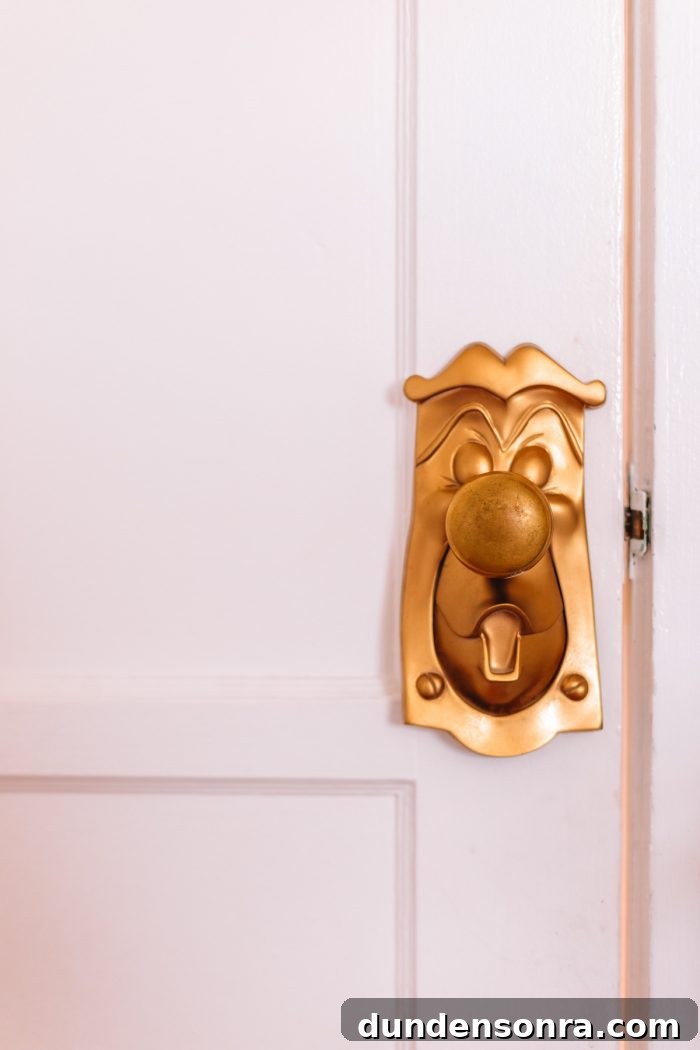
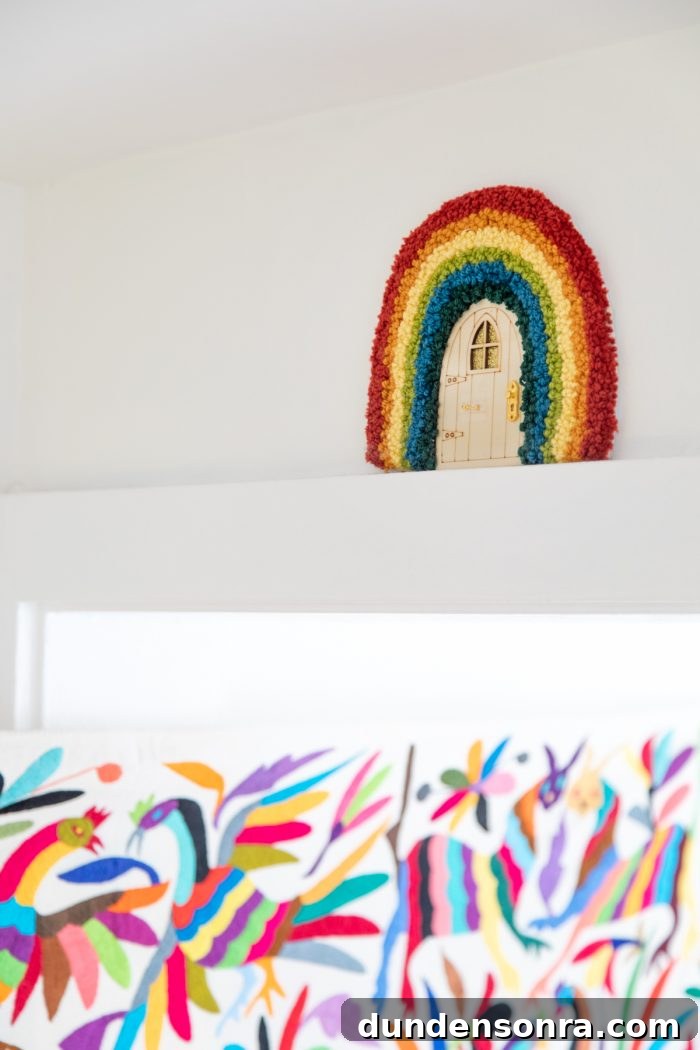
Because the room doubles as a craft space for our child, I added playful touches he would enjoy. A whimsical door handle is a small, secret delight when the door is closed, and a tiny fairy door tucked on an awkward beam turns an odd architectural feature into something magical.
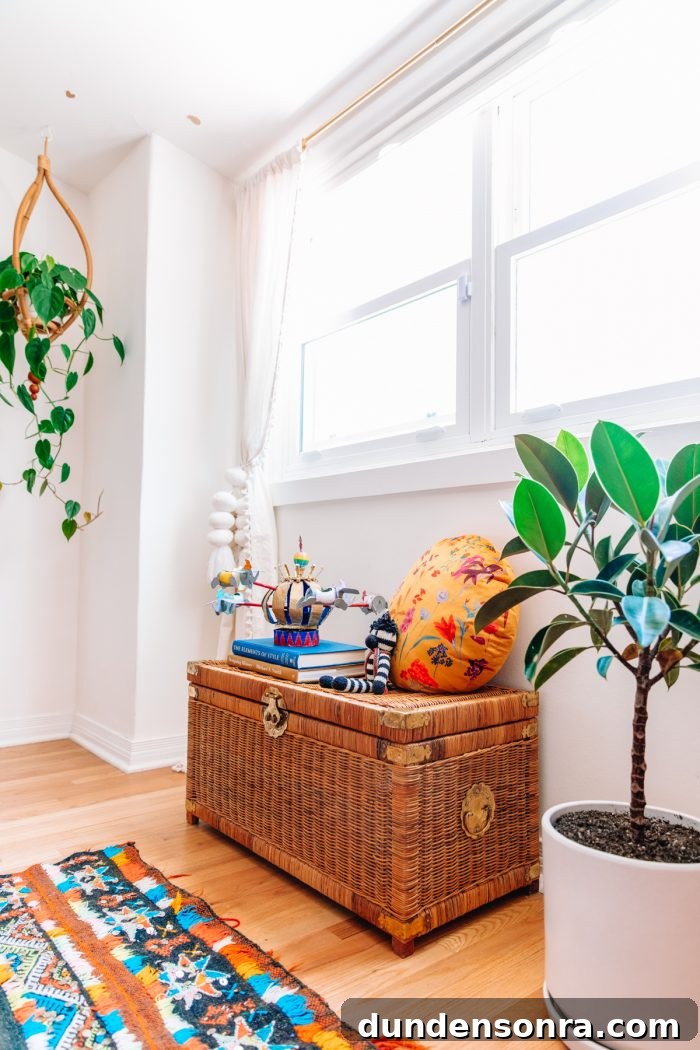
Under a high window I chose a vintage wicker trunk instead of a bench to avoid another flat surface that collects clutter. The trunk stores memory-keeping supplies and doubles as a seat or surface when needed. Adding plants around the trunk helps fill the space with life.
The print above the bed is a meaningful piece that marks the night our son was born, tying personal story into the room’s decor. Small, personal details like that make a multipurpose room feel lived-in and intentional rather than purely functional.
Photos by Jeff Mindell
Designing a multipurpose room is about making smart furniture choices, flexible storage solutions, and adding personal touches that make the space welcoming for daily life and overnight guests. With a few adaptable pieces and some creativity, you can create a room that functions beautifully for work, play, and rest.