
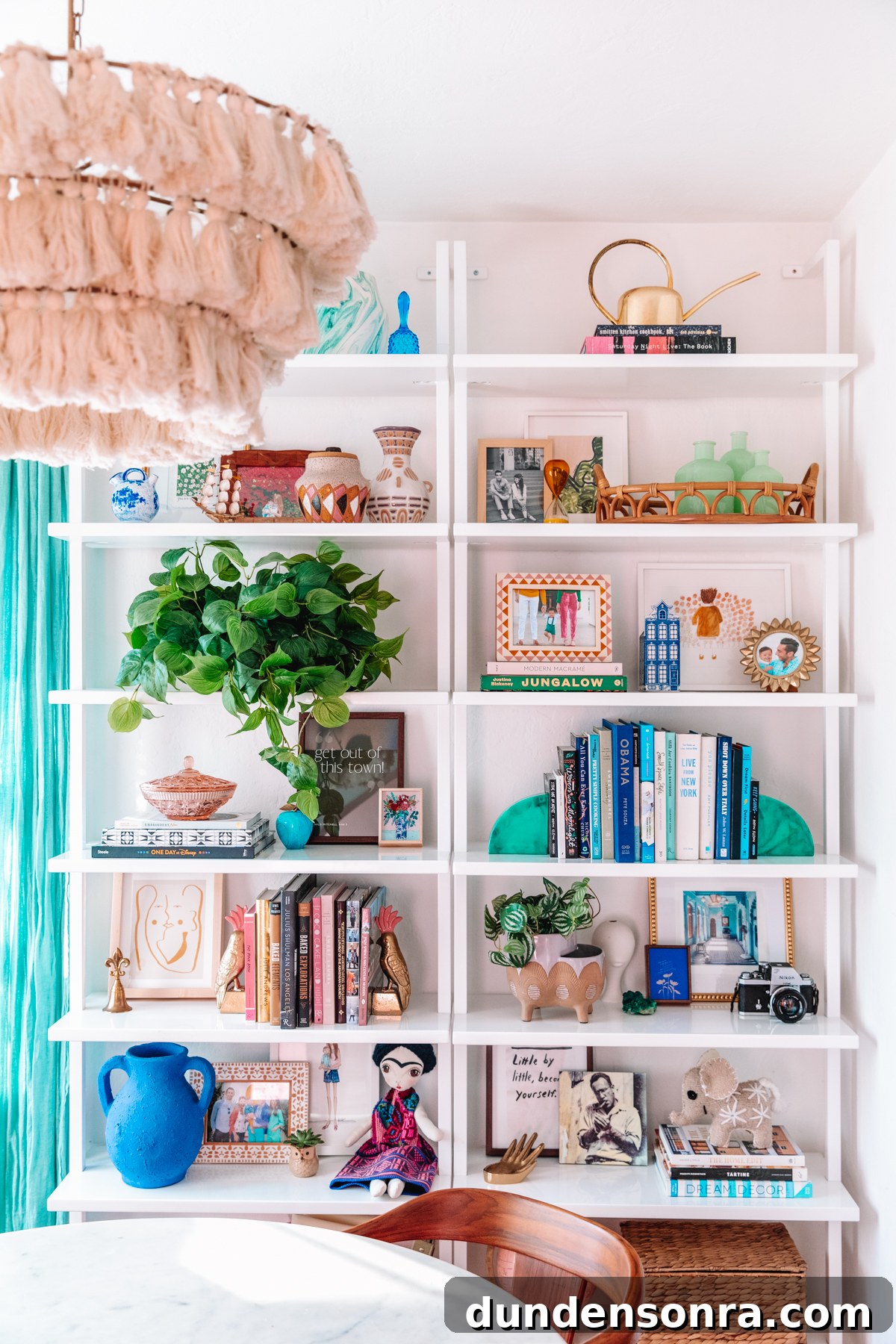
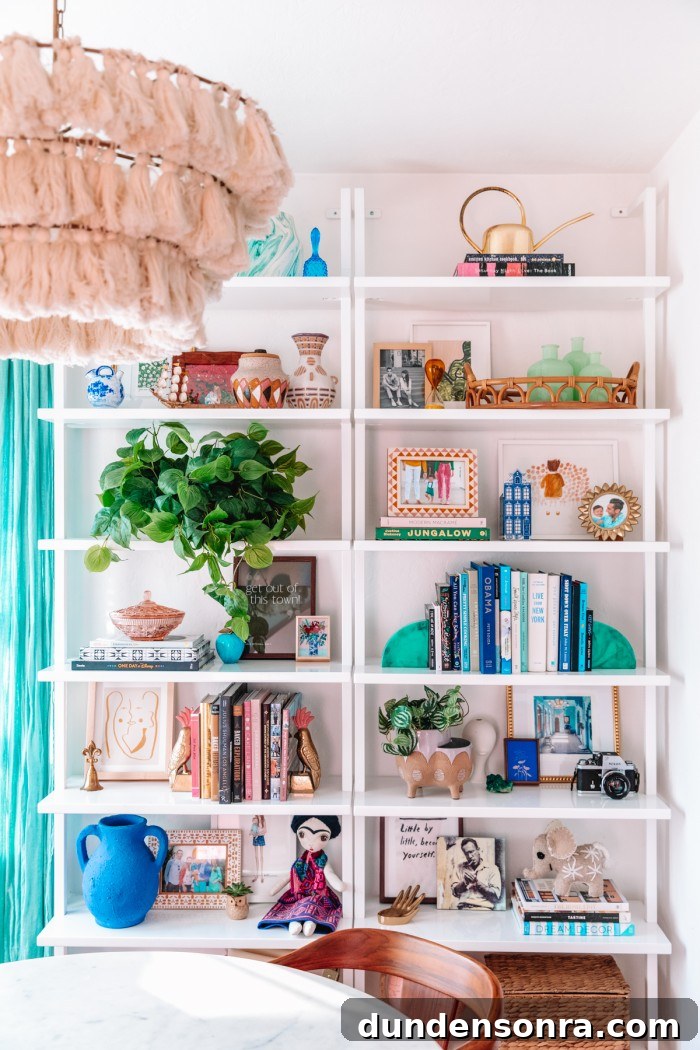
A well-styled bookshelf adds dimension, personality and function to any room. Styling shelves can feel intimidating because you want to showcase books, decor, photos and meaningful objects without creating clutter. Below are practical, stylish tips to help you curate balanced, cohesive shelves that reflect your taste and make your space feel intentional.
First, collect the items you want to display—books, art, baskets, plants and personal pieces—then arrange them using the step-by-step approach I outline here.
Choose a Color Palette
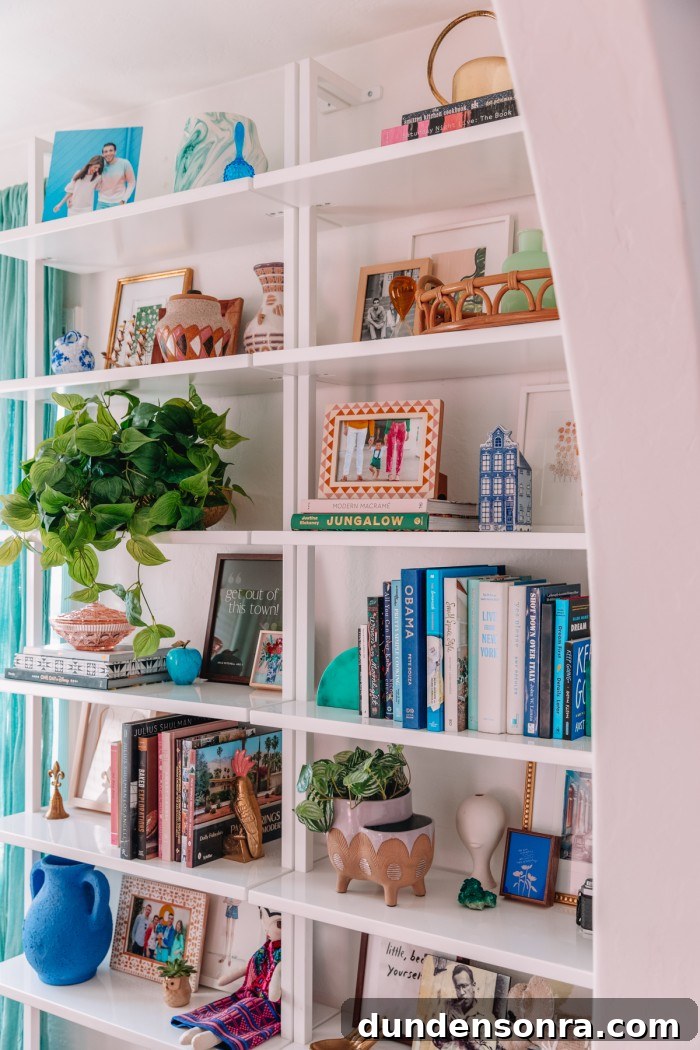
If styling a shelf feels overwhelming, begin with a color palette. This doesn’t mean limiting yourself to one or two colors; instead, select a harmonious range of hues to guide your choices. A palette makes shopping and curating easier and ensures the shelf reads as one cohesive vignette within the room.
Use that palette when choosing books, decor and art so everything ties together visually.
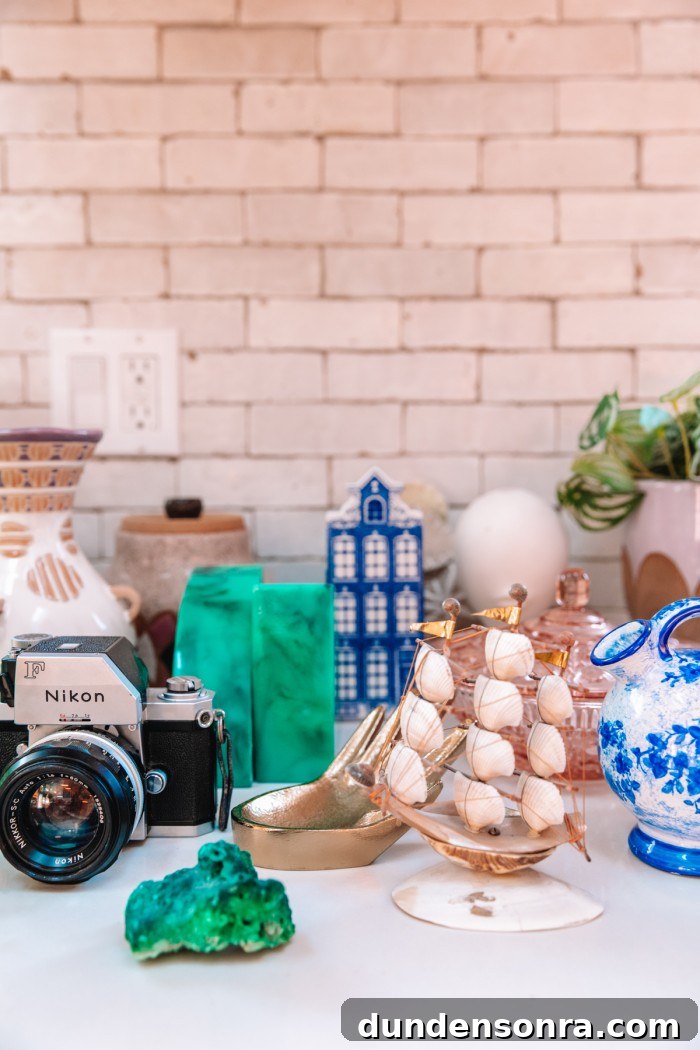
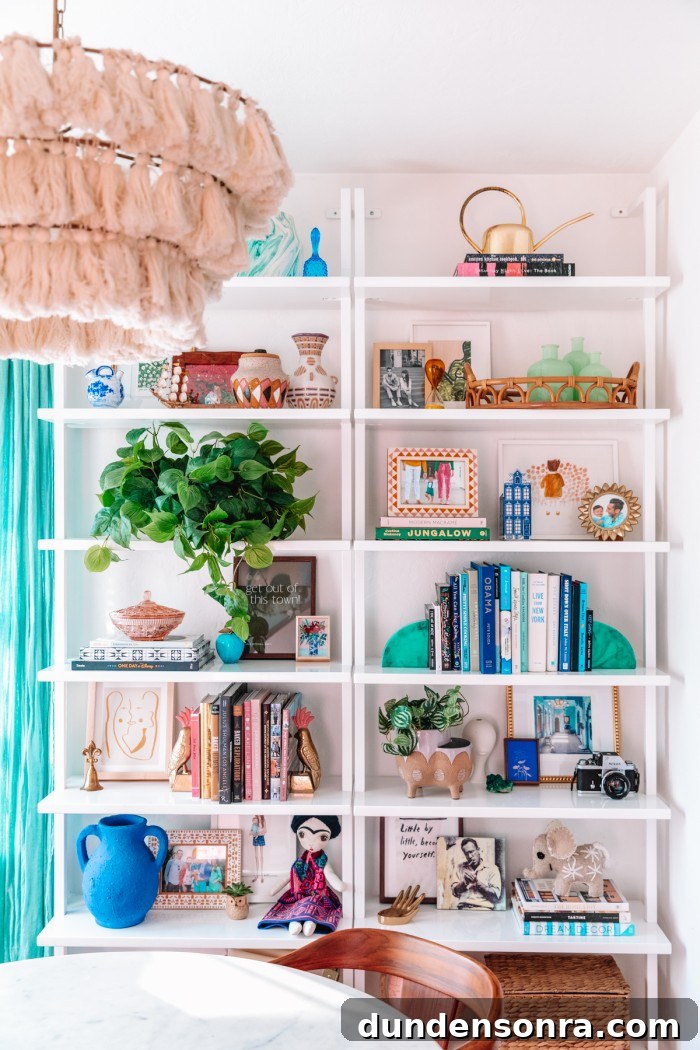
In these photos, shades of blue, green, pink, mustard, gold and neutrals were used to create a unified, lively look in the dining room shelves.
My Favorite Bookshelves
A simple, open bookshelf is versatile and easy to style. Open shelving allows you to introduce color or wallpaper behind the unit for added depth. Choose sizes that fit your space and balance function with display.
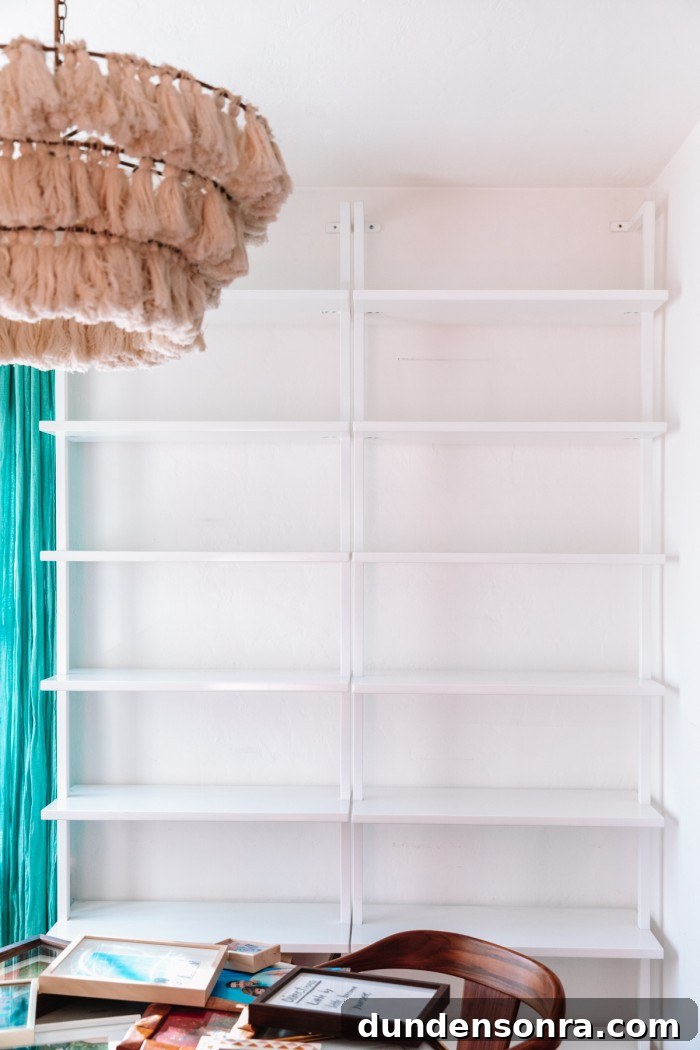
With your shelving in place, follow the order below to style with confidence.
Books
Begin with books—the primary reason for the shelf and the easiest way to establish scale and pattern. Gather the books you plan to display and decide on an organizing principle: color, author, subject or title. Organizing by cover color creates an immediate visual rhythm; organizing by genre or author makes books easier to find. Choose what works best for you.
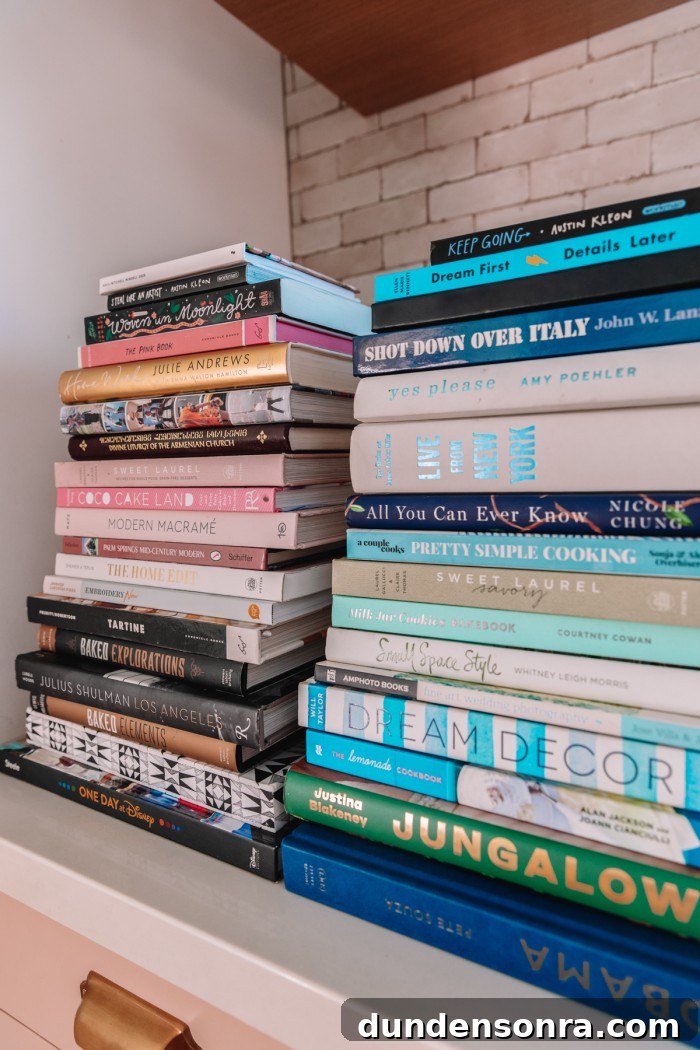
Styling approaches for books:
- Fill an entire shelf end-to-end with books for a dense, library-like look.
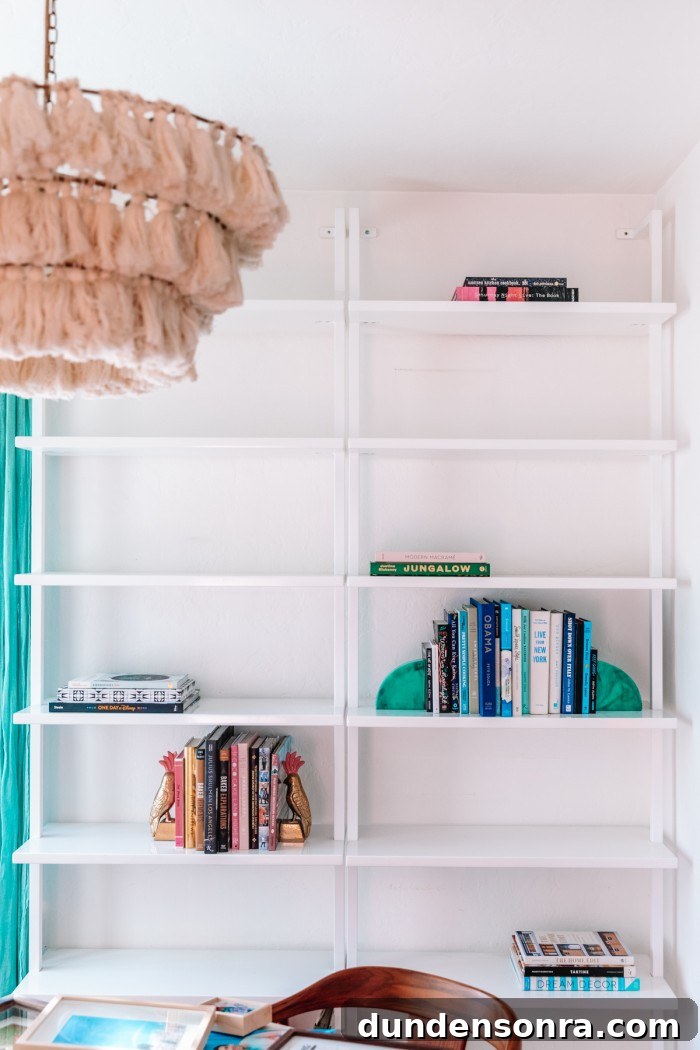
- Use bookends to anchor a partial row of books, leaving space for decor beside them.
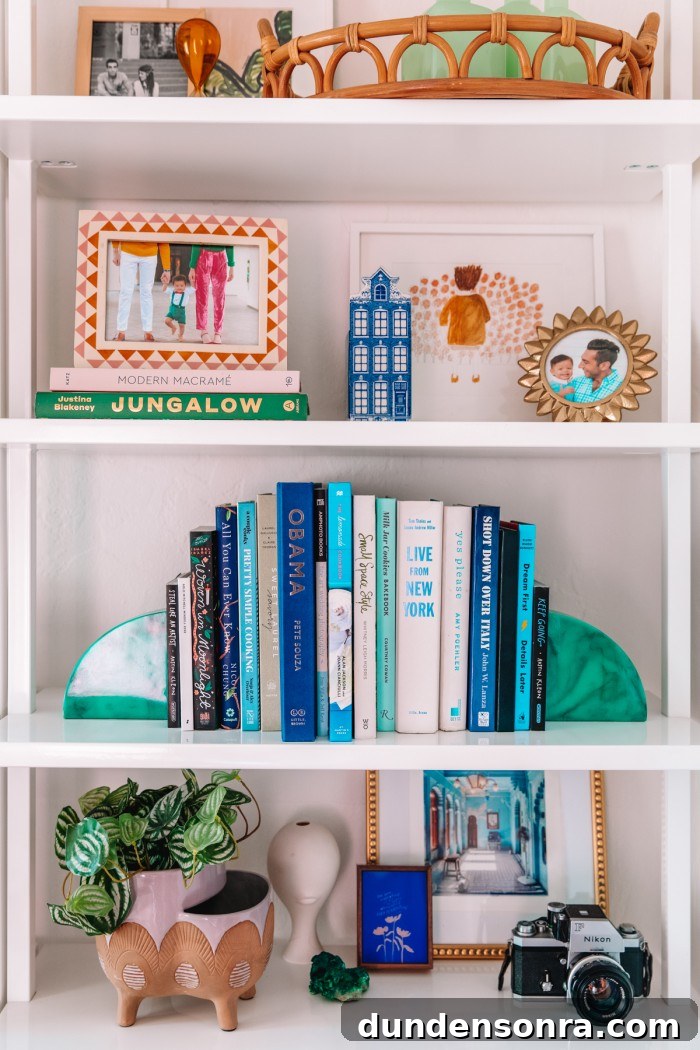
- Stack books in small piles of two or three to create horizontal interest; you can top stacks with a small object or vase.
Mix vertical rows and horizontal stacks across shelves to keep the display dynamic. If most shelves are filled with books, vary the arrangement so the eye moves around the unit.
Large Trays, Baskets & Bowls
Large trays, shallow bowls and baskets are useful anchor pieces. They can fill an entire shelf or act as a contained vignette on a partial shelf. Baskets are especially practical—they hide cords, manuals or toys while adding texture and warmth.
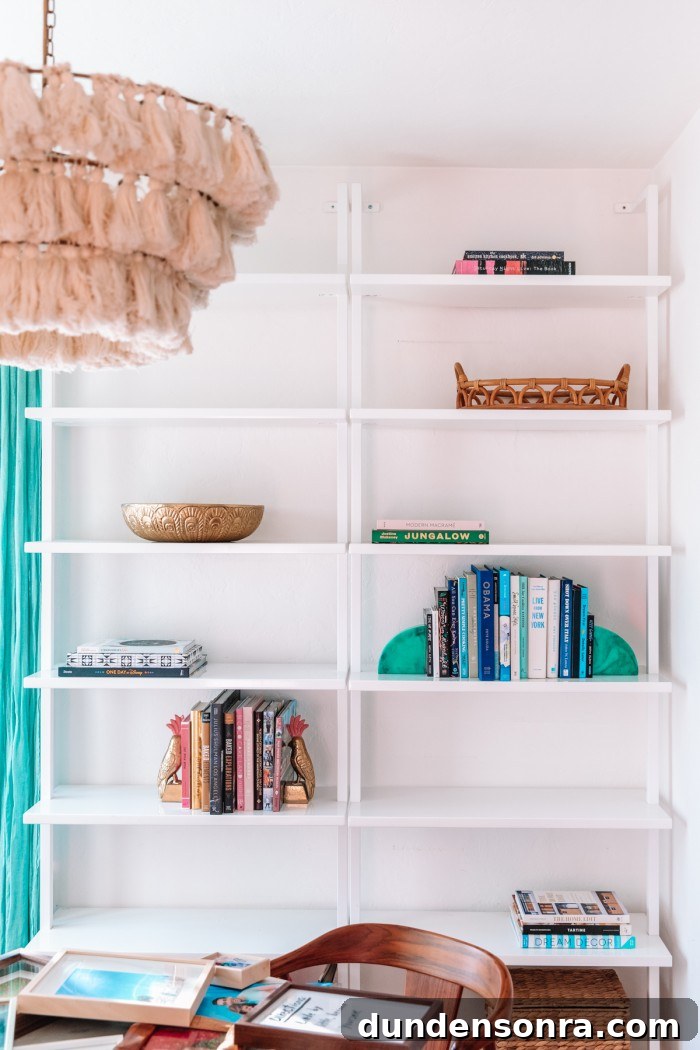
These containers also serve as bases for arranging plants or smaller decorative items described below.
Photos & Art
Leaning framed art or photos against the back of a shelf adds depth and a layered feel. It creates a backdrop for smaller items and can make the overall display feel more curated and personal.
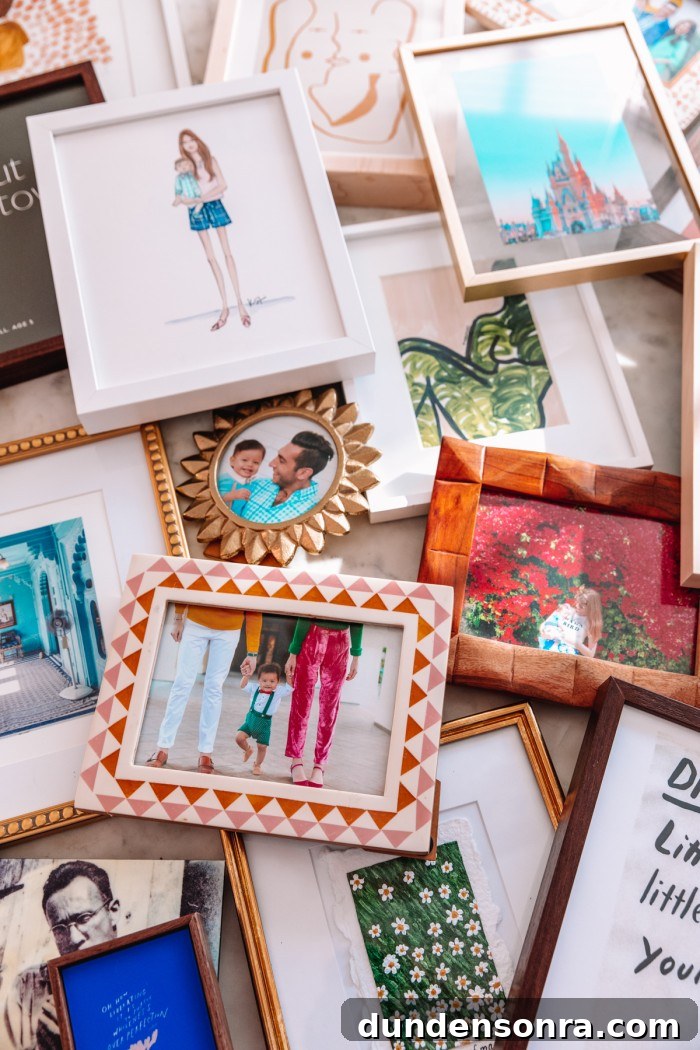
Curating tips for art and photos:
- Mix vertical and horizontal orientations to create visual interest.
- Layer pieces of different sizes, placing smaller frames in front of larger ones.
- Place a small frame on top of a stack of books to integrate art with other elements.
- Use matching frames for a cohesive look or mix styles for an eclectic feel.
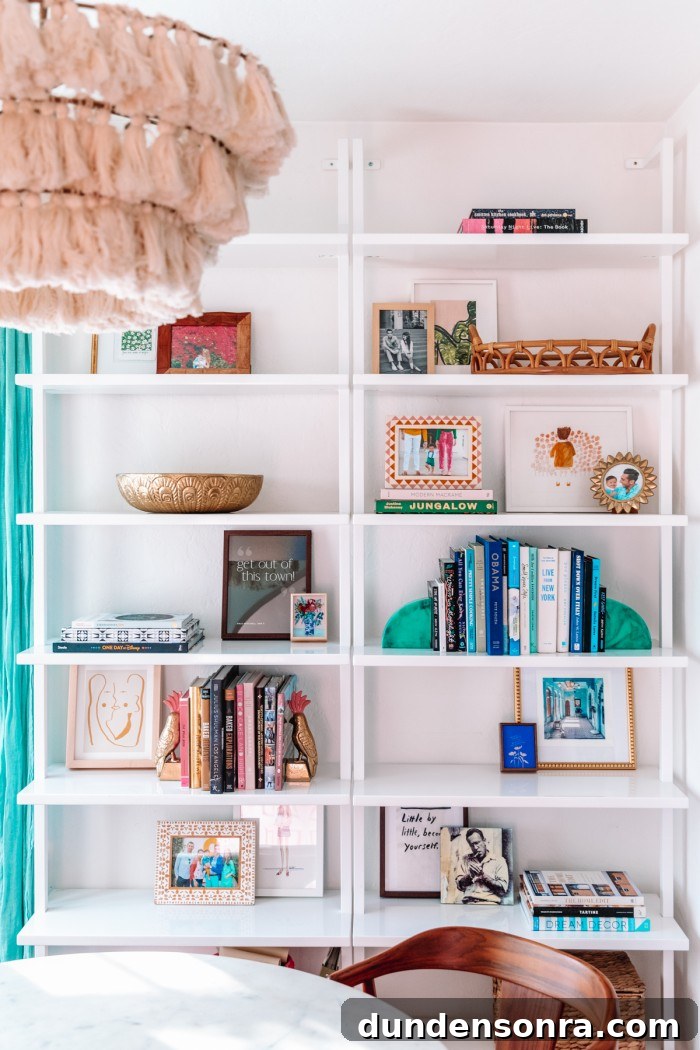
Add art near a bowl or book stack, or reserve an entire shelf for framed pieces if you prefer a gallery-like composition.
Plants
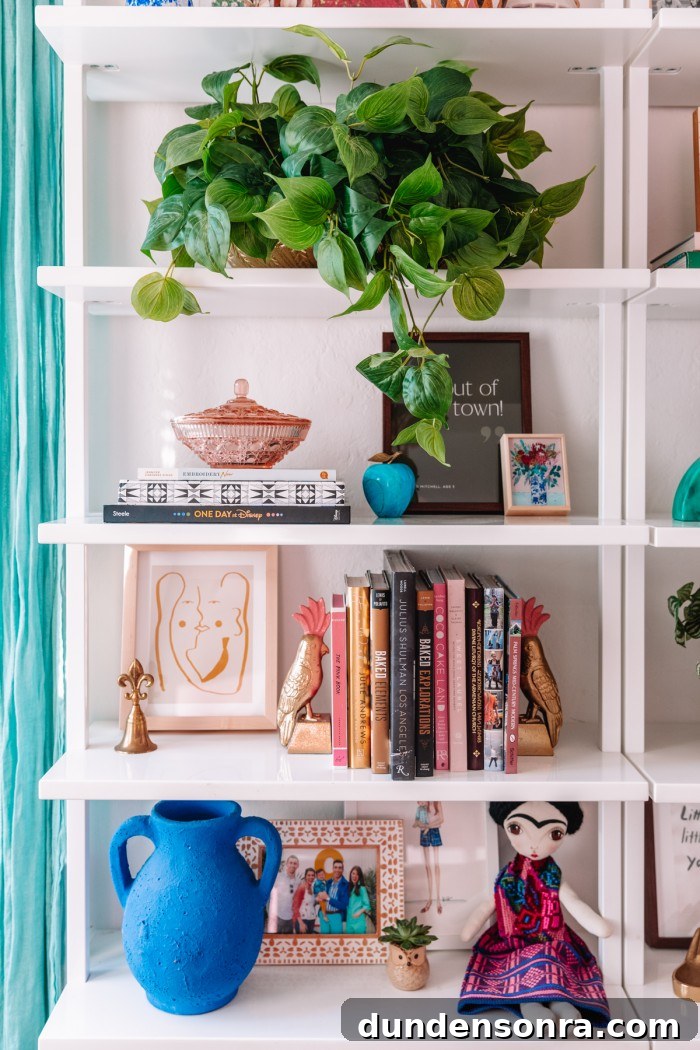
Greenery brings life and texture to shelves. Choose real plants if the spot receives sufficient light; otherwise, high-quality faux plants work well. Place plants in attractive vessels, nest them in bowls or space them sporadically across the unit to create a natural rhythm.
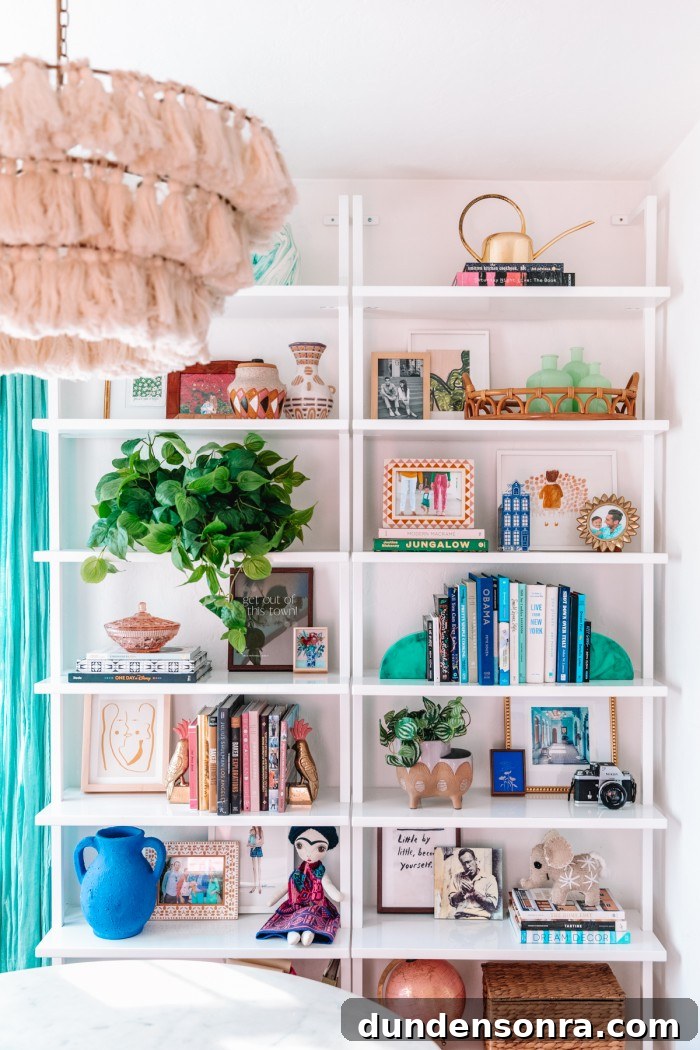
Vary plant sizes and pot textures to add layers and avoid visual monotony.
Small Decor & Personal Items
This is where personality shines. Select small objects that fit your color palette and reflect your interests—vases, bowls, vintage finds, travel souvenirs and family heirlooms all make excellent additions.
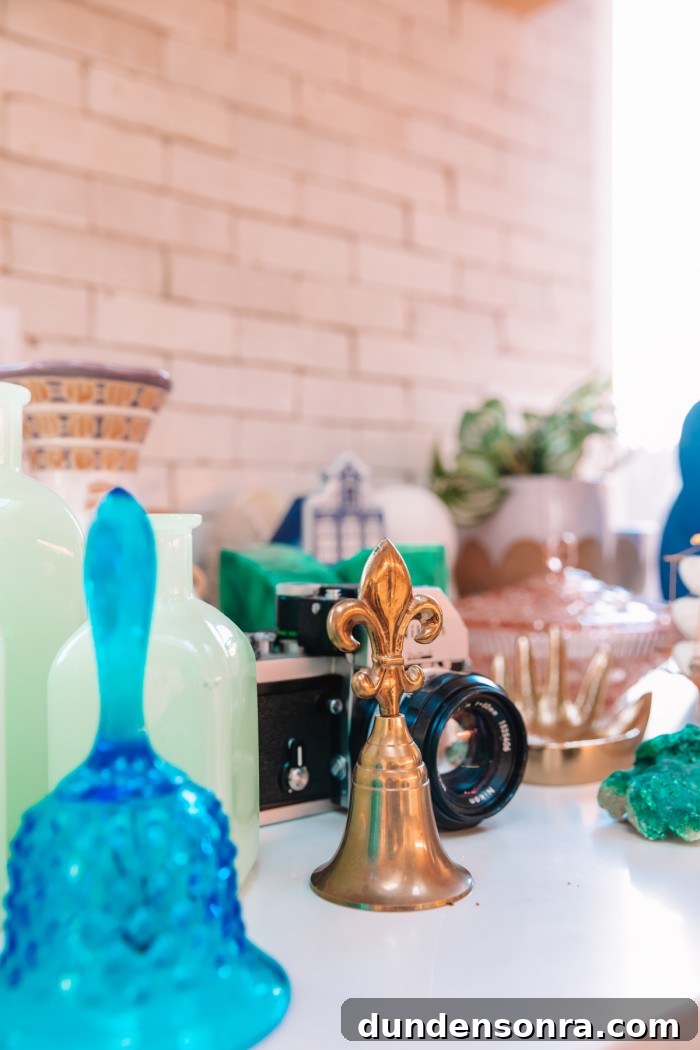
Items to consider styling with:
- Small bottles and vessels
- Vases (even empty ones add shape)
- Trays, dishes and coin bowls
- Family heirlooms and decorative sculptures
- Vintage cameras, pottery or curios
- Travel keepsakes like shells, stones or small souvenirs
- Globes and useful objects like a watering can
- Plush toys for lower shelves in family spaces
Ways to incorporate small pieces:
- Top a book stack with a small vase or decorative object.
- Group three objects together in front of art for a balanced vignette.
- Place a plush item beside a stack of books on a low shelf for a lived-in look.
Change It Up!
Once everything is arranged, step back and assess. Look for areas that feel heavy or too monochrome and redistribute items until the composition feels balanced. Moving a single object can make a big difference.
Bookshelves are easy to refresh seasonally or whenever you acquire new treasures—swap colors, rotate plants and update small decor to keep the display feeling fresh.
Photos by Jeff Mindell
I hope these tips make styling your next bookshelf enjoyable and successful. With a color plan, a few anchor pieces and meaningful touches, you can create shelves that are both practical and beautiful.