
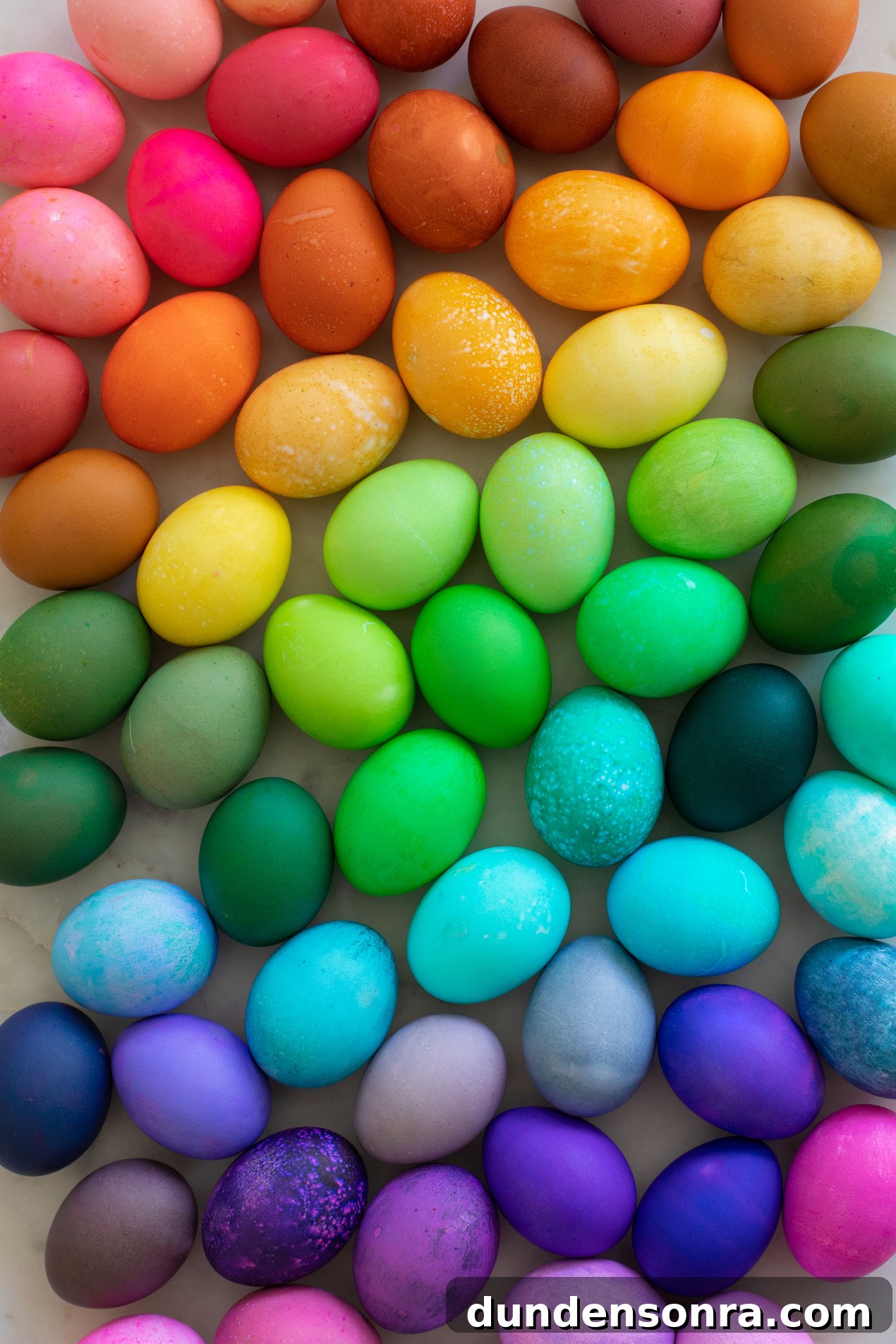
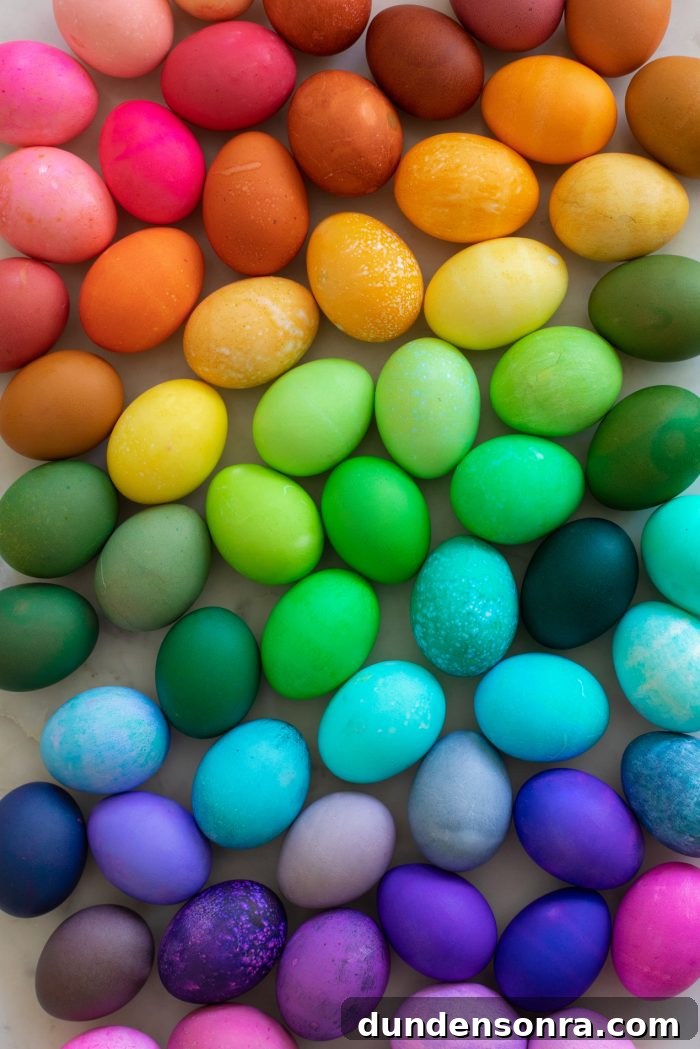
Dyeing Easter eggs is a timeless childhood tradition, and you don’t need a specialty kit to get beautiful results. With basic food coloring and white vinegar from the pantry, you can create dozens of vibrant shades. Below I’ll outline the supplies, tips, and exact formulas to make more than 40 colors so you can host an egg-decorating party or simply wow your family.
Using food coloring is economical and flexible: start with a few primary colors, then mix and match to expand your palette. The recipes and timing I share make it easy to reproduce consistent shades and experiment for endless variations.
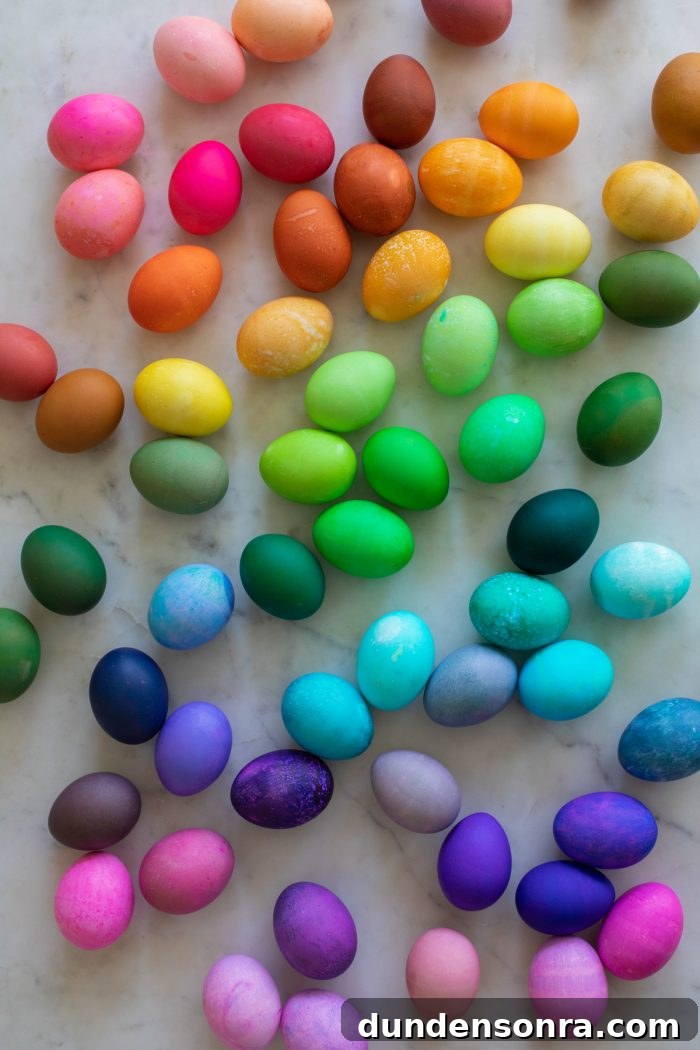
Supplies for Egg Dyeing
Gather these items to dye eggs in over 40 colors:
- Eggs – white or brown; raw or hard-boiled (hard-boiled recommended if kids are involved).
- Food coloring – liquid or gel food coloring in standard and/or neon sets.
- Vinegar – white vinegar, 1 tsp per dye color.
- Hot water – about 1/2 cup per dye color.
- Glasses or bowls – one per color.
- Slotted spoon or whisk – for placing and removing eggs from the dye.
What Food Coloring Should I Use?
Liquid food coloring from the grocery store works well and is easy to find, though it usually comes in the basic colors. Gel food coloring can be more concentrated; some gel varieties dissolve unevenly, but Wilton gel colors are consistent and mix smoothly. If using gel, be sure it dissolves fully in the hot water and vinegar mixture before adding an egg.
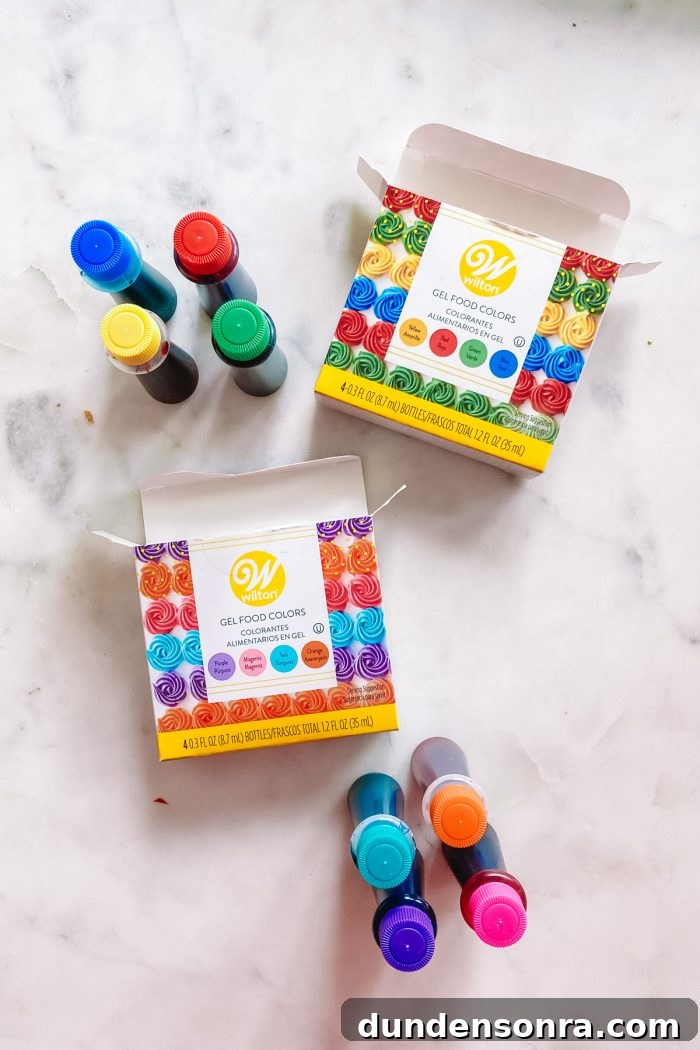
Choose colors based on the palette you want—standard packs cover many shades when combined, while neon sets add bright, saturated hues. Avoid gels that don’t dissolve well, as they can leave streaks or uneven color.
Hard Boiling & Preparing Eggs for Dyeing
You don’t have to hard-boil eggs before dyeing, but it’s less messy and safer with kids. To hard-boil: place eggs in a saucepan, cover with water, bring to a boil, then remove from heat, cover, and let sit 10–12 minutes. Cool the eggs in cold water before dyeing.
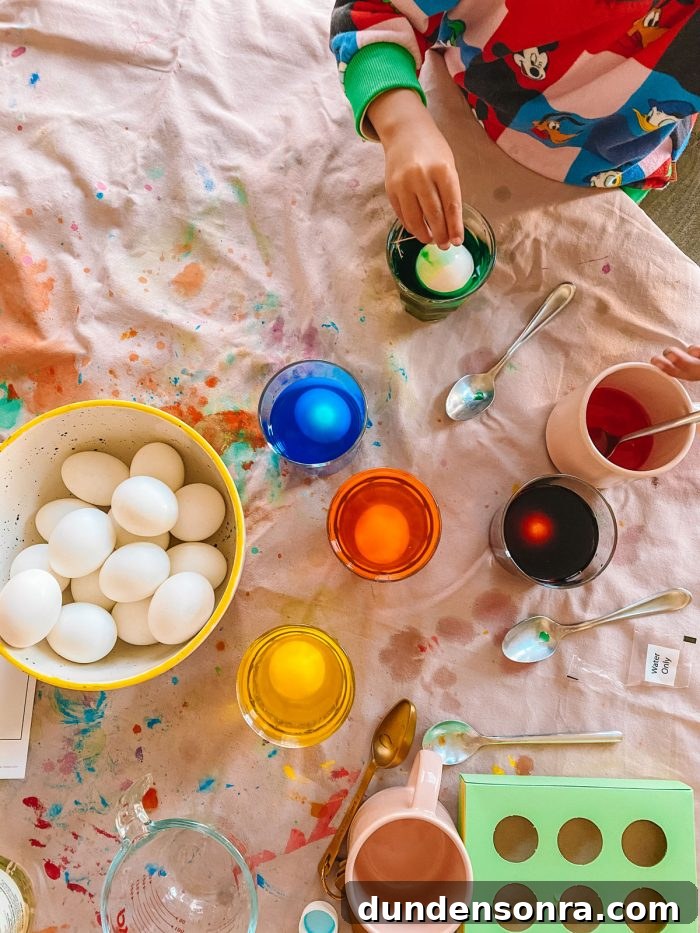
You can also dip eggs briefly in a diluted vinegar rinse before dyeing to help colors adhere more evenly—this helps some shades more than others. Keep in mind eggs are natural and will vary; some may show subtle mottling or texture differences after dyeing, which can be part of their charm.
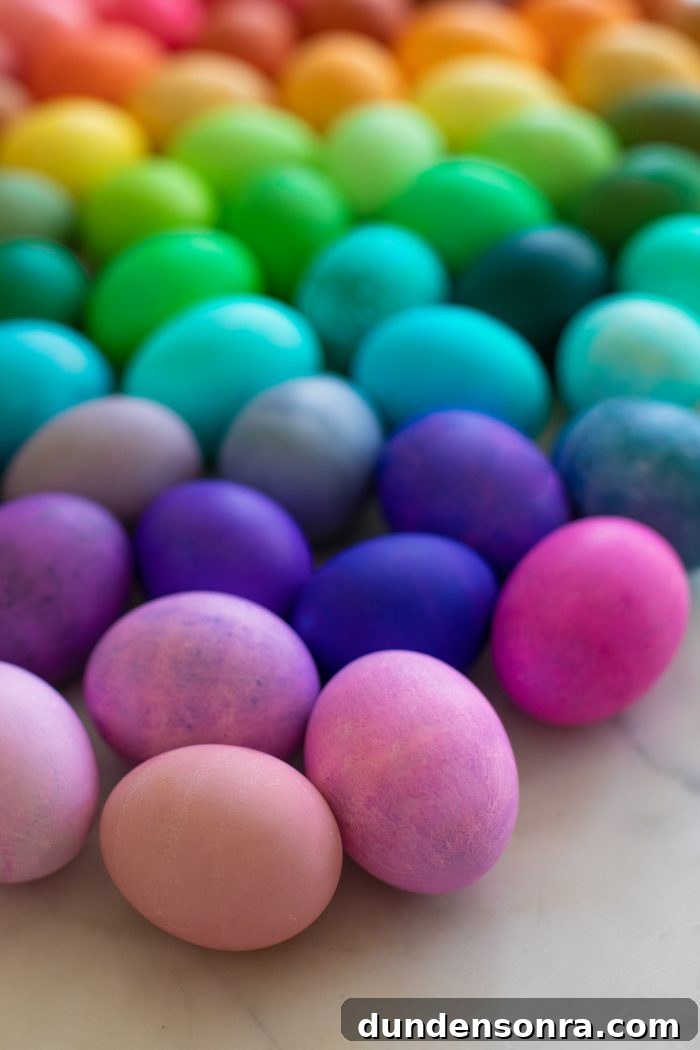
How To Dye Easter Eggs
- Combine 1/2 cup hot water and 1 tsp white vinegar in a cup or bowl for each dye color.
- Add food coloring drops according to the formulas below and stir until mixed.
- Carefully place the egg in the dye and leave it for the listed time to reach the shade desired.
- Remove the egg with a slotted spoon and set it on a drying rack or an inverted egg carton to dry.
You can reuse a dye bath to get multiple eggs in similar shades, then intensify the color by adding more drops to that same cup to create new hues without starting over.
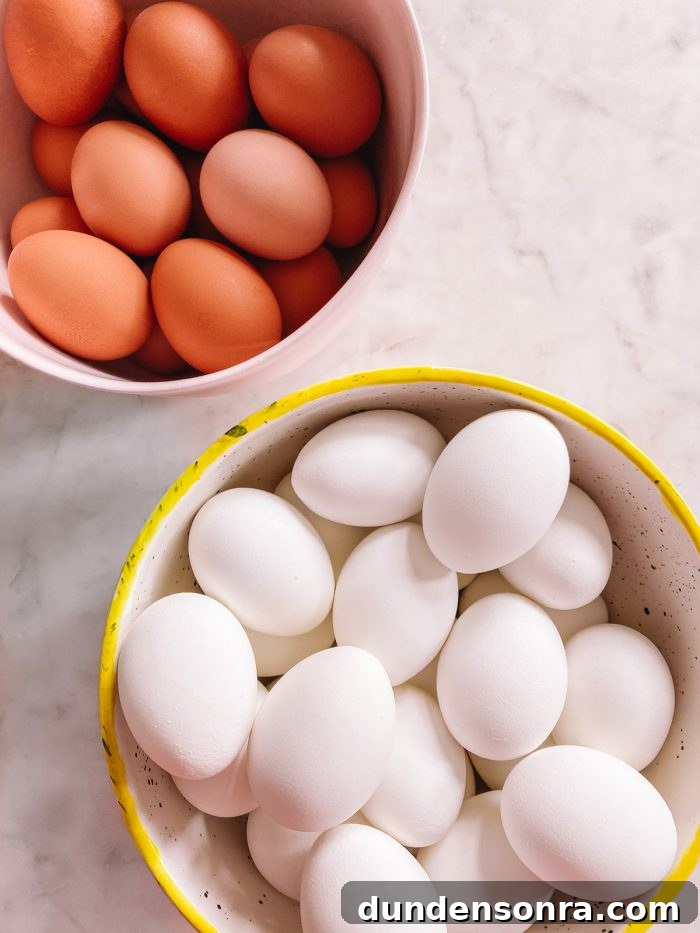
Can I Dye Brown Eggs?
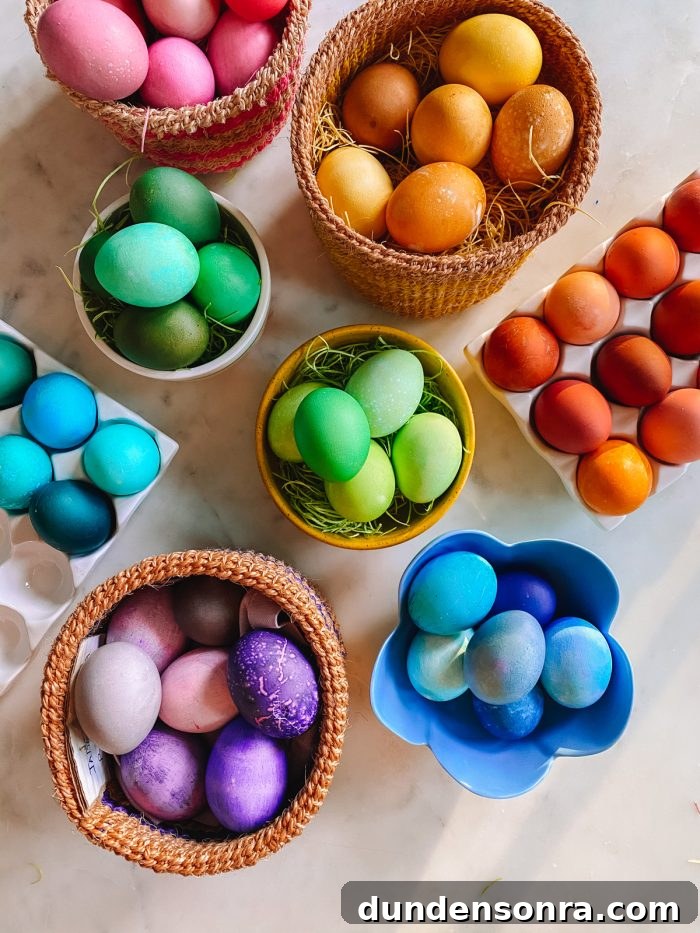
Yes—brown eggs take dye differently and produce deeper, jewel-like tones. Because brown eggs vary in their base shade, results can differ; check them frequently while dyeing. Some formulas below note when a brown egg was used so you can anticipate richer outcomes.
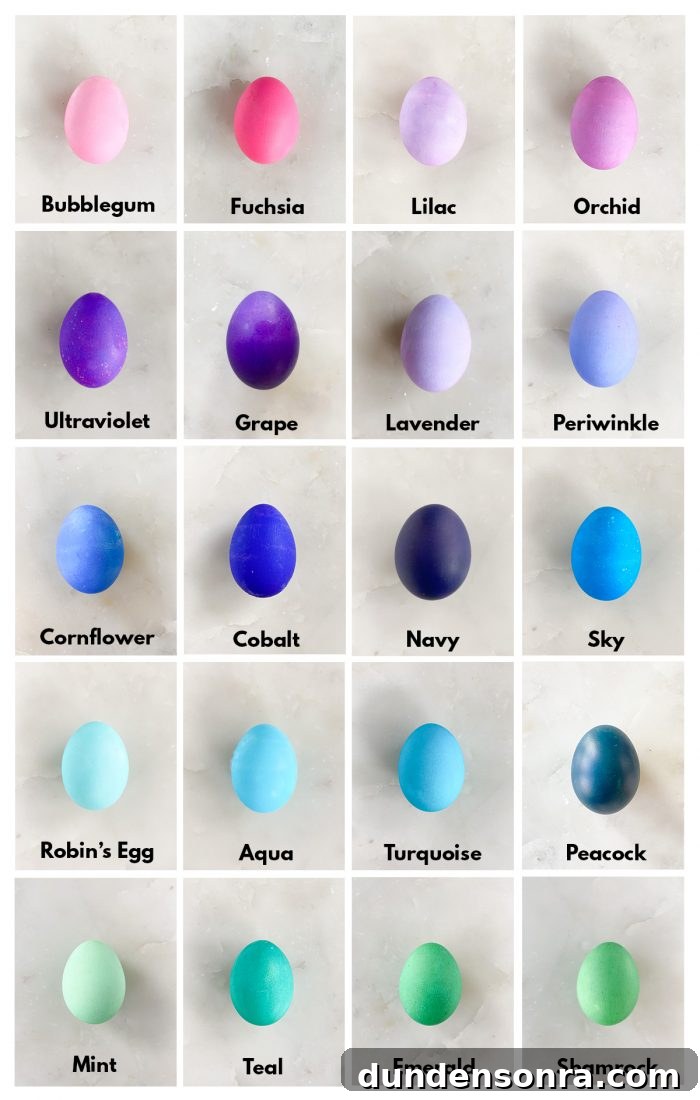
Dyeing Eggs: Pinks, Purples, Blues, Greens
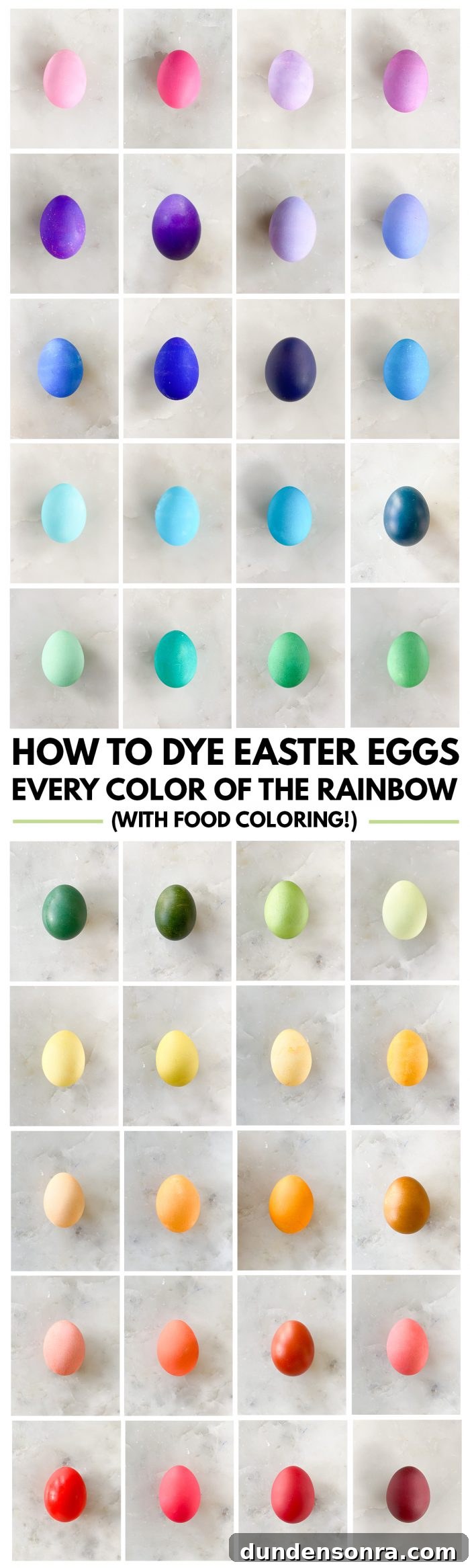
Use these formulas and timing to achieve pinks, purples, blues, and greens. Each listing assumes 1/2 cup hot water + 1 tsp vinegar per color.
Pink & Purple:
- Bubblegum – 5 drops pink, 30 seconds or less
- Fuchsia – 5 drops pink, 3 minutes
- Lilac – 5 drops pink + 5 drops purple, 30 seconds or less
- Orchid – 5 drops pink + 5 drops purple, 3 minutes
- Ultraviolet – 5 drops purple, 3 minutes
- Grape – 10 drops purple, 5 minutes
- Lavender – 5 drops purple, 30 seconds or less
Blue:
- Periwinkle – 5 drops blue + 5 drops purple, 30 seconds or less
- Cornflower – 5 drops blue + 5 drops purple, 3 minutes
- Cobalt – 5 drops blue + 5 drops purple, 5 minutes
- Navy – 5 drops blue + 5 drops purple, 5 minutes (Brown Egg)
- Sky – 5 drops blue, 3 minutes
- Robin’s Egg – 5 drops teal, 30 seconds or less
- Aqua – 5 drops blue, 30 seconds or less
- Turquoise – 5 drops teal, 3 minutes
- Peacock – 5 drops blue, 5 minutes (Brown Egg)
Green:
- Mint – 5 drops teal + 3 drops green, 30 seconds or less
- Teal – 5 drops teal + 3 drops green, 3 minutes
- Emerald – 10 drops teal + 10 drops green, 3 minutes
- Shamrock – 5 drops teal + 10 drops green, 3 minutes
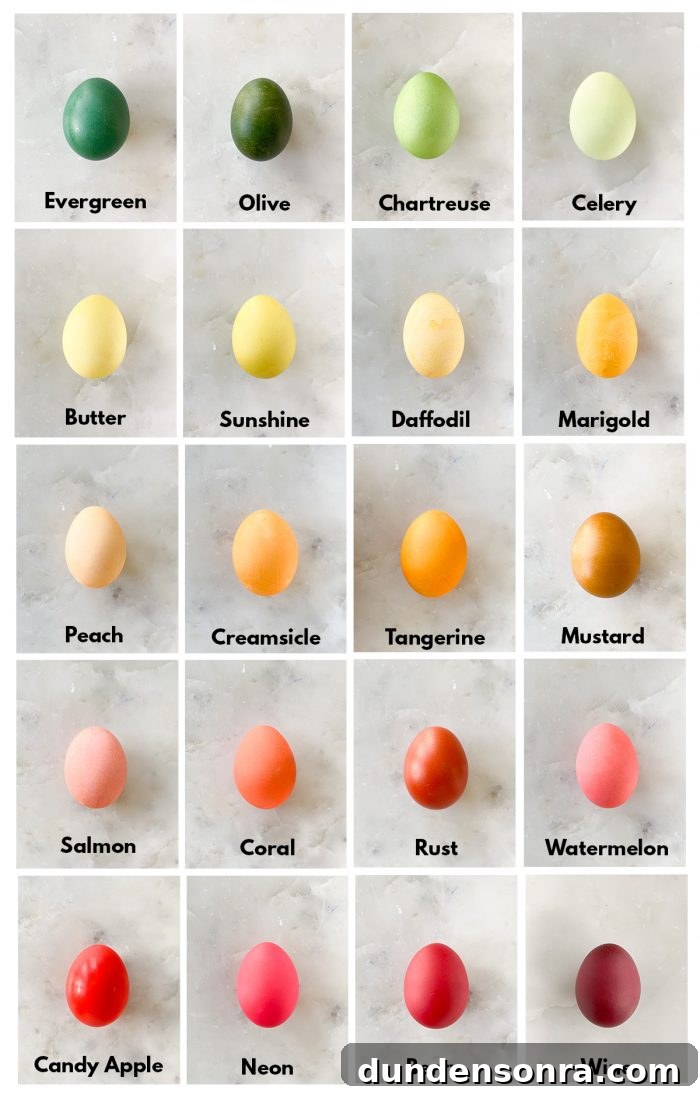
Dyeing Eggs: Greens, Yellows, Oranges, Reds
Formulas for greens, yellows, oranges, and reds are listed below. Again, each assumes 1/2 cup hot water + 1 tsp vinegar.
Green & Yellow:
- Evergreen – 5 drops teal, 5 minutes (Brown Egg)
- Olive – 10 drops green, 5 minutes (Brown Egg)
- Chartreuse – 5 drops green, 3 minutes
- Celery – 5 drops green, 30 seconds or less
- Butter – 10 drops yellow + 3 drops green, 30 seconds or less
- Sunshine – 10 drops yellow + 3 drops green, 3 minutes
- Daffodil – 5 drops yellow, 30 seconds or less
- Marigold – 5 drops yellow, 3 minutes
Orange:
- Peach – 5 drops orange, 30 seconds or less
- Creamsicle – 5 drops orange, 3 minutes
- Tangerine – 5 drops orange + 5 drops yellow, 3 minutes
- Mustard – 10 drops yellow + 3 drops green, 5 minutes (Brown Egg)
- Salmon – 10 drops yellow + 5 drops red, 30 seconds or less
- Coral – 10 drops orange + 5 drops red, 3 minutes
- Rust – 10 drops orange + 5 drops red, 5 minutes (Brown Egg)
Red & Pink:
- Watermelon – 5 drops red, 30 seconds or less
- Candy Apple – 10 drops red + 5 drops yellow, 5 minutes
- Neon – 5 drops red + 5 drops pink, 3 minutes
- Berry – 5 drops pink, 3 minutes (Brown Egg)
- Wine – 5 drops pink + 5 drops purple, 5 minutes (Brown Egg)
Print a Color Formula Guide
If you want a quick cheat sheet to keep by your work area while decorating, create or print a simple list of the formulas above. Having the drops and times handy speeds up the process and helps you reproduce favorite shades.
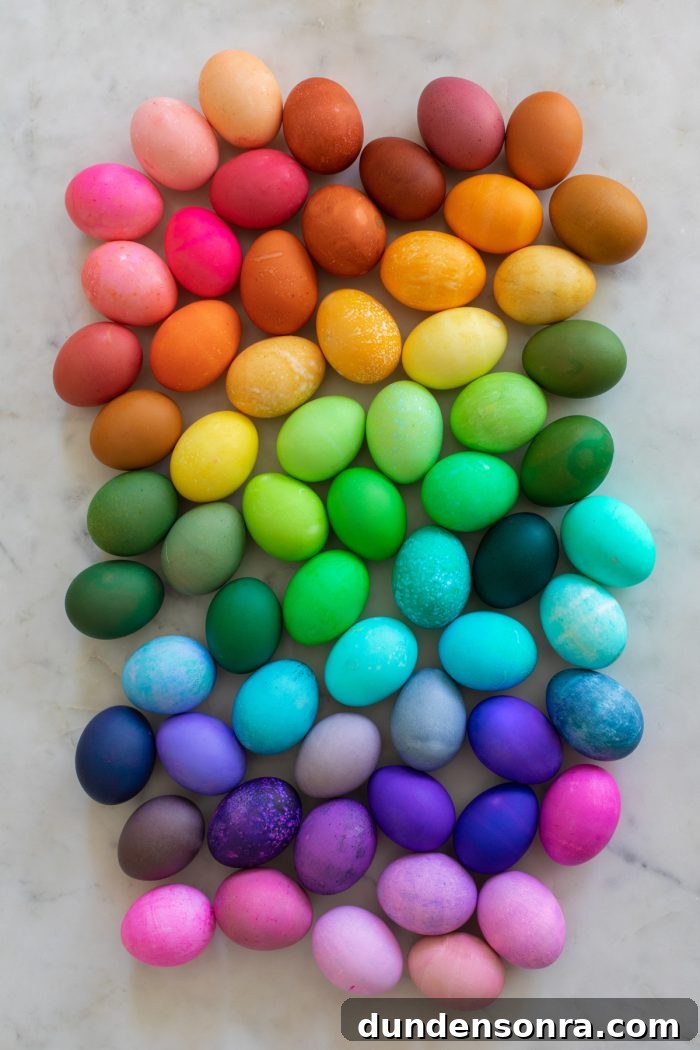
Tips for Drying the Eggs After Dyeing
Drying eggs evenly prevents smudges or flat spots where the shell rested against a surface. Try these methods:
- Gently pat with a cloth: Use an older towel or rag to blot eggs dry. This is quick and usually keeps most of the color intact.
- Cooling rack: Set eggs on a cookie cooling rack to air dry; be aware the grid can leave a faint pattern on one side.
- Toothpick stand: Insert toothpicks into a piece of styrofoam and rest eggs between them to let them dry all around.
- Upside-down egg carton: Flip an egg carton and set eggs in the hollows; drying can be uneven but it’s a convenient option.
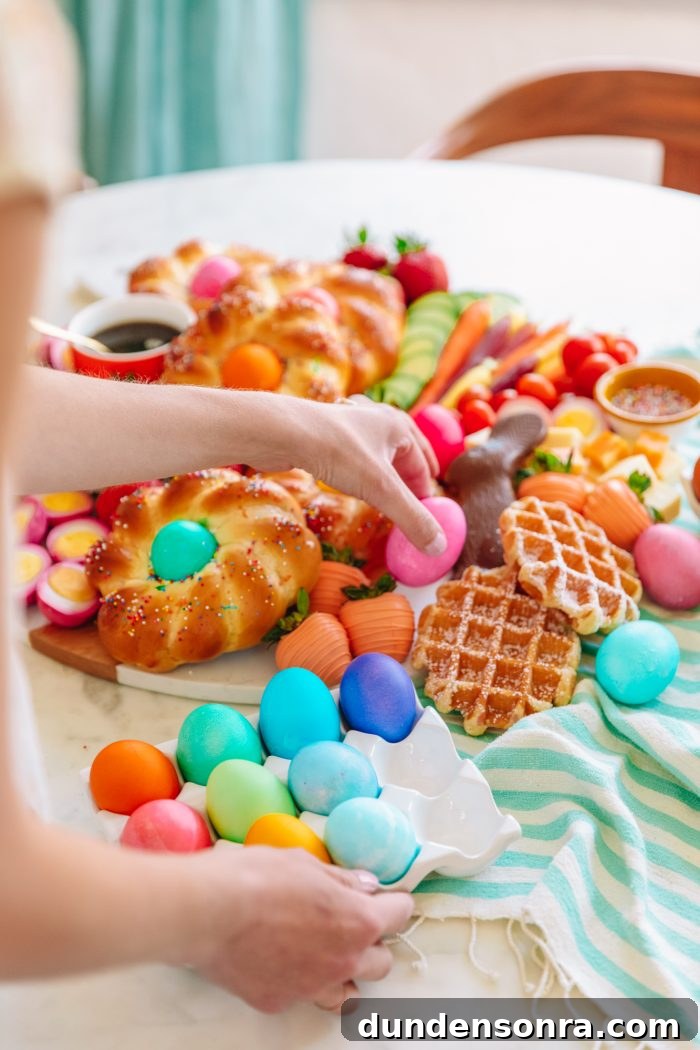
What Do I Do With My Dyed Eggs?
Decorated eggs make a beautiful addition to an Easter brunch board, a centerpiece, or a festive display. Arrange them with breads, cheeses, and fresh fruit for an eye-catching seasonal spread.
Photos by Jeff Mindell
Other Ways To Decorate Eggs
Beyond dye baths, try creative techniques like painting with acrylics, applying temporary tattoos, or adding sprinkles and glitter for unique textures and patterns. These methods work well alone or combined with dyed bases.
- Use paint pens or acrylic paint for hand-drawn designs.
- Apply temporary tattoos for precise, repeatable patterns.
- Decorate with sprinkles or edible glitter on a thin layer of frosting or adhesive.
Happy decorating!